
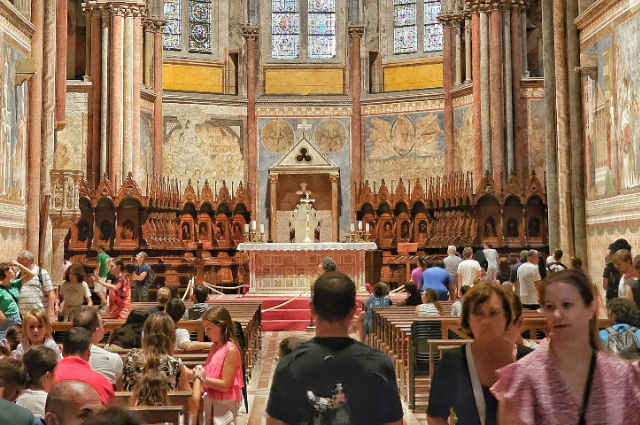
Religious institutions use their sacred spaces for creating environments that promote inclusive treatment and societal transformation through spiritual restoration.
Sanctuaries, whether they are churches, mosques, temples, or synagogues have existed as permanent religious sites which maintain their original customs. The same spaces that once reinforced social hierarchies are now being reclaimed as platforms for confronting prejudice, mental health taboos, gender bias, and other forms of stigma. This article surveys three recent, well documented incidents that illustrate how religious institutions are actively breaking stigma from the inside out. You can explore the stories in depth through the original reporting links which accompany each case.
A Historical Glance: Why Stigma Persists in Sacred Places
Stigma finds its strongest existence in the areas where power relationships intersect with identity creation and doctrinal beliefs. In many faith traditions, doctrines about purity, morality, or "order" have historically been interpreted in ways that marginalize certain groupspeople living with mental illness, LGBTQ+ individuals, women, or those who deviate from prescribed gender roles.
The "Othering" Mechanism - Anthropologists such as Mary Douglas have shown that religious rituals often demarcate "clean" versus "unclean" bodies, reinforcing social boundaries (Douglas, Purity and Danger, 1966). Religious leadership structures usually operate through hierarchical systems, which make it impossible to implement quick organisational transformations. The process of changing a doctrine that exists as part of a liturgical tradition that has lasted for centuries gets perceived by people as an act of sacrilege.
The same religious devotion that creates obstacles to transformation also provides sacred spaces with their greatest potential to create change. The collective bias assessment process allows congregations to discover their excluded members beyond their physical boundaries.
Actual Event Number One: LGBTQ+ Rights in the United Methodist Church
What Happened?
The United Methodist Church (UMC) approved a resolution in 2021 that permitted member congregations to select their preferred level of LGBTQ+ acceptance. The national church remains divided, but local congregations gained authority to conduct same-sex weddings and ordain openly homosexual ministers.
The Sanctuary Moment
The historic sanctuary of St. Paul's United Methodist Church in Denver, Colorado, became the first United Methodist church to conduct a public same-sex wedding. The ceremony achieved worldwide reach through its live streaming, which attracted more than 30000 online viewers. The Reverend James Brown, who identifies as gay, delivered a sermon about love which describes inclusion as an essential religious principle that must be followed.
Impact
- Congregational Healing: Members who previously concealed their orientation reported feeling free to be fully human(interview in The Denver Post).
- Community Dialogue: The town hall meeting invited local LGBTQ+ advocates, mental health professionals, and clergy to discuss stigma. The church achieved its highest attendance record with 500 people present at the event.
Mental Health Support Within Buddhist Temples
What Happened?
In 2023 the KÅyasan Shingon Buddhist community in Kyoto launched a “Mindful Healing†program that integrates traditional meditation with modern psychotherapy. The initiative came into existence after multiple monks revealed their personal experiences with depression and anxiety, which became a foundation that proved mental illness does not represent spiritual failure.
The Sanctuary Moment
The flagship event took place at the ancient Kong buji temple, where Buddhist scholars and licensed psychologists and laypersons presented their personal experiences to the audience. Venerable Ryta, a monk conducted a guided meditation followed by a group counseling session, which temple settings do not usually permit.
Impact
Reduced Shame: A pre and post-survey of 312 participants showed a 27 % drop in self-stigma regarding mental health (published in Journal of Buddhist Studies).Three other temples in Japan and two temples in the United States have adopted the model, which includes the San Francisco Zen Center that scheduled its sangha program to start in early 202
The Islamic Centre of Riverside, California, appointed Fatimah Al-Hussein, who works as a certified Islamic scholar, to become its first female Imam who would lead Jumu'ah prayers for mixed-gender congregations. The center deemed the decision to show its dedication to fighting against the "spiritual marginalisation of women", which caused debates among all Muslim groups.
The Sanctuary Moment Fatimah delivered the khutbah (sermon) in Arabic and English on May 13 2022, when she used Quranic verses to show that gender equity exists in Al-Hujurat 4. She then performed the congregational prayer, which is usually only executed by male imams in most Sunni traditions. The session reached a worldwide audience when more than 120000 people watched it live through the centre's website.
Impact
Community Empowerment. A poll conducted after the event showed that 78 of regular attendees felt more respected and included, according to data released by the centre. Educational Ripple Effect. Nearby mosques saw a 45 increase in women studying Islamic studies after the event because it created more interest in gender-inclusive education.
Partner with Specialists: Invite therapists, counsellors, or advocacy groups to cohost workshops.
Create Safe Ritual Spaces. Design specific services or prayer circles which enable the stigmatised group to share their experiences without facing judgment.
Document & Share. The organisation will document its procedures. The organisation will obtain data through. The organisation will distribute its results through newsletters, social media, and local news outlets. People trust organisations through their transparent operations because this practice leads to trust building, which attracts nearby faith groups.
The Broader Social Ripple
Stigma eradication inside sanctuaries does not remain restricted to the areas between pews and prayer mats. The 2023 Pew Research Centre study showed that people with high religious commitment tended to support progressive LGBTQ+ rights when their church recognised these identities (Pew 2023). Faith-based mental health programs have demonstrated a decrease in youth suicide rates across various counties (CDC 2022).
Sacred spaces that accept all people establish a cultural framework that schools, workplaces and government bodies can use. The ripples become waves of social transformation.
The concept that churches exist as everlasting centres of tradition has been replaced by a modern understanding that sees sacred spaces as areas for extreme empathy. The narratives demonstrate that when faith unites with courage and dialogue through a modern reinterpretation of ancient teachings, stigma disappears in all three cases.
As more congregations choose to confront bias within their own walls, the collective impact extends far beyond any single sanctuary as it transforms communities, creates new definitions of religious practice and restores holy spaces to become areas of welcome for all who desire to join.
. . .
References:
- Islamic Society of North America (ISNA). “Mental Health, Faith, and Healing: An Islamic Perspective.” 2023. https://www.isna.net
- Qur’an, Surah 2:156 157; Surah 2:186; Surah 26:80.
- Sahih Bukhari, Book of Medicine, Hadith 5678.
- Al Hidayah Mosque, “Dua for the Heart” program brochure, 2022.