
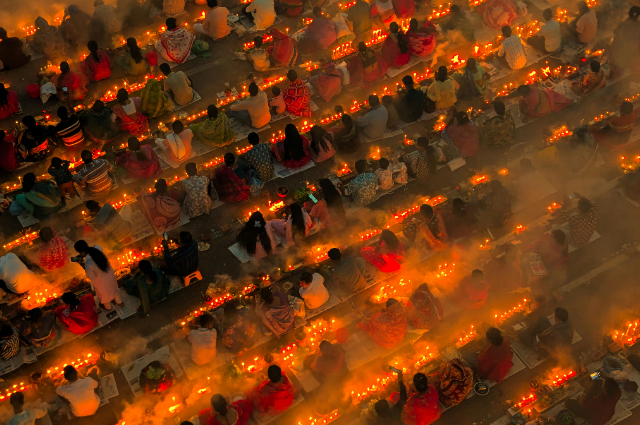
In the diverse tapestry of India, the concept of “othering” plays a significant role in shaping social dynamics. “Othering” refers to the process of perceiving or portraying a group as fundamentally different from oneself, often leading to marginalization & discrimination. This phenomenon is pronounced in the context of visible minorities - groups distinguished by physical features, cultural practices, or linguistic differences.
Understanding Visible Minorities in India
Visible Minorities in India include various ethnic, religious, & linguistic groups that differ from the dominant cultural narratives. These groups may include, but are not limited to, tribal communities, certain religious minorities (such as Muslims & Christians), & individuals from north-eastern states. Their distinct physical features, cultural practices, & languages often set them apart, making them targets of othering.
The Visible Minority: A Case Study
Visible minorities in India, such as the Northeast Indian tribes, Afro Indians, & certain Dalit communities, often bear the brunt of “othering”. Their distinct physical features-such as skin tone, facial structure, & traditional attire – set them apart from the majority population. This difference can lead to stereotyping, discrimination, & social ostracism.
For instance, individuals from the Northeast often face prejudice in mainland India, where they are sometimes perceived as “foreigners” due to their Mongoloid features. This perception is not merely a matter of physical appearance; it is intertwined with historical narratives, cultural misunderstandings, & socio-political dynamics. The result is a complex interplay of identity belonging, & alienation.
The Psychology of Othering
The psychology of othering is rooted in social identity theory, which posits that individuals derive a sense of self from their group memberships. When individuals identify strongly with their in-group, they may develop negative attitudes toward out-groups, leading to stereotyping & discrimination. In India, this dynamic is exacerbated by historical, political, & economic factors that reinforce divisions among communities.
Moreover, the experience of being “othered” can create a rift between individuals & their cultural heritage. Many may feel pressured to conform to the dominant culture, leading to a loss of traditional practices, languages, & identities. This cultural assimilation, while sometimes seen as a means of survival, can result in a profound sense of disconnection from one’s roots.
The Role of Media & Education
Media plays a crucial role in shaping perceptions of visible minorities. Often, the portrayal of these groups in films, news, & social media can reinforce stereotypes or challenge them. Educational institutes also have a significant impact; inclusive curricula that celebrate diversity can foster understanding & reduce prejudice.
However, there is a growing movement towards more inclusive representation in Indian cinema, literature, & art. By showcasing diverse narratives & celebrating the richness of minority culture, media can help dismantle stereotypes & foster a sense of belonging among all communities.
Bridging the Divide: Towards Inclusivity
Addressing the burden of features & the psychology of “othering” requires a concerted effort from all sectors of society. Education plays a pivotal role in fostering understanding & empathy. By incorporating diverse histories & cultures into school curricula, future generations can learn to appreciate the richness of India’s diversity rather than viewing it as a source of division.
Community engagement initiatives that promote intercultural dialogue can also help bridge the gap between different groups. By creating spaces for open conversations, individuals can share their experiences, challenge stereotypes, & build connections based on mutual respect & understanding.
The burden of features for visible minorities in mainland India highlights the complex interplay of identity, perception, & social dynamics. Understanding the psychology of othering is essential for fostering a more inclusive society. By challenging stereotypes & prompting dialogue, India can move towards a future where diversity is celebrated rather than marginalised.
References
- Tajfel, H.,&Turner, J.C(1986) The Social Identity Theory of Intergroup Behaviour. In S. Worchel & W.G. Austin (Eds.), Psychology of Intergroup Relations. Chicago Nelson-Hall
- Bhattacharyya, D.(2018). The Politics of Othering: A Study of North-eastern States of India. Journal of South Asian Studies,41(2),123-145.