
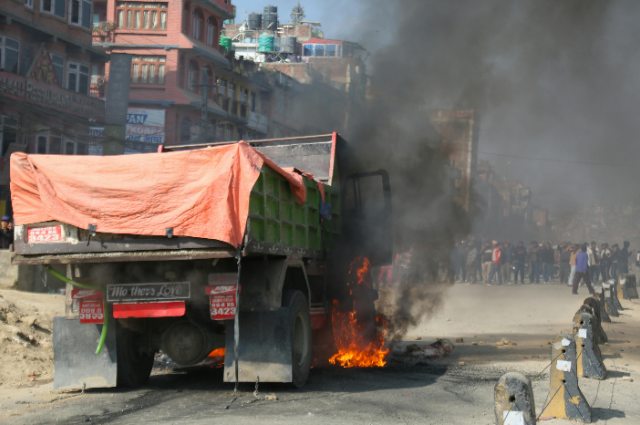
The dark, billowing clouds hanging over the urban skyline provided a horrific visual summary of the day’s events. By late afternoon, the atmosphere was heavy with the suffocating stench of charred timber, melted plastic, and the sharp, coppery scent of fresh blood. A minor dispute in a crowded commercial hub had detonated into a full-scale riot within a matter of hours, resulting in four fatalities, the near-destruction of three historic houses of worship, and the total devastation of the city’s primary trading district.
To grasp the magnitude of this tragedy, one cannot focus solely on the visual wreckage of shattered architecture. This was not a random tragedy or a freak occurrence; it was the inevitable explosion of weeks of deliberate misinformation, financial desperation, and the systemic deterioration of civic cohesion ignored by those in power.
The Trigger at the Market
The violence ignited in the Central Market, the vibrant, congested heart of the city’s trade. For generations, this marketplace served as a neutral space where the shared pursuit of profit quelled ideological friction. However, in the preceding days, anonymous online agitators had weaponised rumours, falsely claiming that a vendor had desecrated local religious icons.
By mid-morning, the mood was volatile. Clusters of frustrated individuals gathered at the gates. When a small altercation broke out—reportedly over a mundane disagreement regarding shop placement—it served as the match in a room full of gasoline. The long-standing, manufactured resentment turned the scuffle into a riot. As the mob surged through the narrow lanes, they overturned stalls and doused fabric and wood in fuel pilfered from nearby vehicles. A panicked stampede followed the initial fires, claiming the lives of an elderly merchant and a teen labourer. Emergency responders were quickly neutralised, unable to breach the dense, aggressive crowd to reach the inferno.
Systemic Assault on Faith
As the market burned, the nature of the violence shifted toward a coordinated, targeted campaign. A subset of the mob broke away, heading for the Old Quarter with the specific intent of hitting historic mosques.
These were not side effects of the riot; they were calculated strikes against the community’s identity. The assailants used heavy rubble to breach the walls of a two-century-old mosque before igniting its interior with firebombs, gutting the iconic pulpit and priceless artefacts. Similar attacks occurred nearby. By the time overstretched police arrived, the damage was irreversible. For the locals, these religious attacks felt far more personal and devastating than the market losses—they represented an attempt to dismantle the community’s soul.
The Cost of Silence
By dusk, the death toll reached four. Alongside the market victims, a bystander documenting the carnage was killed by a projectile, and another body was recovered from the ruins of a mosque.
The silence of city officials during the initial hours was catastrophic. As baseless rumours hardened into "fact" across social media, the authorities offered no counter-narrative. By the time leaders finally called for restraint, the social contract had already been shredded. The city’s economic and spiritual pillars lay in ruins.
The Aftermath: Lingering Embers
A sombre silence, enforced by military checkpoints and strict curfews, now grips the city. While forensic teams sift through the ash of the market, the true damage is the deep psychological fracture separating once-unified neighbours.
Sociologists view this catastrophe as a grim preview of regional instability. When official communication vanishes, and the places of shared livelihood become battlegrounds, the state loses its authority. While external influencers will surely be blamed, the residents understand that their city was destroyed by a lethal synergy of government neglect, deep-seated prejudice, and the runaway velocity of digital disinformation.
The four individuals who lost their lives are the immediate casualties, but the city’s stability is the long-term victim. The blackened ruins act as a haunting reminder of how fragile a society becomes when it discards dialogue for extremism. As the city remains under lockdown, it faces a daunting reality: the physical structures may eventually be replaced, but the foundational trust that once held the community together may have been incinerated beyond repair.
References