
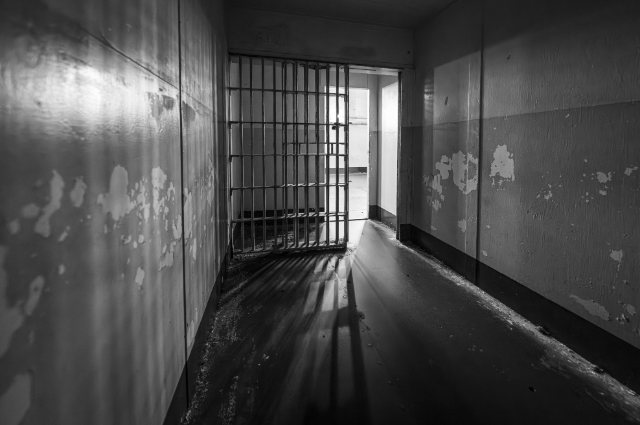
In the broader context of India’s legal landscape, certain recurring tragedies have ceased to feel like anomalies. Instead, they appear as the predictable, grim outcome of a fraying social contract. Recent events in Pune—characterised by a string of offenses committed by individuals who have repeatedly slipped through the fingers of the justice system—have sparked an urgent conversation regarding the dangerous equilibrium between judicial discretion and societal safety. When news reports reveal that a suspect is a repeat offender, it serves as a stinging rebuke to an institutional framework that consistently returns known threats to the streets, choosing to ignore the neon-red warning signs embedded in a perpetrator’s record.
The Predictability of Recidivism
The phenomenon of recidivism is a staple of criminological study, yet in Pune, the abstract data has transformed into a visceral, public terror. By granting bail to individuals with well-documented histories of predatory behavior, the legal system inadvertently elevates the procedural "rights" of the accused above the foundational human right of the citizenry to exist in safety.
Pune’s rapid expansion has clearly strained its administrative and judicial machinery. However, institutional bottlenecks cannot justify the failure to conduct robust risk assessments. The sequence is depressingly circular: an arrest is made, a temporary period of custody follows, and then comes a release that seems completely detached from the severity of the initial crime. When that individual inevitably strikes again, the ensuing public outrage is overshadowed by the haunting, logical question: Why were they ever allowed back into the community?
Beyond the "Cycle of Leniency"
The mechanism allowing repeat offenders to roam free is anchored in the constitutional principle of "bail, not jail." While this is essential to prevent state overreach and protect the presumption of innocence, it is being weaponized in cases of heinous, violent crime.
Too often, the courts treat a defendant’s criminal history as dry statistics rather than a behavioral prophecy. Decisions based on procedural technicalities—such as delayed charge sheets—ignore the grim sociological reality: habitual predators rarely reform of their own volition. By returning these individuals to their familiar habitats, the system essentially guarantees the staging of a second, far more traumatic, tragedy.
The Erosion of Faith
The psychological toll on Pune’s residents is reaching a breaking point. When the rule of law fails to function as a deterrent, trust in the judiciary evaporates, replaced by a sense of precarious helplessness. The current outcry in the city reflects a collective exhaustion; citizens feel that the legal apparatus is more concerned with the decorum of the courtroom than the survival of the innocent. This creates an dangerous vacuum that invites vigilantism and forces communities into self-imposed isolation, effectively curbing the freedoms of the very people the state is sworn to protect.
A Call for Structural Transformation
To break this cycle, the approach must shift from reactive to proactive:
- Integrated Behavioral Databases: Courts require real-time access to a comprehensive "dossier" of an offender’s history, moving beyond isolated case files to identify clear patterns of violence.
- Reforming Bail for Violent Crimes: For repeat offenders involved in sexual or grievous assault, the burden of proof for securing bail must rest on the defense demonstrating "extraordinary circumstances."
- Rigorous Post-Release Monitoring: The lack of a formalized probation or monitoring system for released offenders is a glaring gap that must be addressed immediately.
- Judicial Accountability: While judicial independence remains paramount, there must be a mechanism to review bail decisions that fly in the face of an offender’s documented history of brutality.
Prioritizing the Citizen
The notion that "he had done it before" should be a history lesson, not a recurring headline. Pune, as a center of intellect and growth, is the ideal crucible for this necessary paradigm shift. We must create a system that refuses to treat habitual criminality with the same lethargy afforded to first-time, minor offenses.
Justice is not merely a verdict delivered; it is the sustained, proactive protection of the innocent. If the rule of law is to regain its authority, it must stop prioritizing the comfort of the status quo over the lives of its citizens. A second chance for an offender should never, under any circumstances, be bought at the cost of a second victim.
References:
- National Crime Records Bureau (NCRB) – Crime in India Reports (For data on recidivism and criminal trends in India).
- Supreme Court of India – Guidelines on Bail and Sentencing (To understand the evolving legal standards regarding bail for repeat offenders).
- Vidhi Centre for Legal Policy (Provides research on systemic judicial reforms and criminal justice policy in India).
- Commonwealth Human Rights Initiative (CHRI) (Analysis on the impact of police and judicial failure on public rights).