
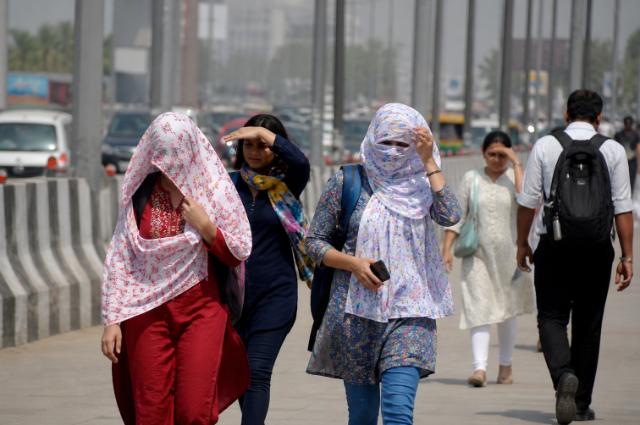
For generations, the global blueprint for "extreme heat" was etched into the golden dunes of the Arabian Peninsula. When we envisioned unbearable temperatures, our minds drifted to the sun-scorched plains of Iraq, the blistering deserts of Kuwait, or the shimmering coastlines of the UAE. But the geography of heat is being redrawn.
A chilling—or rather, sweltering—transformation is underway. Recent meteorological shifts indicate that the epicentre of the world’s thermal crisis has migrated. India has not only joined its Middle Eastern neighbours at the top of the mercury scale; it has, in many lethal respects, overtaken them. This isn't merely a record-breaking summer; it is a fundamental reconfiguration of the planet’s climate map, with profound implications for the survival of over a billion people.
Shattering the Shimmering Ceiling
The summer of 2024 served as a terrifying wake-up call. Weather monitors across Northern and Central India began flashing numbers that felt like typos. In the Delhi suburb of Mungeshpur, a sensor recorded an eye-watering 52.9°C (127.2°F). Even as experts debated the precision of that specific reading, the surrounding region remained locked in a 50°C (122°F) vice.
To put this in context: India is now matching the peak intensities of Basra and Kuwait City—traditionally the hottest inhabited places on the planet. However, a raw temperature reading only tells half the story. The true danger lies in a phenomenon that makes India’s heat far more treacherous than the dry furnace of the Middle East: the "Wet-Bulb" effect.
The Invisible Killer: Why Humidity Changes Everything
In the deserts of the Gulf, the heat is often "dry." While brutal, dry heat allows the human body’s natural cooling mechanism—sweat—to evaporate, pulling heat away from the skin.
India’s geography creates a more sinister cocktail. Across the vast Indo-Gangetic plains and the humid coastlines, soaring temperatures collide with heavy moisture. This brings us to the "Wet-Bulb Temperature"—a measure of the body’s ability to cool itself. Scientists warn that at a wet-bulb temperature of 35°C (95°F), the human "radiator" fails. In these conditions, sweat purely clings to the skin rather than evaporating. Even a perfectly healthy individual, resting in the shade with ample water, will eventually suffer organ failure.
While the Middle East might see higher raw numbers, India’s "thermal feel" is becoming more lethal. A 45°C day in a humid Indian city can be significantly more life-threatening than a 52°C day in the dry Sahara. India is now frequently brushing against the absolute limits of human survivability.
The Architects of the Inferno
How did India "steal" the title of the world’s furnace? It is the result of a "perfect storm" of environmental and man-made factors:
- The Concrete Pressure Cooker: India is urbanising at a breakneck pace. Natural sponges—forests, wetlands, and parks—have been paved over with heat-absorbent asphalt and concrete. This creates "Urban Heat Islands," trapping warmth and keeping cities up to 10 degrees hotter than the countryside. Unlike Dubai, which was designed for the heat, many Indian cities are trying to survive 21st-century temperatures with 19th-century infrastructure.
- The Climate Multiplier: While the El Niño cycle has added fuel to the fire, human-driven carbon emissions are the primary driver. Research shows that modern Indian heatwaves are 30 times more likely today than in the pre-industrial era. The high-pressure "heat domes" that once sat over the Middle East are now expanding their territory, anchoring themselves over South Asia.
- The Thar Desert "Bellows": Changing atmospheric currents are acting like a bellows, blowing scorching air from the Thar Desert and the Middle East toward the heart of India. These winds become trapped against the wall of the Himalayas, creating a "pressure cooker" effect across the northern plains.
The Cost of a Warming Giant
The Middle East, bolstered by oil wealth, has built a society shielded by universal air conditioning and shifted work hours. India, conversely, is an outdoor economy.
- The Productivity Crisis: Millions of Indian citizens—labourers, farmers, and street vendors—earn their living under the open sky. When the mercury crosses 45°C, work becomes a death sentence. The International Labour Organisation (ILO) predicts India could lose the equivalent of 34 million jobs by the end of the decade due to heat stress alone.
- A Global Breadbasket at Risk: As the world's second-largest wheat producer, India’s climate affects global plates. Extreme "terminal heat" is now shrivelling crops before they can be harvested, forcing export bans and destabilising international food prices.
- The Power Grid Paradox: As the nation rushes to plug in air conditioners, the electrical grid is screaming under the strain. Frequent blackouts leave the most impoverished citizens without even a fan to circulate the stifling air, turning homes into ovens.
The Path to Cooling a Nation
India is fighting back, but "Band-Aid" fixes won't suffice. While over 23 states have launched Heat Action Plans (HAPs) to provide early warnings and public cooling stations, systemic change is required.
The roadmap for survival includes:
- Reflective Infrastructure: Widespread adoption of "cool roofs" using specialised paints to bounce sunlight back into space.
- Urban Re-greening: A massive effort to bring forests back into the heart of concrete jungles to break the heat island effect.
- Clean Energy Cooling: Transitioning to solar and renewable energy so that the very act of cooling our homes doesn't further cook the planet.
India’s unwanted ascent to the "hottest region on Earth" is a sobering milestone. It proves that the climate crisis isn't a distant finish line—it’s a marathon we are already losing. As the sun grows more aggressive, India has become the world’s living laboratory for climate adaptation. The lessons learned under the Indian sun today will dictate how the rest of the world survives the heat of tomorrow.
Sources and Insightful Reads:
- India Meteorological Department (IMD): Official Climate Records
- World Weather Attribution: Climate Change and South Asian Heat Analysis
- The Lancet Planetary Health: Heat Exposure and Mortality in India
- World Meteorological Organisation (WMO): The State of the Global Climate
- International Labour Organisation (ILO): Working on a Warmer Planet Report