
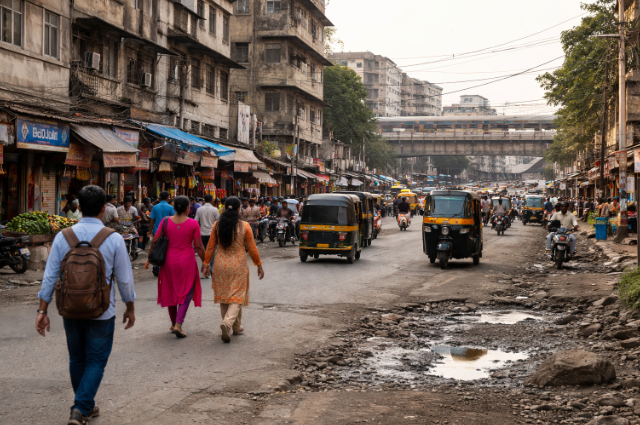
For the people of Kalyan and Dombivli, getting to Mumbai has long been a daily battle. In recent years, however, the real fight has moved from crowded local‑train platforms to the halls of the municipal corporation. The upcoming Kalyan‑Dombivli Municipal Corporation (KDMC) elections – slated for 2026 – are shaping up to be more than a routine local vote. They have become a test of whether a democracy that many feel has been “killed” by endless delays, party‑hopping and a complacent bureaucracy can be revived.
“Murder of Mandate” – what it really means
The phrase “murder of mandate” is used by locals to describe a situation where the people’s right to choose their representatives is literally erased. The last elected KDMC body finished its term in 2020, and since then, the city has been run by an appointed administrator. For more than five years, one of Maharashtra’s most densely populated urban areas has been without any elected voice in the council.
The long pause: rule by an administrator
In November 2020, a Municipal Commissioner was appointed as administrator, a move initially justified by the COVID-19 emergency. Yet, the election has been postponed repeatedly, officially due to disputes over ward boundaries and OBC reservation quotas. The result? No ballot, no elected corporators, and a growing sense that the electorate has been sidelined.
A concrete example: the “27 villages” dispute
The status of the so‑called “27 villages” has repeatedly ignited protests. These localities were added to, then removed from, the municipal limits, and later only partially reinstated. In 2023‑24, villagers took to the streets, complaining that they pay taxes to KDMC but see no roads, streetlights or drainage work. Because there is no ward representative for them, their grievances have nowhere to go.
When a mandate is postponed indefinitely, the power of the vote is neutralised. Bureaucrats, unlike elected politicians, do not answer to the electorate every five years, creating a gap between city planning and the actual needs of residents.
The political split: whose mandate is it now?
The 2026 election will be the first municipal contest after Maharashtra’s political landscape fractured. The 2022 split of Shiv Sena and the 2023 division of the NCP have turned Kalyan‑Dombivli into a testing ground for new alliances.
Kalyan is the stronghold of the Shinde family – Dr Shrikant Shinde (MP) and his father, Chief Minister Eknath Shinde. Voters traditionally identified with the “Bow and Arrow” symbol, assuming it stood for a clear ideology.
When the party fractured, dozens of sitting corporators jumped from the Uddhav Thackeray camp to the Shinde camp overnight.
Real‑world incident – July 2022 mass defection
Almost 80 % of former Shiv Sena corporators in the city switched allegiance to the Shinde faction after Eknath Shinde’s rebellion. Voters who had elected these officials on a “Thackeray” platform suddenly found themselves represented by a different political family. Critics call the 2026 poll a “post‑mortem” of the original mandate.
Ward delimitation – redrawing the will of the people
Before any vote is cast, the very shape of that vote can be altered through ward delimitation. In the run‑up to 2026, the number and borders of wards have been changed several times:
- MVA government (Uddhav Thackeray) – increased the total number of wards.
- Mahayuti government (Eknath Shinde‑BJP) – rolled the changes back to the 2017 map.
- Supreme Court – intervened after petitions, staying the latest delimitation order.
These constant shifts are a classic gerrymandering tactic: weaken opposition strongholds and create confusion among voters who can no longer identify their “local” leader.
Infrastructure suffers while parties fight.
While politicians argue over symbols and boundaries, everyday citizens pay the price in crumbling infrastructure.
- Pothole nightmare – Every monsoon turns Kalyan‑Dombivli’s main roads into pits, causing several fatal accidents in 2023. Without an elected council to hold the engineering department accountable, funds earmarked for a “Smart City” project appear to vanish.
- Patripul bridge delay – The long‑awaited bridge in Kalyan dragged on for years, choking traffic. Residents argue that an active municipal opposition could have turned the delay into a political liability for the ruling side.
Grassroots protest – “Pothole Photo Contest”
Citizens, together with members of the Maharashtra Navnirman Sena (MNS), launched a social‑media campaign where people posted pictures of potholes. The stunt highlighted how, without elected corporators, there is no official avenue to demand repairs.
Who will contest the 2026 battle?
| Party//Group | What do they claim? | Main Goal For 2026 |
| Shinde Sena | "We own the ground reality of Kalayan." | Consolidate power in the twin cities |
| UBT (Uddhav Balasaheb Thackeray) | “Emotional reclamation and survival” | Re‑establish the original Shiv Sena base |
| BJP | “Expand our urban footprint” | Capture more wards in the municipal map |
| MNS | "Marathi Manoos frustration” | Leverage anti‑establishment sentiment |
What do the people really want?
Kalyan‑Dombivli residents are no longer satisfied with vague promises of “development.” They demand genuine representation. The “murder of mandate” is not merely the postponement of an election; it reflects a deeper conviction that the voters’ choice has been pushed to the back seat while political elites protect their own interests.
Final thought
As 2026 draws near, the streets of Kalyan and Dombivli will once again be draped in banners of saffron, blue and green. Beneath the colourful display, however, a wary electorate will be watching closely. To truly end the “Murder of Mandate,” the upcoming vote must do more than swap faces; it must restore the principle that a city belongs to its people, not to appointed administrators or opportunistic party switch‑overs. Only then can the twin cities finally breathe freely again.
Suggested reading
The Indian Express – analysis of Maharashtra’s delayed local‑body polls and OBC‑quota legal battles.
Hindustan Times – coverage of the “27 villages” dispute and its impact on KDMC’s revenue.
Maharashtra Times (Marathi) – detailed look at shifting corporator loyalties in Kalyan‑Dombivli.
Association for Democratic Reforms (ADR) – financial and criminal profiles of past KDMC corporators.
Source
- LiveLaw – “Maharashtra Local Body Elections: Supreme Court stays ward delimitation.”
- Times of India – “KDMC citizens protest road conditions through unique social media campaigns.”
- The Hindu – “Villagers in Kalyan‑Dombivli protest lack of basic amenities.”
- Free Press Journal – “Former KDMC corporators join Eknath Shinde camp.”