
For decades, the political discourse in Maharashtra has been deeply intertwined with the preservation and promotion of Marathi identity. The rallying cry of "Marathi Asmita" (Marathi pride) has been the cornerstone of numerous electoral campaigns, promising to protect the language, culture, and the state's educational foundations. However, a jarring reality has recently come to light—one that has prompted the Bombay High Court to step in and question the state’s commitment to its own linguistic heartland.
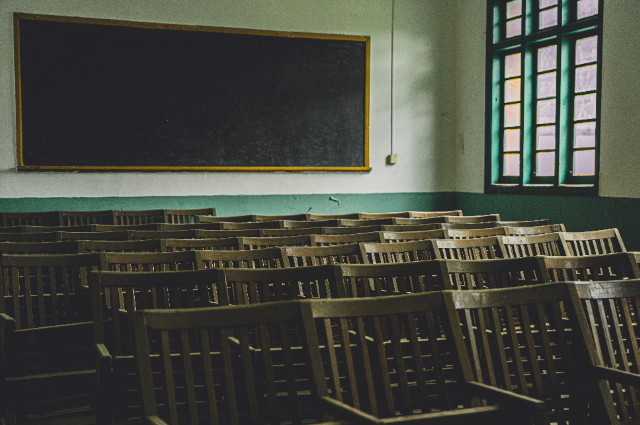
In a move that has sparked widespread public outcry and legal scrutiny, the Maharashtra government’s decision to "rationalise" or close down hundreds of Zilla Parishad (ZP) schools—many of which are Marathi-medium institutions—has created a paradox that is hard to ignore. Citizens who voted for the protection of their cultural heritage now find themselves watching as the very institutions meant to nurture that heritage are shuttered.
The Paradox of Policy
The rationale provided by the state authorities for closing these schools—mostly located in remote, rural, or tribal areas—is centred on the "low student-teacher ratio." The government argues that schools with fewer than 20 students are economically unviable and that students should be "consolidated" into larger, supposedly better-equipped schools.
On paper, this sounds like administrative efficiency. In practice, however, it is a death knell for the Marathi-medium primary education system. When a village school closes, the distance to the next available school often becomes prohibitive. For young children in rural Maharashtra, this doesn't just mean a longer commute; it results in a higher dropout rate and a slow, systematic erosion of the foundation of Marathi literacy in the next generation.
The High Court’s Stance
The Bombay High Court’s recent intervention serves as a necessary reality check for the state. Judges have repeatedly questioned the government on the logic of consolidating schools without first ensuring safe, accessible transportation and quality infrastructure at the "receiving" schools.
The Court’s scepticism underscores a crucial point: education is a fundamental right, and the state cannot use the guise of "efficiency" to undermine the educational rights of the rural poor. By closing Marathi schools, the state is effectively creating a tiered system where quality education becomes an urban luxury, while rural children are left to navigate the consequences of a hollowed-out public education system.
The judiciary’s stance highlights a blatant contradiction: how can a state claim to be the vanguard of "Marathi Pride" while simultaneously dismantling the primary infrastructure that teaches the language to its most vulnerable citizens?
The Erosion of "Marathi Asmita"
The term "Marathi Asmita" has historically been used to command pride, unity, and a sense of belonging. Yet, the current trend of school closures suggests that for the political establishment, this pride has become a performative tool rather than a developmental mandate.
If Marathi is to remain a vibrant, living language, it must find its strength in the classroom. When Zilla Parishad schools—the bedrock of rural education—are closed, the state is not just cutting costs; it is signaling to the rural population that their linguistic and cultural future is an expendable commodity. This is a betrayal of the democratic trust placed by the voters who championed the cause of the state’s regional identity.
A Way Forward
To rectify this, the Maharashtra government must pivot from a policy of "consolidation" to one of "revitalisation." Instead of shuttering schools, the state should focus on:
- Bridging the Resource Gap: Investing in ZP schools to make them competitive with private alternatives.
- Community Engagement: Involving local bodies in the management of schools to ensure they remain relevant to the specific needs of the village.
- Prioritising Access: Recognizing that in rural geography, the "school-to-student" ratio cannot be treated with the same cold, urban accounting used in corporate settings.
The Bombay High Court has sounded the warning. It is now up to the citizens and policymakers to demand a policy shift. If Maharashtra truly stands for Marathi pride, it must ensure that the light of education continues to burn in every village, in every classroom, and in every Marathi-medium school. Anything less is not just administrative failure—it is a surrender of the very identity the state claims to uphold.
References
- The Indian Express: Bombay HC on school closures - Reports on the court's intervention regarding the closure of schools with low attendance.
- Scroll. In: The Crisis of Rural Education in Maharashtra - An in-depth look at how the government's consolidation policy affects rural students.
- The Hindu: Maharashtra School Merger Controversy - Details on the government’s stance and the subsequent public opposition.
- Pratidhwani (Marathi Perspective): Marathi Shalaonchi Durdasha - Loksatta offers consistent coverage on the implications of school closures for the preservation of the Marathi language.
- Right to Education (RTE) Act: Official Portal - Reference for the legal provisions concerning the distance and availability of primary schools in rural areas.