
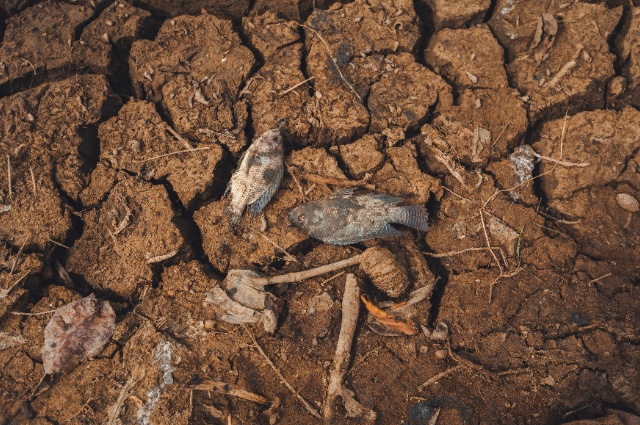
India is still struggling with a serious water crisis by early 2026, which has resulted in its ranking of 120th among 122 nations on the Global Water Quality Index. This miserable ranking, commonly dubbed the "120th Seal," is a clear indication of the total failure to handle the country's most important resource. The authorities have now confessed that around 70% of the freshwater sources in the country are polluted. The crisis status has changed from a mere problem of infrastructure to a public health and environmental catastrophe.
The Magnitude of the Crisis
The NITI Aayog's "Composite Water Management Index" was one of the factors behind the ranking, and it proved a very shocking situation: nearly 600 million Indians, or taking them together, nearly half the entire population, are getting extreme to very high water stress.
In India, the absence of potable water has a catastrophic effect on public health, causing an estimated 200,000 deaths annually. Besides, the horrible situation with water-borne diseases is somehow still recognised through the huge number of 20.98 crore cases of cholera, typhoid, and viral hepatitis that have been registered from 2005 up to 2022. The situation is further aggravated by the fact that the average water availability per person has dropped to about 1,100 cubic meters, which brings the country almost to the threshold of 1,000 cubic meters, where water scarcity is already critical.
Why India Slipped: The Pillars of Failure
India's fall from grace in the global rankings is due to a combination of factors such as the mismanagement of decades, uncontrolled urbanisation, and the lack of proper institutions.
Systemic Pollution and Contamination
The very first and most important reason for low ranking is the pollution that comes from different sources and is present in both surface and groundwater in the country.
The Infrastructure Gap & "Software" Failure
Even though the Jal Jeevan Mission and similar large-scale ventures have completely transformed rural tap water supply to more than 75% by the year 2025, the standard of water supplied is still not uniform.
In metropolitan areas, drinking water purity is frequently undermined during the critical "journey to the tap" process, and this problem is clearly illustrated by the ageing infrastructure. A city like Indore, which is famous for its cleanliness, even faced a catastrophic outbreak in late 2025 when sewage got into the city's water lines due to the breakdown of systems and a lack of coordination between the agencies. The issue is further aggravated by the lack of independent oversight since the municipal bodies often play multiple roles – they are service providers, quality testers, and regulators of their own performance. The practice of self-regulation brings about a large deficiency in transparency and accountability, thereby subjecting the public to the risks posed by such failures.
Over-extraction and agricultural mismanagement
India, with its heavy reliance on groundwater, is the largest user globally, using more than 25% of the total amount of groundwater.
India's agricultural sector is crucial, but at the same time, its water consumption is a big problem. Agriculture accounts for a huge 85% of the country's total freshwater use, and unfortunately, the greater part of it is wasted due to poor methods, such as flood irrigation. To make it worse, the government usually supports the growing of these water-demanding crops, such as paddy and sugarcane, in areas like Punjab and Maharashtra still dealing with water shortage. The discrepancy between the choice of crop and water supply in the region is making it harder for our already drained aquifers.
Climate Change and Environmental Degradation
The unpredictable monsoon rains and the glaciers in the Himalayas melting are factors that increasingly render the water supply unreliable. Over the past thirty years, climate change has resulted in northern and central India receiving reduced rainfall of almost 20%. Urban heat islands, meanwhile, add to the problem by increasing local scarcity.
The Economic and Social Cost
The water crisis is not only a matter of health but also a hindrance to the national economy. It is believed that every year, contaminated water is responsible for the loss of about 73 million working days. Water scarcity, if not dealt with properly, could result in a 6% decline in India’s GDP by 2050.
The Path Forward: Breaking the Seal
The year 2026 will see India, according to experts, change from "counting pipes" to "guaranteeing safety".
In order to achieve better water management, the adoption of a few important measures is necessary. The first measure is the creation of separate regulatory bodies, which will take care of the service provision and the quality assessment, thus leading to fairer evaluations. The second measure is the modernisation of infrastructure by making shared, digital maps of the underground utilities, which is necessary for avoiding pipe damage during construction activities. The third measure is the acceptance of decentralization where the practice of restoring aquifers through the weight of nature rather than through the impact of big dams will be the sustainability of elements like stepwells and ponds, which are revivable traditional water harvesting systems.
India's rank of 120th is a blatant indication of the country's ecological state. If there is no radical change in the whole process of handling water in terms of its value, its monitoring, and its conservation, the "120th Seal" could be a constant part of the country's environmental identity.
Reference websites
- NITI Aayog: Composite Water Management Index (CWMI)
- The CSR Universe: India’s Water Quality Challenge 2025-26
- Yale University: Environmental Performance Index (EPI) 2024
- Drishti IAS: Water Crisis in India – Policy & Reality
- GK Today: Why Unsafe Drinking Water Remains a Public Health Emergency
- World Bank: South Asia Water Initiative (SAWI)