
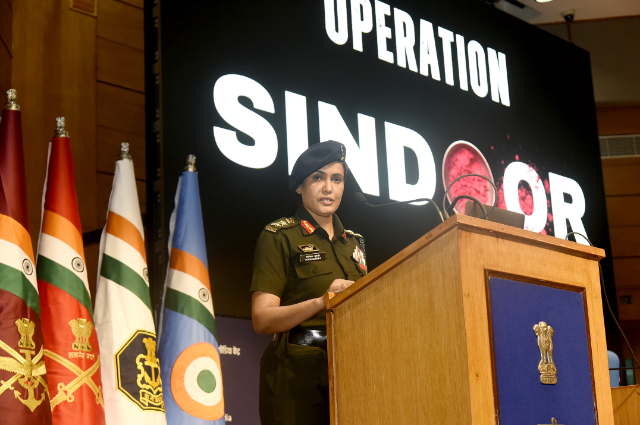
When India responded to a calculated act of aggression with a demonstration of surgical precision and tactical restraint, the nation’s security apparatus signalled a shift that resonated far beyond the borders of conflict. At the epicentre of the post-operation briefings stood two women—Wing Commander Vyomika Singh and Colonel Sofiya Qureshi—whose presence at the podium fundamentally altered the public narrative regarding India's defenders. They were not mere symbols of progress; they were active, indispensable participants whose careers had converged at a moment of historical gravity.
Operation Sindoor served as a watershed moment for the inclusion of women in the Indian armed forces. By placing female officers at the forefront of the mission’s public communication, the military showcased the reality of its modern operational structure: a force where expertise, accountability, and the weight of national security are shared equally, regardless of gender.
Destiny in the Clouds: Wing Commander Vyomika Singh
The journey of Wing Commander Vyomika Singh is often described as a prophecy fulfilled. Her name, which translates to "daughter of the sky," became a poignant metaphor for her professional ascent. Long before she found herself briefing the media on the nuances of a high-stakes military operation, she was carving out a career within the unforgiving environment of the Indian Air Force.
As a helicopter pilot, Vyomika operates in a domain defined by split-second decisions and intense physical demands. During the planning and execution phases of Operation Sindoor, her role extended beyond the cockpit into the complex machinery of mission support. Her participation wasn't an anomaly; it was the result of years of institutional integration that has seen female aviators take on increasingly central roles in surveillance, strike support, and logistical manoeuvres. The acknowledgement by senior government officials, including Defence Minister Rajnath Singh, that women were pivotally involved in the mission’s effectiveness, served to validate the systemic changes that have allowed officers like Vyomika to reach the zenith of their profession.
The Voice of Command: Colonel Sofiya Qureshi
While the pilots captured the imagination of the public, the seamless cooperation between the Army and the Air Force relied heavily on the expertise of officers like Colonel Sofiya Qureshi. A stalwart of the Corps of Signals, Colonel Qureshi represents the unsung backbone of military action: the ability to coordinate, communicate, and command under extreme duress.
Her presence alongside Wing Commander Singh during the media briefings was a calculated strategic choice. It signalled that in modern warfare, the ability to articulate mission objectives and manage the flow of information is as critical as the kinetic strike itself. By selecting women to represent the military at the highest level of national discourse, the Indian armed forces normalised female leadership in security affairs, moving the conversation away from "tokenism" and toward a recognition of professional competence.
The Invisible Infrastructure: Operational Roles
While the public saw the podium, the true scope of female contributions to Operation Sindoor occurred behind the scenes. Contemporary reports suggest that women were embedded across the entire tactical chain. In mission control rooms, female intelligence analysts pored over satellite imagery to verify targets; in electronic warfare units, they navigated complex signal environments; and in strike-support formations, they ensured that the path for combat assets remained clear.
This integration is vital for the success of precision operations. Modern aerial and ground missions require a multi-layered approach to minimise collateral damage and ensure the neutralisation of terrorist infrastructure. By successfully incorporating women into these specialized nodes, the Indian military proved that gender integration is not just a social imperative but a requirement for operational excellence and strategic flexibility.
A New Era of Nari Shakti
The term Nari Shakti (Women’s Power) is often invoked in Indian political discourse, but during Operation Sindoor, it moved from the abstract to the empirical. For young women across the country, the sight of Vyomika Singh and Sofiya Qureshi speaking with authority about national defence offered a tangible, viable career roadmap. They demonstrated that the highest levels of state-level action are accessible to those who possess the requisite discipline and expertise.
Culturally, this period has accelerated the acceptance of women as guardians of the nation. It dismantled the lingering, outdated perception of the military as an exclusively male enclave, showing that when the security of the country is at stake, the only metrics that matter are skill, courage, and dedication to the mission.
The Integrated Chain of Command
To understand the success of the mission, one must visualise the squadron cycle: the technicians—male and female—meticulously inspecting sensors; mission planners calculating egress routes; and analysts confirming the legality of targets. Every segment of this chain is vital. The precision with which Operation Sindoor was carried out suggests that these integrated teams—where male and female officers operate shoulder-to-shoulder—are functioning at a high level of efficiency. When leadership acknowledges this contribution, it institutionalises the culture of equality, ensuring that the next generation of officers enters a force that views them through the lens of their capabilities rather than their gender.
References
- Ministry of Defence, Government of India: – For official statements regarding policy changes and mission briefings.
- Indian Air Force Official Portal:– Detailed insights into the career paths and operational roles of female aviators.
- The Indian Express (Defence Commentary): – Investigative reporting on the briefing procedures and the rise of female officers in strategic communication.
- IDSA (Institute for Defence Studies and Analyses): – Academic analysis of the tactical and strategic shift toward gender integration in the Indian security establishment.
- Press Information Bureau (PIB): – Archived press releases covering the official briefings and national reactions to operations involving female combatants.