
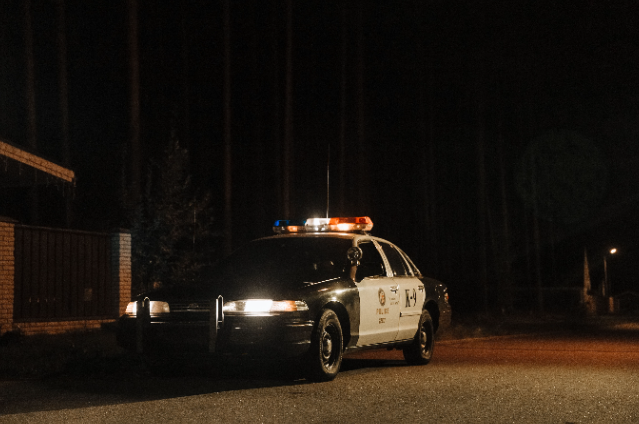
The arrest of a leading priest on charges of drunk driving and murder following a fatal accident involving a Temple Trust vehicle has shaken the foundation of faith in the religious community and sparked a nationwide debate on accountability. The incident, which happened on a country road, has sparked serious questions about the responsibilities imposed on religious leaders and the monitoring processes governing vehicles employed by religious establishments.
The Incident That Rocked a Community
The tragedy occurred one fateful evening when Father Michael Thompson, a well-known priest serving a congregation of over three hundred families, was travelling in a car belonging to the local Temple Trust. Preliminary police reports indicate the vehicle was returning from a charitable function during which the priest was representing the temple community. Eyewitnesses say the car was speeding before it hit another car at an intersection, killing the other driver, a thirty-four-year-old mother of two, instantly.
Officers who responded to the scene reported that when they arrived, Father Thompson was visibly intoxicated. Field sobriety tests confirmed their suspicions, and blood alcohol testing showed his blood alcohol concentration was nearly three times the legal limit. The priest was arrested at the scene and has now been formally charged with second-degree murder, drunken vehicular manslaughter and a series of traffic offences.
Legal Proceedings and Serious Implications
The legal implications of this event are much more than the usual drunk driving cases. The prosecutors stress the case is especially heinous because an innocent civilian lost his life, and the priest was a moral authority figure in the community. “When someone who regularly preaches virtue and righteousness drinks and drives and kills another person, it is a profound betrayal of public trust,” the district attorney said at a recent press conference.
On these charges, Father Thompson could be sentenced to a minimum of fifteen years on the murder charge alone, with the possibility of additional consecutive sentences for the other charges. The Temple Trust vehicle adds another layer of complexity, raising questions about whether the temple’s insurance will cover the incident and whether trust board members could be scrutinised for allowing the priest access to the vehicle despite possibly knowing about previous concerns about his behaviour.
Community Response And A Faith Crisis
The local community is plunged into a state of profound grief and confusion. Parishioners who knew both the victim and the accused have had trouble reconciling the image of a respected religious leader with the actions attributed to him. The victim’s family asked for privacy as they grieve, but their lawyer issued a statement asserting that no amount of spiritual leadership can justify the taking of an innocent life.
Meanwhile, the temple's governing council has convened emergency sessions to address the incident and its implications for institutional governance. Questions have emerged about oversight protocols for temple vehicles, particularly regarding whether there should be stricter policies preventing clergy from operating trust property after consuming alcohol. Some congregation members have called for comprehensive reforms to temple operations, while others have advocated for compassion and forgiveness in line with their spiritual teachings.
The incident has also prompted broader discussions within religious communities across the country. Religious ethics scholars note that this case highlights the need for religious institutions to establish clear codes of conduct that apply equally to leaders and followers. "Religious authority does not grant immunity from civil responsibility or moral accountability," remarked Dr Sarah Jennings, a professor of religious ethics at a major university. "In fact, those who claim spiritual leadership should be held to higher standards, not lower ones."
Meanwhile, the temple governing council has convened emergency sessions to address the incident and also its implications for institutional governance, kind of like on a tight schedule. Questions have emerged about oversight protocols for temple vehicles, more specifically, whether there should be stricter policies meant to keep clergy from operating trust property after consuming alcohol. Some congregation members have pushed for comprehensive reforms to temple operations, while others have leaned toward compassion and forgiveness in step with their spiritual teachings, even if it complicates the discussion.
The incident has also stirred broader conversations within religious communities across the country. Religious ethics scholars say this case basically underscores the need for religious institutions to set out clear codes of conduct that apply equally to leaders and followers. “Religious authority does not grant immunity from civil responsibility or moral accountability,” Dr Sarah Jennings said, a professor of religious ethics at a major university. “In fact, those who claim spiritual leadership should be held to higher standards, not lower ones.”
The Broader Context of Religious Accountability
This incident is happening within a wider context of increasing scrutiny aimed at religious institutions and their leaders. Across different faith traditions, there have been multiple cases where religious figures ended up facing legal consequences for actions that, frankly, contradict their own moral teachings . The Temple Trust vehicle angle of this case adds another layer, raising questions about the legal status of religious institutions and what they are responsible for when vehicles are provided to their leaders.
Religious institutions usually operate under specific legal frameworks that grant them certain protections and privileges. But yeah, vehicles owned by religious trusts pretty much end up under the same traffic rules, and liability standards as basically any other kind of vehicle, too. Still, the fact that this particular vehicle was being used for what looks like official temple business at the time of the accident could end up mattering a lot for criminal proceedings and also for possible civil lawsuits.
Institutional reforms… or at least that’s what folks are talking about
After the incident, several religious organisations have started looking back at their own vehicle usage rules. Several major denominations have put out statements stressing the need for clear boundaries between religious leadership and the privileges that can come attached to those roles. Some groups are also considering mandatory insurance for religious officials who operate institutionally owned vehicles, along with random testing procedures aimed at verifying compliance with safety standards.
And honestly, the tragedy has opened up conversations that go beyond driving policies, like mental health, and what support systems are actually available for religious leaders. Many clergy experience heavy pressure to keep up appearances and stick to exhausting schedules, and that can sometimes feed stress-related behaviours. This does not in any way excuse what happened or the actions that led to the fatality. But some commentators have still pointed out that religious institutions should create healthier channels for handling the demands placed on their leaders.
A Reminder of Personal Responsibility
In the end, this situation is a really blunt reminder that personal responsibility can’t just be passed along or ignored, no matter where you sit inside a religious community. Father Thompson’s alleged actions have, in a way that can’t really be undone, changed multiple lives, the life of the victim and her family, the day-to-day rhythm of his congregation, and even the wider discussion about religious accountability. And as the legal process keeps moving, it might end up being used as a kind of reference for later conversations about where religious power meets civic duty.
Also, the memory of the victim should stay as a lasting testament to the true fallout from choices made behind the wheel. None of the sermon, prayer, or ritual can reverse what drunk driving has already done. And no collar, cassock, or title offers any sort of shield from the law. As the community tries to live through the aftermath of this tragedy, the hope is still there that real reforms and straightforward self-reflection can stop other, similar loss of life in the future.