
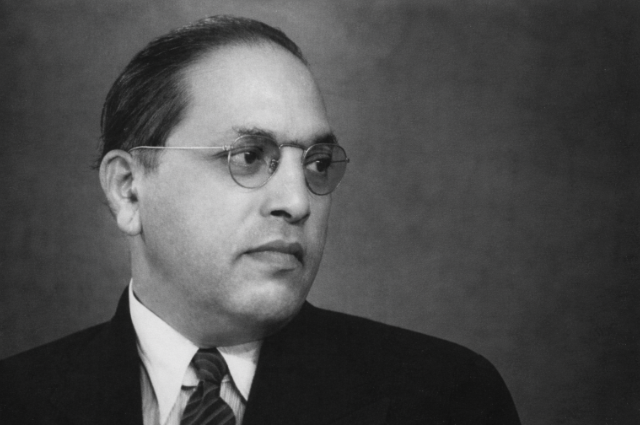
One of the most amazing intellectual journeys in contemporary political history is Dr B. R. Ambedkar's contribution to the creation of the Indian Constitution. He is now widely regarded as the Chief Architect of the Indian Constitution. However, this position was neither politically guaranteed nor predetermined. Ambedkar entered the Constituent Assembly primarily as a representative of the Scheduled Castes, determined to obtain protections for historically oppressed populations, rather than as a consensual leader or nationalist symbol. His remarkable legal intelligence, moral clarity, and unwavering dedication to constitutional democracy drove his transition from a sectional advocate to a national architect.
Ambedkar's involvement in the Constituent Assembly was anything but simple. He was not a prominent member of the Indian National Congress, which dominated the Assembly. In actuality, Ambedkar had been an outspoken opponent of Congress leadership, especially Mahatma Gandhi, on matters pertaining to caste, Dalit representation, and political rights. He had previously clashed with mainstream nationalist politics on his proposal for distinct electorates for the Depressed Classes. Ambedkar first lost the Bombay Constituent Assembly election. He was only nominated to the Assembly thanks to the intervention of Bengali leaders. The irony of his subsequent prominence is highlighted by this marginal start: a man who had difficulty gaining admission to the Assembly would go on to form its intellectual core.
Ambedkar's original goal was very clear: to guarantee the Scheduled Castes constitutional protection through institutional processes, legal protections, and fundamental rights. But once discussions started, his role naturally grew. Ambedkar had exceptional academic qualifications, including doctorates from Columbia University and the London School of Economics, a thorough understanding of comparative constitutional law, and real-world legal experience. In addition to showing care for Dalits, his remarks during discussions demonstrated a deep comprehension of federalism, individual liberty, social justice, and the rule of law. Eventually, even his political foes realised that Ambedkar's skills were necessary to design a constitution of the highest calibre.
His nomination as Chairman of the Drafting Committee in August 1947, a choice motivated more by need than by political goodwill, was the result of this understanding. Ambedkar had a great deal of responsibility as Chairman of the Drafting Committee. He organised talks, defended controversial clauses, and converted impersonal principles into legally binding language. His legal genius consisted in striking a balance between a variety of interests, including tradition and modernity, authority and liberty, and unity and diversity.
Ambedkar eschewed mindless replication while drawing from a variety of constitutional models, such as those of the United States, Britain, Ireland, and Canada. Rather, he tailored international ideas to Indian conditions. Concerns about maintaining national unity in the wake of Partition were evident in his insistence on a powerful central administration. At the same time, his support of constitutional remedies and fundamental rights guaranteed the accountability of state power.
Ambedkar encountered opposition along the way. Conservative members questioned the judiciary's broad authority, while others criticised clauses about equality and reservations. Instead of using rhetoric, Ambedkar countered with well-reasoned arguments. He emphasised time and time again that the Constitution was a flexible document that could be amended while remaining firmly rooted in justice and liberty.
Ambedkar continued to be politically isolated even though he was the Drafting Committee's intellectual leader. The limits of his acceptance in mainstream politics are reflected in his subsequent resignation as Law Minister due to the Hindu Code Bill's failure to pass. Despite these obstacles, his constitutional legacy persisted.
Ambedkar's remarkable journey from a marginalised caste champion to the key architect of India's Constitution symbolises the victory of reason over bigotry. It shows how knowledge, honesty, and dedication to justice can overcome political exclusion. He provided India a Constitution that aimed to balance freedom with equality and authority with accountability, making his contribution not just technical but also civilizational.
Ambedkar's pivotal involvement seems predictable in hindsight. However, history tells us that the country trusted him with its founding text due to his indisputable genius rather than political expediency. His story serves as a potent reminder that those who start at the periphery of democracy frequently alter it.
In retrospect, Ambedkar's crucial role seems obvious. But history reveals that the nation trusted him with its founding text because of his undeniable brilliance rather than for political reasons. His narrative is a powerful reminder that democracy is often altered by people who begin at its fringe.
Ambedkar's trip serves as an example of how intellectual excellence may temporarily upend long-standing hierarchies and compel a country to face its own moral inconsistencies. He turned his own experience of marginalisation into a universal framework of rights, protections, and social justice when he was tasked with drafting the Constitution. By doing this, he reinterpreted democracy as a hard-won tool for the oppressed to demand equality, citizenship, and dignity rather than as a gift from the powerful.
. . .
References: