
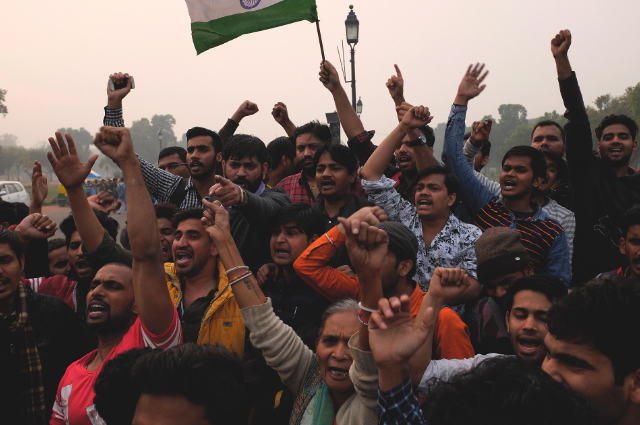
In the earlier part of January 2026, the Kalyan Dombivli Municipal Corporation elections led to a result that is both alarming and concerning. The Mahayuti Alliance won 20 seats without any opposition. What happened during the Kalyan Dombivli Municipal Corporation elections was not just an electoral issue but a quiet stop put on the democratic process. From the 122 seats in the municipal corporation, atleast 16% of them were given a result without even one vote being cast. The BJP acquired 14 seats while the Shiva Sena, led by Eknath Shinde, won 6 seats. These were not victories that were achieved through fair and open electoral methods, but instead through sudden withdrawals and disqualifications by the opposition.
Democracy doesn't just mean conducting elections, but having people have the choice to select their representative. In the KDMC Elections 2026, this choice was not given to people. The candidates from the opposition parties, Shiva Sena (UBT), MNS, Congress and both factions of NCP, either withdrew their name or their nominations were revoked by January 1. The timings of these withdrawals raise suspicion and questions. While officially, the process was said to be "within rules", anyone who believes in fair and open elections can't help but find the KDMC Elections troubling when procedures are misused to support specific parties instead of a fair and open process. Reports show that the nomination papers of the opposition were rejected over minor mistakes, while similar issues in the Mahayuti candidates' forms were ignored.
The magnitude of the coordinated withdrawals across wards and parties indicates that this was a controlled conclusion rather than a collection of haphazard choices. Money and power have always swayed elections in democracies, but this particular instance is particularly risky because the distortion took place before voting, making the electorate irrelevant.
The reaction of democratic institutions is arguably the episode's most troubling feature. According to the State Election Commission (SEC), the Municipal Commissioner must submit inquiry reports on any "duress, pressure, or allurement" before the SEC will legally certify all 20 unchallenged victors. A contradiction is revealed by this admission alone. Why were candidates declared elected at all if coercion is suspected? Democracy enters a grey area when institutions admit the possibility of wrongdoing but permit results to remain provisional, neither entirely violated nor genuinely protected. Democratic backsliding flourishes in these grey areas.
A basic constitutional question is brought up by the legal challenge currently before the Bombay High Court: Is it possible for voters to be excluded from voting just because there is only one candidate? Social activist Shrinivas Ghanekar contends that in order to give voters the choice of NOTA (None of the Above), elections must go forward even in single-candidate contests. The NOTA on EVMs affirms the citizen's right to reject choices that are forced; it is not only symbolic. Voters lose that privilege when a candidate is declared elected without conducting a poll. Although it may appear extreme, the Aam Aadmi Party's plan for a "virtual candidate," in which a NOTA victory would lead to reelections, is a reflection of growing democratic unease. Assuming consent instead of expressing it turns legitimacy into a legal fiction.
The 27 Villages Struggle Committee, which is calling for a separate municipality, called for a boycott, which made everything more problematic. The committee inadvertently enabled uncontested triumphs by declining to take part in or field candidates in multiple panels. This draws attention to yet another weakness in democratic politics: by withdrawing from protest, dominant forces are frequently strengthened. Boycotts create vacancies, not pressure, in politically divided environments. Consent becomes indistinguishable from the lack of contest.
The uncontested victory, according to Chief Minister Eknath Shinde, is a support for welfare programs and governance like Ladki Bahini. The results have been presented by BJP leaders as proof of rising popular trust. However, votes, not silence, are used to gauge confidence. It is participation, not clean areas, that creates a mandate. The transition from competitive democracy to managed democracy, where results are predetermined before voters even arrive at the voting station, is what Kalyan-Dombivli exposes. Elections still take place, but they are becoming more and more ritualistic, procedurally accurate, and substantively meaningless.
The democratic institutions that are closest to daily life are municipal corporations. They oversee public health, housing, roads, sanitation, and water. The damage is profound when democracy is undermined to this extent. Elections can only endure in form, not in spirit, if uncontested triumphs gained by coercion, financial gain, and administrative bias become commonplace. Kalyan-Dombivli issues a sobering caution. Votes burning in the open or tanks on the streets are not always signs that democracy is failing. Occasionally, it silently vanishes through rejections, withdrawals, and statements made in vacant spaces. The Netas might have prevailed in this election. However, the janata was never allowed to lose.
References
- https://reflections.live
- https://timesofindia.indiatimes.com
- https://indianexpress.com
- https://www.youtube.com