
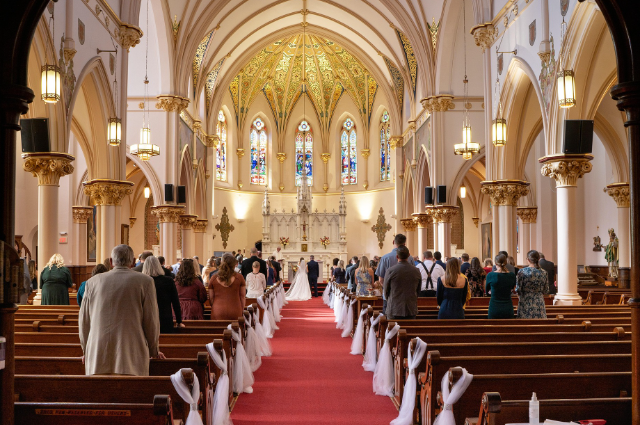
A wedding is one of the most visible and celebrated ceremonies social rituals across cultures, it consist of various ceremonies, vows, photographs and it is something that recognized by the court of law but at the same time, history and society disclose a contradictory truth which is that while a wedding maybe be real but the marriage that is the representation of is not,this difference captures what is known as lavender marriages.
Lavender marriages originated in the 1920s when studios like Universal and MGM brought into existence the morality clause, under which the actors’ contracts were made void if the actor was caught in a scandalous activity like homosexuality. Studios controlled the lives of their actors by organizing arrange marriages for them. Some prominent actors who had to go through this were Rudolph Valentino and Jean Acker, where the silent film heartthrob was forced to marry Jean Acker in 1919. Another such example is of the MGM actor, William Haines, who was given an ultimatum by Louis B.Mayer to end his relationship with his male partner, Jimmy Shields and to enter a marriage of convenience. Haines refused, which ended his career in the 1930s.
Lavender marriages are practised across cultures and countries. In China, there are two types of marriages: marital fraud and sham marriage or marriage of convenience. Marital fraud refers to marriages where one of the parties is closeted queer. Sham marriages refer to marriages whose parties are queer, and it is contracted to dodge societal pressures. The former is common for queers in rural areas, while the latter is common among urban queers and younger queers. Xinghun is a formal marriage. Xinghuns are undertaken by queer individuals who want to get rid of parents who are pressuring them. Earlier, gay men took heterosexual wives or Tongqi to keep their social image in conservative China. Xinghuns avoid the Tongqi situation as it is rewarding for everyone involved, a gay man, a lesbian and two sets of parents. These lavender marriages are convenience marriages where often between gay men and lesbians, which are driven by societal pressure to marry, family honour{Mianzi}, fulfilling filial duty and gaining legal or finanical duty as it allows people to be in same sex relationships. Chinese people believe in filial piety or xiao, which stems fropect, in Japan, thereism, it stressesrespect, obedienceKorea, years. on deep respect, obedience and care for one’s practisepparents. Years. arents. This tends to trap people in homosexual relationships tonot. -known XpractiseKorea, Southampton or Tongqi.
China also has a wellChinag-kpractisenownKorea:ayles, Chinese website called 2005. -knownwhichChinagayles,20% of which was founded in Xinghun. It facilitates xingh2005. couples. un. It is a platform for LGBTQ+ individuals to find partners for fake marriages,xinghun. delay delay delay, which helps them present a conventional image for their families while maintaining their sexual identities; thesemarriages,judgementidentities; thesemarriages, entities; these often come with terms about living arrangements and children.
In The marriages hide one partner’s sexual orientation orientthe USA, beardation, the USA, a gay man uses a woman as a “beard” to appear straight. orientation, orientation, ng originates from the early 20th century. straight. y, specifically, in Hollywoodcentury, specifically in Hollywood, where
Celebrities like Rock Hudson married Phyllis Gates to protect their careers due to the stigma.
In France, marriage blanc refers to sham marriages without any intention to live together and historically for sex, marriage blanc's sex, but now it is mainly for immigration benefitslike residency and citizenship.
In South Korea and Japan, there sex, sex, are fake marriage setups which are driven by social stigma over unmarried adults over the age of 30 years. Japan, thereJapan, thereJapan, thereIn South Korea, years. years. Korea, South Korea, 20% newly married people delay marriage registChinagayles, rations to avoid housing and loan fines for married couples. coupl2005. es. Japan has stronger family rules, which delay youth marriages due to poor employment. employment. employment. These fake marriage arrangements are xinghun. made to avoid social judgment on singles.
The concept of lavender marriages is coming back to the USthe US and the UK, but for a completely different reason: economics. Reason: economics. Gen ZGen Z is rebranding lavender marriages by describing platonic marriages between individuals of any gender, gender, and they enter the relationship with full transparency. transparency. The focus of the societyis companionship and financial benefits like shared rent and tax benefits.
This particularly arises from giving priority to friendships on the same level as romantic relationships.
This trend is emerging due to economic benefits, rejection of financial benefits, rejectionof traditional norms, focus on benefits, rejection of norms, focuson authenticity and boundaries and valuing friendship as a core connection.
Dating apps like Bumble also have the option of making friends norms, focusfriends, which shows the shift.
In 2020, Jay friends,2020, Jayand Krystie married after 10 years of friendship to co-parent, share 2020, Jayco-parent, sharefinances and build a relationship without romance. Ico-parent, shareromance. In the same year, another romance. year, anothercouple year, another couple of years, Dene Brown and Kema Barton in Ohio, decided to raise their children as siblings.
In China, seven Ohio, China, sevenfriends put together funds to buy a 580 China, sevenKK house to retire together.
TikTok videos like @psychottie’s normalise moving around the world with friends.
While things are better and society is becoming accepting, at normaliseaccepting, atthe same time, the accepting, attime, thesociety seeing marriage as a necessity highlights a deeper issue.
The stark division between wedding and marriage shows society’s fixation with appearances over being one’s true self. Time, theself. The society has a self. havean issue with anything that doesn’t fit into their ideas of the so-called normal.
Weddings are public performances that ensure families, communities, and institutions that thfamilies, communitiesthat thee social norms are followed. Wthat thefollowed. While marriage, on followed. marriage, onthe other hand, is marriage, onhand, issomething is mhand, issomething thateant to signify intimacy, companionship, and a shared life.Intimacy, companionshiplife. In lavender marriages, the life. Marriages, theperformance is given more importance than one’s personal truth. A marriage, thetruth. weddingtruth. A wedding is the ritual that tends to satisfy society, as individuals live hidden, secret lives.
In literature and film, lavendereyfilm, lavender marriages are used as symbols to show societal hypocrisy; they tend to expose how individuals are forced to fit into boxes that contradict their true selves. s. The idea that a marriage can be real without romantic love or desire raises unsettling questions: Is marriage something that can be explained through law, ritual, and public recognition or by emotional truth? ruth? It is also the question that this article also asks,, which is whether,, if the wedding is real but the marriage is not, it is that the society truly cares about commitment or conformity.
. . .
References: