
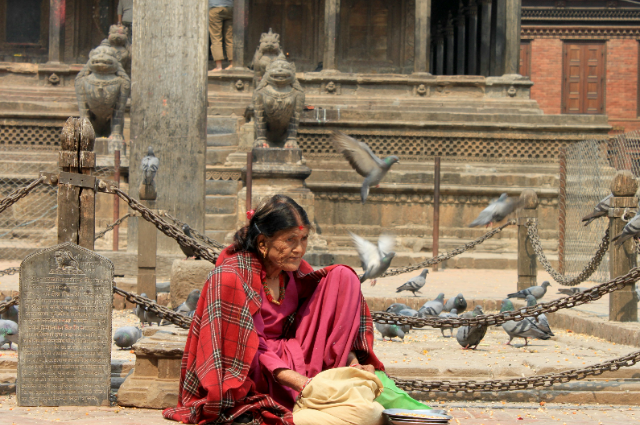
The jogini system is a disturbing example of how religion,patriarchy and caste intersect together to justify this lifelong exploitation.Under the jogini system,young girls who are mostly from dalit and marginalized communities are made to marry to a village deity and are ceremonially worshipped.What follows this isn’t a divine honour but a cycle of lifetime of social exclusion,sexual harassment and economic distress.The ritual starts with celebration.The child is dressed in new clothes,decorated with flowers and seen as sacred.The families are often pressured by priests,local elites etc ,they are told that marrying their daughter will bring them blessings and that not doing so would lead to misfortune.After the ceremony gets over,the girl child is denied education,marriage and is excluded from society and social belonging.After the girl child becomes a jogini,they are expected to provide sexual favours to upper-caste men in the village.This system normalizes exploitation.The same men that worships goddesses are the ones that sexually assault women.The jogini is given the divine status only for her to be oppressed.Religion is used as a means to hide exploitation.The caste hierarchy makes jogini socially powerless.Their bodies became sites where dominance is constantly asserted.Many jogins become victims of early pregnancies,STI and chronic health problems.With no social protection,the jogini and the children remain marginalized in the society as they remain trapped in cycles of poverty and stigma.The children of the joginis especially children are at risk of being forced into the same system.Once a jogini turns old,she is abandoned and is no longer “sexually attractive” to the men.Most of the abandoned jogini end up begging outside the same temples where they were made to marry god.This jogini system is highly prevalent in rural districts of Telangana which are Mahbubnagar and Nizamabad and Belagavi district of Karnataka.
Despite the jogini system being banned by laws like Devadasi(Prohibition of Dedication)Act but it still exists under the disguise of tradition.The enforcement remains weak and the rehabilitation programs are often underfunded and poorly implemented.The survivors who attempt to leave face social exclusion, struggle to find jobs and threats. Legal prohibition can’t alone deconstruct traditions assisted by culture and economic inequality.
The Jogini system is especially terrible because of how accepted it has grown in some communities. Destiny is used to justify exploitation. Devotion is used to cover up abuse. Girls are raised to believe that there is a spiritual reason for their suffering. Perhaps the most potent instrument of tyranny is this internalization of injustice. It is more difficult for victims to resist when they are trained to view their suffering as sacred.
However, things can change. By concentrating on awareness campaigns, economic empowerment, and education, grassroots organisations, activists, and survivor-led movements have started to challenge the system. Giving former joginis housing assistance, scholarships, and alternative sources of income aids in their life reconstruction. Importantly, it's critical to include men and community leaders in discussions on gender justice. Until society faces its own culpability, the system cannot be overthrown.
The Jogini system compels us to consider how societal institutions let exploitation to occur under the pretense of tradition on a larger scale. When laws are in place, yet justice does not reach those who need it most, it highlights the shortcomings of governance. Additionally, it brings up difficult issues of selective morality,the celebration of spirituality at the expense of human dignity.
"Worshipped once, used forever" sums up the Jogini system's brutality. A lifetime of vulnerability is sealed by a single ritual. What ought to have been safeguarding turns into an invitation to abuse. Such behaviours will remain hidden until education takes the place of superstition, equality takes the place of hierarchy, and accountability takes the place of silence.
The way society treats its most disadvantaged members is a better indicator of development than economic growth alone. More than only legislative changes are needed to end the Jogini system; a public moral awakening is also necessary. Every girl is entitled to a childhood, an education, and the autonomy to make her own decisions about her future. Anything less is injustice rather than tradition.
Since detrimental customs are frequently maintained through quiet and normalization, this moral awakening must start at the community level. Local authorities, educators, families, and religious leaders all have a part to play in dispelling myths that support exploitation in the name of religion. By teaching kids about gender equality, consent, and constitutional rights, schools may become potent places of change. The media must also go beyond sensational reporting and continuously showcase successful rehabilitation initiatives, systemic flaws, and victim experiences.
The necessity of long-term support networks for survivors is equally crucial. Without rehabilitation, rescue merely creates new vulnerabilities. To reconstruct their life with self-assurance and independence, former joginis need access to education, healthcare, psychological treatment, and respectable jobs. Legal assistance, self-help organisations, and economic empowerment initiatives can all help end the generational cycle that keeps families in poverty and disgrace.
. . .
References: