
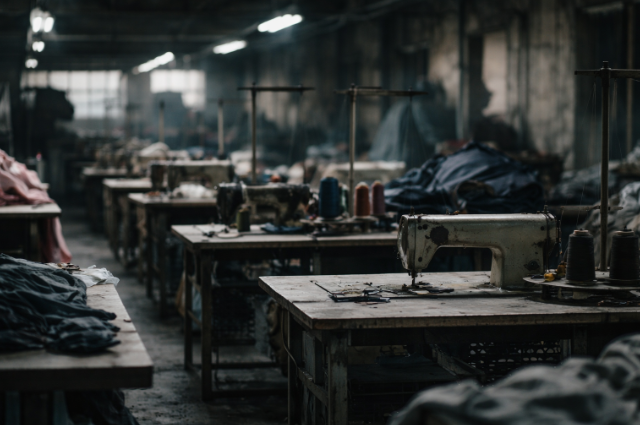
Visibility When It is a Performance.
In the modern global economy, child labour is both disapproved of and illegal and publicly denounced. Global companies put up codes of conduct, conduct social audits and publish sustainability reports reeking with sustainable production guarantees. This compliance architecture gives the impression that child labour is a diminishing issue, which is relegated to the periphery of the global market. However, there is much more to worry about than meets the eye below this (seemingly well-monitored) image. Children who are still millions of them work not where inspectors make inspections, but in areas that are specifically designed to be out of view.
Child labour in the twenty-first century did not go away, but it has been restructured. It has been displaced from controlled factory floors into the domestic, agricultural and informal workshop, and distant mining zones. These children are around not when inspectors enter, but are taught to conceal themselves by the system. This phenomenon, which is also known as invisible child labour, is not an incident of lax implementation. The result of the global production systems where low costs, speed and plausible deniability are rewarded is quite a foreseeable outcome.
The International Labour Organisation (ILO) reported that there are about 138 million children in the world who are forced into child labour as of 2024, with almost 54 million children working in hazardous labour. The numbers indicate a worldwide failure to achieve the internationally agreed system of ending child labour by 2025. More to the point, they reveal the constraints of the traditional methods of studying that revolve around the observable workplaces and do not take into account the underlying systems of production, where exploitation remains unaddressed.
Factory Floors to Fragmented Production Networks.
To comprehend the reason why child labour is so hard to get rid of, one has to move beyond a factory and consider how modern production has been structured. Products that are used in affluent markets are seldom manufactured in one place. Rather, the production is distributed in the form of networks of suppliers, subcontractors, intermediaries and informal workers. Whereas the export-based factories tend to be scrutinised and certified, most of the labour-intensive processes take place in other areas.
These marginalised production spaces consist of domestic workplaces, small farmland, artisanal mines, and informal processing factories. They are connected with global markets by the layers of mediators, but are not very connected with regulatory control. In such places, labour regulations are poorly upheld, records are very slim, and work is often seen as family support instead of a practice of employment.
Children do not enter these spaces, but by necessity. They assist parents in achieving the production standards, fill the family coffers or carry out work that is deemed to be a culmination
of the domestic work. These activities are not classified as a traditional workplace; hence, they cannot be detected by an inspection regime built around factories and not families.
Cobalt Supply Chain: A Disappearance Case Study.
An example of a few industries that show the dynamics of invisible child labour better is the case of cobalt mining in the Democratic Republic of Congo (DRC). The cobalt world is moving towards digital technologies and electric mobility, thus putting pressure on the natural resources of cobalt that is one of the main components in lithium-ion batteries. DRC currently provides a large portion of cobalt in the world (more than 70 per cent); hence, it is an indispensable resource to the global supply chains.
Even though companies boast about responsible sourcing, reports conducted by Amnesty International and other groups have time and again reported cases of the presence of children in cobalt mining. Artisanal mining communities use child labour to excavate narrow tunnels, clean ore using polluted water, and transport heavy items for hours every day. These operations subject them to dust-related toxicity, bodily harm, and health-related risks in the long-term.
The most alarming thing about this case is not only that the cases of child labour exist, but the effectiveness with which this issue is condemned to oblivion. After mining, cobalt produced in the artisanal mines is sold to local merchants, who blend it with the material mined by industrial activities. Its origins are blurred as it passes through processing and refining phases. When it gets into the hands of battery manufacturers and global brands, the association of child labour has been cut on paper, although it still carries its implications in the product itself.
This is because, through this, the companies can boast of being compliant, yet enjoy the advantages of having a system that depends on informal labour. Child labor invisibility
is not, therefore, a knowledge failure, but an outcome of the processes of aggregation and anonymisation of materials in world markets.
Home-based labour within the garment industry.
This is a dynamic that is similar in the garment industry in South Asia. Although export factories are usually seen as being obliging during inspections, much garment production is done by women at home and in small workshops. Chores and work on family wages, e.g., embroidery, beadwork, thread cutting, and finishing, are all outsourced.
In such an environment, the labour of children is quite often a necessity to meet production quotas. The parents have to work hours on end and get low wages, and it becomes a necessity to bring children on board. Since this is work done outside the premises of the factory, auditors have no visibility of this work. Children are not seen on the payroll, involvement in the attendance records or seen during inspections.
The physical distance between the inspected buildings and the real sites of production is a structural blind spot. Compliance is ensured in the face of export, and exploitation is witnessed in other locations through audits. What ensues is a system that seems ethical but is not.
Poverty, Precarity and Family Survival.
Invisible child labour is not possible to comprehend without facing the economic circumstances supporting it. Multinational companies put a very strong pressure on their suppliers to cut costs, speed up production, and absorb the risk. All these pressures flow down and narrow the wage bracket and destabilise livelihoods at the end of production chains.
In families on or close to subsistence, child labour is hardly an intentional breach of norms. It is a survival technique that is influenced by the paucity of choices. According to the
ILO estimates that almost 70 per cent of the child labour in the world is involved in the family oriented economic activities, especially in agriculture and informal manufacturing. This statistic defies the accounts of the problem of child labour that depict it as an effect strictly of either cultural disposition or parental neglect.
Rather, it is better to see child labour as a structural solution to the problem of economic precarity. Since adult salaries are not adequate, there are no social programs, education may not be accessible, or it may be very expensive, and families turn to child labour.
Why the Inspections Do Not Reflect Reality.
Though reforms to inspection systems have been decades old, they still are ineffective in combating the manipulation of invisible child labour. The majority of social audits are preceded by prior announcements, which give suppliers time to take children off the work sites or redirect the production. There are cases of falsifying documentation and coaching labourers to give authorised answers.
More fundamentally, inspections are meant to measure formal workplaces, and not informal production networks. Auditors hardly do any off-site interviews, do any home-based work, or follow up on subcontracted work. Consequently, audits are performed using measures of compliance with processes but not outcomes.
In 2023, the Business and Human Rights Resource Centre analysed over 250 large international brands and discovered that more than half lacked any demonstration of effective monitoring on any supplier outside their immediate sphere of influence. Only a small number might be evidence of remediation in case child labour was detected. This difference between
policy and practice leave room to continue to exploit as firms ensure that their reputation is protected.
The Traceability and Mixed Material Problems.
The confusion of materials and sources is yet another significant hurdle towards the eradication of child labour. Farms that use child labour in agriculture usually sell their crops alongside those harvested by machine-driven farms. In mining, there is a mix of informal and industrial mines. When a mixture of materials occurs, it becomes economically inconvenient and technically difficult to trace the origin.
This veil allows the corporations to pretend that they do not know anything, yet they enjoy low-cost inputs. Despite the availability of traceability technologies, their use is still low because of their high cost and opposition by suppliers, as informal workers are cheaper and have to survive with this workforce.
Legal Responsibility and Change of Direction.
The new legal trends point to the possibility of a change in the patterns of responsibility allocation. The Corporate Sustainability Due Diligence Directive of the European Union provides binding requirements on companies to address human rights abuses in their supply chains. The inability to take an action can lead to both legal and financial penalties, the first time.
Although this is a huge contrast to voluntary standards, it will be effective based on enforcement. Devoid of meaningful punishment and true interest in communities that have been affected, due diligence runs the risk of turning out to be another exercise in compliance. There should be legal reform along with changing the purchasing practices, the pricing models and risk allocation.
Making the Visible Invisible.
Those children who escape during the arrival of the inspectors are not gone by chance. The production systems make them invisible by externalising risk, dividing responsibility and minimising reward costs. Child labour is not being perpetuated because it is unknown, but rather because it is inconvenient.
Child labour should be eradicated using more than audits and declarations. It requires openness in the production networks, equitable payment of labor and a continuous development of education and social security systems. Above all, it is necessary to accept the fact that ethical consumption is not consistent with exploitative production.
Until the concept of accountability is applied to all spaces where work is visible, and where production can be seen and heard, the factory floor will be haunted by the same children whose labour keeps the global markets afloat, but the lives of these children will continue to be the unseen force.
References
- International Labour Organisation & UNICEF. Child Labour: Global estimates 2024, trends and the road forward. 2024. Available at: https://www.ilo.org
- Amnesty International. This Is What We Die For: Human Rights Abuses in the Democratic Republic of the Congo Power the Global Trade in Cobalt. 2016. Available at: https://www.amnesty.org
- Business & Human Rights Resource Centre. Fast Fashion and Human Rights Due Diligence. Available at: https://www.business-humanrights.org
- European Commission. Corporate Sustainability Due Diligence Directive. Available at: https://commission.europa.eu
- World Bank. Ending Child Labour: Progress and Challenges. Available at: https://documents.worldbank.org