
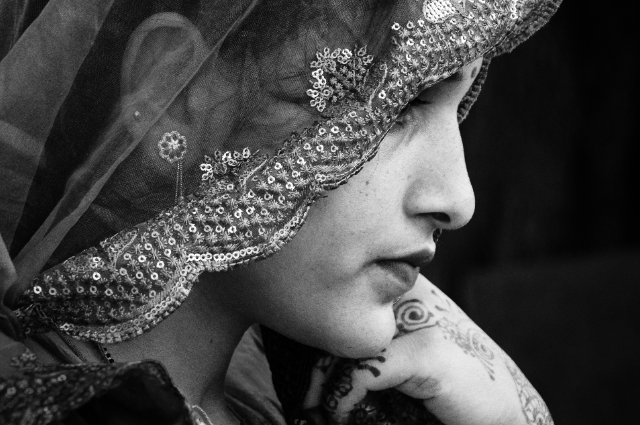
Photo by Kishan Sharma on Unsplash
When Faith Becomes a Weapon
Religion is not only a belief system in various parts of South India but also a social control system. The Jogini system, also known as the Devadasi system in Karnataka and Maharashtra, has become a practice whereby gender, caste, poverty and superstition come together in an attempt to justify sexual exploitation. Even though it is illegal, the system still endures in rural areas of Telangana, Andhra Pradesh, Karnataka and Maharashtra, albeit quietly behind closed doors as far as tradition is concerned. The provided paper explores the Jogini system as institutionalised caste-based sexual slavery based on investigative journalism, case studies of the region, and medical studies to reveal how religious symbolism is employed to normalize violence against dispensary women.
Understanding the Jogini System
Through the Jogini system, young girls (mostly in Dalit and other low-caste communities) are ritually dedicated to a deity shown as Goddess Yellamma, or Renuka. After being committed, the girl is pronounced Nitya Sumangalia or eternally married. This status permanently denies her the right to be a wife to a human man and, at the same time deprives her of the rights of widowhood/family life that are accorded by her society. Such women are called Joginis or
Mathammas in Telangana, Devadasi in Karnataka and Maharashtra. Even after state governments passed Devadasi Prohibition Acts during the 1980-2004 period, the practice continues to exist in an informal manner especially in rural districts that are economically disadvantaged in which caste stratification is entrenched and where the authority of the state is weak.
The Dedication: Superstition, Poverty, and Coercion
Initial exploitation starts with the dedication ceremony, where the ritual is usually initiated by a bad luck in a family, which may be disease, sterility, famine, or a cause of death that cannot be explained. The analysts of the event are often village priests or seniors and they explain to families that such occurrences are a result of Goddess anger and the only way to appease her is by sacrificing their daughter. These commitments are usually done between the ages of five and ten years, before she can even understand what the ritual means. A mangalsutra is thrown around her neck in such a way that it links her to the deity, and the act is not reversible. An investigation by the Centre of Economic and Social Studies in Telangana had established that over eighty per cent of Jogini families were living below the poverty line hence showing how economic desperation makes them more vulnerable to religious shenanigans.
Case Study: Mahbubnagar, Telangana Where Dedication Replaces Welfare
Mahbubnagar district in Telangana illustrates how the Jogini system thrives where state welfare mechanisms fail. Historically affected by drought, migration, and chronic poverty, the district reports one of the highest concentrations of Joginis in the state. Field research by the Centre for Economic and Social Studies documented that many families dedicated their
daughters following repeated crop losses and unmanageable debt. Interviews conducted by The News Minute revealed that several girls were dedicated before the age of ten, with no intervention from local authorities despite the illegality of the practice. In these villages, dedication functions as a substitute for social security, exposing how structural neglect allows religious exploitation to flourish.
Puberty Rituals and Institutionalized Sexual Abuse
The Jogini system is at its most violent stage when the girl is already at the age of puberty. This biological transmission is baked with a ritual that is an indication of her sexual availability in the pretense of religious tradition. Her body is regarded as property of the village or temple since they are wedded to the Goddess. Article 14 investigative reporting includes the story of the first sexual encounter of the girl in which it is frequently asserted by a landlord (or priest) of a higher caste, or even Charlton, the village headman. Money given to the family or as ritual expenses takes the form of a religious offering and not a transaction and therefore the perpetrator can get away with crime. The survivors always referred to these experiences in such terms as coercive and traumatising, and disclosed the way ritual language conceals the structured sexual violence based on caste power.
Investigative Highlight: The “First Night” and Caste Authority
Investigations of Article 14 in northern Telangana found that the informal ritual of puberty commonly serves as a sort of auction on the right to sexual access. The ceremony is sponsored by very powerful men, as they want to get the exclusive right to have sex with the women and once again it strengthens the dominance of caste on the bodies of the Dalit women.
The system allows impunity against offenders and safety because it hides the operation under the guise of religion and places the silence of society. This is investigative evidence that Jogini system is not the cultural residue as an ordinary practice; it is a highly preserved system of caste-based exploitation.
A Lifetime of Sexual Servitude
After conception of sexuality, the Jogini becomes the victim of inhuman exploitation. The social stigma does not allow her to get married, and the social norms do not allow her to reject sexual demands. She is also financially dependent on men who pay inconsistently, thus she lacks any economic stability and control. The children born out of such encounters end up being brought up without the knowledge of their fathers and end up being highly discriminated against. According to research carried out by the International Dalit Solidarity Network, daughters of Joginis have a disproportionately high chance of being re-dedicated, and thus the cycle of sexual exploitation becomes hereditary within the marginalised caste groups.
The Goddess Slave Paradox
The Jogini system gives the woman a contradictory status, which is one of the psychologically harmful aspects of the system. She is venerated during festivals and rituals when she is seen as a divine vessel, and the feet of the gods are touched with respect to what she brings, like the Bonam. In the rest of the world, she has been meticulously subjected to social contempt and deprived of dignity, safety, and legal acknowledgement. This contradiction enables the society to metaphorically idolise the woman as it exploits her materialistically, in effect shifting the moral burden portfolio out of the hands of human actors to a supernatural finding.
Health Crisis and HIV Vulnerability
The health risks encountered by jogini women are a major problem that can lead to severe health consequences and the total lack of sexual freedom. According to medical research that is mentioned by the National Institutes of Health, HIV prevalence is considered to be high among the Devadasi and Jogini women as compared to the women in the whole of India. Untreated sexually transmitted infections have also been reported to be high and fueled by stigma, fear of understanding, and lack of access to medical services. It is both a structurally produced health crisis, which indicates the overlaps between caste marginalisation, gendered violence, and poor intervention by the state in terms of providing health care.
Old Age, Abandonment, and Jogwa
When they grow older and become asexually unattractive, their election becomes a slow process since they are discarded by their clients. Having no other activity to do, little access to state rehabilitation programs, lots of them end up doing Jogwa, which is a type of ritualistic begging in the same temples they used to serve devotion. This is evidenced by the fact that the policy review by the Centre of Law and Policy Research revealed that in most instances, the elderly Devadasis are living in abject poverty, even though there are established welfare programs, which highlights the disparity between the policy intentions and their practical implementation.
Legal Prohibition and Its Failure on the Ground
The Jogini and Devadasi systems are not only criminalised by the laws of states, but they are also not strictly enforced. Tributes are carried on secretly and tend to be masked as family or cultural ceremonies. Caste pressure, political complicity and community silence are some of the reasons why police intervention is a rarity. According to a report by The News Minute, the law is on paper but does not work in their real lives, as meant by a few Jogini women.
Breaking the Sacred Silence
Jogini system is not an old practice but a living system of caste-based sexual violence perpetuated by poverty, patriarchy, and religious machinations. The reason why it still exists is an indication of failure by many people to question the process of weaponising tradition against marginalised women. Alone, legal prohibition cannot be effective unless it is enforced, survivor-based in rehabilitation and economically empowered and accountable to those who benefit the system. Unless these structural changes are achieved, Jogini women will remain in a productively discontinuous reality, goddesses in the ritual areas and sex slaves in the real world.
. . .
References:
- Article 14. (n.d.). The gods are not going to save us just because we are married to them. Retrieved from https://article-14.com
- Bansal, S. (2015, February 23). NCW for the effective implementation of the law against the Devadasi. Business Standard. Retrieved from https://www.business-standard.com
- Devadasi system still exists in Telangana, AP, says report. (n.d.). The Times of India. Retrieved from https://timesofindia.indiatimes.com
- Joginis: The religious sex slaves of Telangana. (2019, November 12). The News Minute. Retrieved from https://www.thenewsminute.com
- Kumar, R. (2020, October 31). 25-year-old Telangana woman rescued from being forced into ‘Jogini’ system. The News Minute. Retrieved from https://www.thenewsminute.com
- NGO report. (2024). Applying life skills education as humanitarian logistics: Special focus on Devadasi/Jogini women in the state of Telangana. Library Progress International. Retrieved from https://bpasjournals.com
- Youdle, A., D’Souza Vali, B. A., John, N., & Anderson, P. (2023). Factors associated with continued Jogini practice in Telangana, South India. Christian Journal for Global Health. Retrieved from https://cjgh.org
- The Wire. (2022, June 25). In photos │ God’s wife, every man’s woman: The lives of ‘Joginis’ in South India. Retrieved from https://m.thewire.in
- Anti-Slavery International. (2007). Women in ritual slavery: Devadasi, Jogini and Mathamma in Karnataka and Andhra Pradesh, Southern India. La Strada Documentation Center. Retrieved from https://documentation.lastradainternational.org
- Tejpal, M. (2018). Sexual slavery: A case study of Joginis in South India. International Journal of Advanced Research, 6(6), 705–714. Retrieved from https://europub.co.uk