
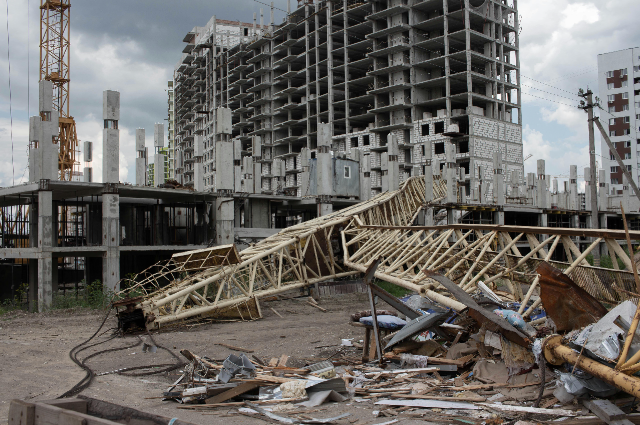
A Death That Was Allowed to Happen
This is a usual depiction of the strange death of a 27-year-old software engineer, Yuvraj Mehta, who died on the night of January 1617, 2026, in Sector 150, Noida. This characterisation hides an unpleasant fact. Yuvraj did not die due to a moment of bad luck; he died due to a sequence of known dangers, where avoidance took place, and even the institution did not respond when there was still time on his side. Yuvraj, who had been alive, seen, and calling in need of help in almost ninety minutes following the fall of his car into a twenty-foot-deep construction pit, full of water. His assassination is one of the darkest paradigms of how the fear of danger, the lack of emotions, and the inability to act are more important than duty in the metropolis of modern India.
Infrastructure Failure in a “Premium” Urban Space
Sector 150 is being positioned as one of the richest residential corridors in Noida, which will be surrounded by lavish high rises, and will be marketed as a component of a smart city within the region. Ironically, this was the place where the absence of a wall at a sharp ninety-degree turn was not repaired, even after being damaged in an earlier accident close to four months earlier. The complaining by the residents was continuous; however, no lasting corrective measure was put in place. Rather, plastic barricades were placed in areas where the thick fog of winter would completely cover. Such symbolic adherence (that seems to concern the safety but does not in practice) is another typical characteristic of urban infrastructure management in India.
Data provided by the government validates the seriousness of this risk. The Ministry of Road Transport and Highways alleged that almost 38 per cent of road accidents in urban areas in India are caused by either bad road engineering, unsafe diversion, or insufficient road barriers near construction areas. They are not some kind of unforeseen hazards but familiar points of failure, and presuppose a permanent physical protection instead of a temporary warning sign. The risk area in which Yuvraj had an accident is exactly in the paperwork brought about by this risk.
The Paperwork Trap and Deferred Responsibility
The wall bordering the area was not repaired since it was not known that there was danger, but due to a lack of accountability. It was the Noida Authority that pointed the finger at the private builder, whereas the builder alleges that it was within the mandate of the Authority. Such a bureaucratic frozenness demonstrates a larger governance flaw in the projects in infrastructure related to private and public. In cases of shared responsibility, no one can generally own what they are supposed to own.
A study report by the Centre of Policy Research (2023) on urban governance reported in the NCR area reveals that most of the unaddressed safety risks are attributed to jurisdictional uncertainty between civic entities and the developers. This is exactly the trend of the Noida incident that administrative lassitude turned an already established hazard into an event that claimed lives.
Ninety Minutes Alive: A Preventable Loss
It is more disturbing that Yuvraj Mehta could die with a drawn-out amount of time when he could have been rescued. His car did not sink immediately after the crash, using which he managed to climb to the roof. He called his father, who arrived on the scene and stood by watching his father hold his son in freezing water in vain. Yuvraj maintained the phone torch on to stay in view amid the mud, as well as screaming his name a few times to seek attention. The mission was not an operation of recovery; it was a live rescue situation with the reality-time play.
Cold-water immersion medical studies show that an adult may live anywhere between forty-five minutes to two hours in temperatures that are common in traditional North Indian winters without suppressing consciousness, and neuromuscular breakdown occurs due to hypothermia. The period of survival by Yuvraj of around ninety minutes lies well within this span. His demise did not occur with necessity, but was the consequence of the lack of action at a critical moment when action would have saved his life.
Emergency Response and the Gurugram Parallel (Case Study 1)
The fire brigade and police officers arrived at the point but had no fundamental water-saving gear like boats, flotation aids or ropes to save lives. Officers have been reported not to get into the water because they can’t swim, or they are afraid of being submerged by the electrical wires or construction debris. These explanations are not the failure of an individual, but of a system.
In a similar situation, a series of incidents where individuals lost their lives while getting in and out of open drains and construction pits, published between 2019 and 2024 in Gurugram, Haryana, arose due to low-visibility conditions. Much of the literature on similar reported cases shows that the victims were still alive when the authorities arrived at the scene, but the rescue efforts were not made due to a lack of proper equipment and qualified personnel. Responses to these deaths revealed a common trend: the first responders on the ground who could not perform their duties, despite their people needing rescue. This failure is almost an exact indication with regard to the Noida tragedy, which illustrates that these occurrences are not an isolated accident but are inherently inbuilt within the urban emergency response systems.
Waiting for the NDRF and the Cost of Delay
Local authorities did not rush to rescue, but on the other hand, waited to be joined by the National Disaster Response Force, which was stationed in another city. This decision proved fatal. The concepts of emergency management dictate that local response at the so-called golden hour is crucial, and the probability of survival is the highest. Depending on remote special forces and the lack of local or interim measures is a fatal failure in emergency procedures.
This gap is not anecdotal. A 2022 audit by the Comptroller and Auditor General of India reported that more than sixty per cent of urban fire stations do not have special rescue equipment to deal with water-filled pits, trenches, or confined spaces, yet the number of such risks in rapidly urbanising regions is increasing. The death of Yuvraj was due to the combined efforts of the deep excavation, the water pool, and the insufficient preparedness of the locals, which was exactly what was considered in the audit.
Courage, Coercion, and Institutional Self-Protection
Unlike formal hesitation, one of the delivery agents, called Moninder, joined the water with the intention to assist. His deeds demonstrated the ethics of goodness versus personal conviction. However, when Moninder talked to the press about why nothing was done by the police, he was allegedly pressured into altering his testimony and then appeared in a video in which he praises the authorities, a video that he claimed to have described as being scripted.
Such narrative containment after the tragedies of the people is not unique. Institutions do not address institutional failures; instead, they tend to do damage control, which negates transparency and trust in the community. Such a behaviour underlines the feeling that accountability is not a form of compulsion but rather administered.
Punishment After Outrage, Not Prevention (Data Example 2)
People were also angry enough to do something. The CEO of the Noida Authority was sacked, engineers were sacked, and the builder was arrested on the accusations of culpable homicide and so on. Although the steps are a sign that failure has been realised, it is also a manifestation of a culture of reactive governance. In one of the studies conducted by the National Law University Delhi, the accountability of administrative bodies in India has shown that it is more probable to activate disciplinary action after media questions than an internal audit of safety or even a preemptive check of compliance.
This tendency indicates that punishment is still rather sporadic than preventive, inspired by indignation, but not by control.
A Question of Urban Conscience
Cold water was not sufficient to kill Yuvraj Mehta. It was due to safety as a matter of the moment, responsibility as an everlasting postponement and emergency systems were not ready to do anything at the right time when it was their time. Living in a working city, a damaged boundary wall is not kept for several months without being repaired. Under a human form of governance, a man will not perish after ninety minutes of making appealing calls.
The Sector 150 tragedy raises a tough question that people will not want to answer. Urban progress is meaningless when basic human safety is still on the negotiation table. So long as paperwork substitutes preparation and accountability is proactive but not reactive, the death of Yuvraj Mehta will not be an isolated case. It will be an admonition in ice-cold water.
References
- Centre for Policy Research. (2023). Urban governance and infrastructure accountability in the National Capital Region. Centre for Policy Research.
- Comptroller and Auditor General of India. (2022). Performance audit on fire and emergency services in urban India. Government of India.
- Hindustan Times. (2026, January 18). Noida Authority CEO sacked after techie drowns in open construction pit. HT Media Ltd.
- India Today. (2026, January 19). Noida techie death: Delivery agent claims police pressure to change statement. Living Media India Ltd.
- Ministry of Road Transport and Highways. (2023). Road accidents in India 2023. Government of India.
- NDTV. (2026, January 18). Greater Noida techie death: Police negligence alleged. NDTV India.
- National Law University Delhi. (2021). Administrative accountability and disciplinary action in India. National Law University Delhi.
- The Times of India. (2026, January 20). FIR against builders for culpable homicide in the Yuvraj Mehta case. Bennett, Coleman & Co. Ltd.