
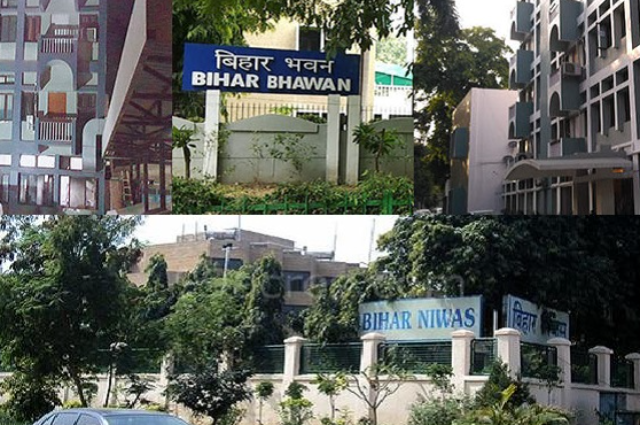
As of January 2026, the idea of Bihar Bhawan has transformed dramatically—from a modest administrative guest house in Delhi into a sprawling, multi-city infrastructure strategy. With the Bihar Cabinet approving a ₹314.20 crore, 30-storey Bihar Bhawan in Mumbai, the state has signalled a new ambition: to create permanent institutional footprints in India’s major metros. However, this expansion has ignited intense political, ethical, and developmental debates.
The Mumbai Bihar Bhawan: Scale and Intent
The most ambitious project yet is the proposed Bihar Bhawan at Elphinstone Estate (Wadala/Dana Bandar), Mumbai. Rising 69 meters with triple basements and smart parking facilities, the complex is designed to serve primarily as a relief centre for cancer patients from Bihar visiting Tata Memorial Hospital.
Key facilities include:
- A 240-bed dormitory for patients and attendants
- 178 rooms for officials
- Conference halls, cafeteria, and medical f
On paper, the project appears humanitarian—offering dignity and shelter to poor patients forced to migrate for life-saving treatment.
Delhi’s ‘Mini Bihar’ Infrastructure
Bihar already operates three major establishments in Delhi:
Bihar Bhawan (Kautilya Marg) – administrative headquarters
Bihar Niwas (Chanakyapuri) – built in 1994, now proposed for demolition and redevelopment into a ₹123 crore, 9-storey modern complex.
Bihar Sadan (Dwarka) – opened in 2021 to accommodate students and patients
Together, these facilities function as Bihar’s informal embassies, assisting residents in navigating the national capital.
The Core Criticism: Treating the Symptom, Not the Disease
The strongest backlash comes from what critics call the “medical failure argument.”
Opponents ask a blunt question: If Bihar can spend ₹314 crore on a patient hostel in Mumbai, why can’t it build a world-class cancer hospital in Patna, Gaya, or Muzaffarpur?
For many, the project is an unspoken admission that Bihar’s healthcare infrastructure has failed its people—forcing thousands to travel over 2,000 kilometres and sleep on pavements outside hospitals. In this view, Bihar Bhawan becomes a permanent workaround instead of a solution.
Politics of Memory and Legacy
The controversy deepens in Delhi, where the proposed demolition of the 32-year-old Bihar Niwas has triggered political accusations. The RJD alleges that the building is structurally sound and that its demolition is driven less by necessity and more by a desire to erase Lalu Prasad Yadav’s legacy.
The ruling JDU government counters that the structure is outdated and incapable of handling current demand, framing redevelopment as administrative modernisation rather than political vendetta.
Mumbai’s Local Resistance
In Maharashtra, the project has faced regional opposition. Leaders from parties like the MNS have criticised the use of prime Mumbai Port Trust land for an out-of-state government facility, calling it a “dharamshala” for Bihar at the cost of local housing needs.
Urban activists argue that such land should be reserved for affordable housing or green spaces for Mumbai’s residents rather than VIP accommodations.
VIP Comfort vs Public Welfare
Perhaps the most damaging critique concerns space allocation. Investigative reports highlight that while 240 beds are reserved for patients, 178 rooms are allocated for officials and VIPs. This imbalance fuels the perception that Bihar Bhawan is evolving into a luxury guest house for bureaucrats, with public welfare serving as moral cover.
Vision or Vanity?
The expansion of Bihar Bhawan reflects both care and contradiction. On one hand, it acknowledges the immediate suffering of Bihar’s migrants and patients, offering them shelter and support. On the other hand, it risks normalizing dependency on external states for essential services.
Ultimately, Bihar Bhawan stands at a crossroads—either as a compassionate bridge during a transitional phase or as a concrete reminder of missed opportunities at home. The real test will be whether such projects are accompanied by equally ambitious investments within Bihar itself. Without that, these towering structures may rise high—but cast long shadows over the state’s development priorities.