
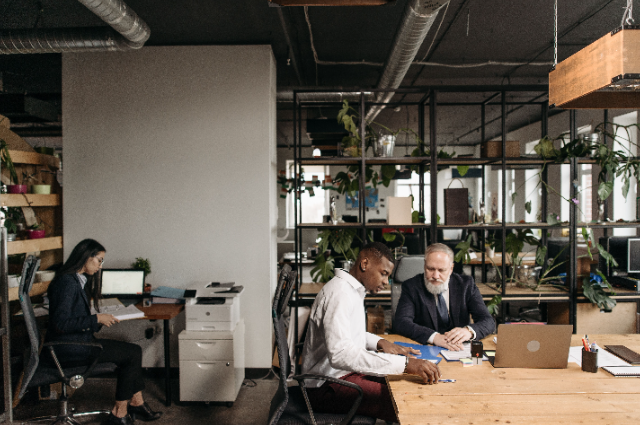
John's morning commute looks a lot like anyone else's. He catches the bus, grabs a coffee, swipes his card at the office entrance, and settles in for a full day of work. He files documents, handles customer calls, and finishes his shift before heading home to his apartment — where he lives alone. What makes John's story worth telling isn't his job. It's the fact that, for most of his life, the world assumed he would never have one.
John has Down syndrome. And the company that hired him didn't do so out of charity. They did it because they were tired of leaving talent on the table.
The Startup Rewriting the Rules
In recent years, a handful of companies have emerged with a radical premise: stop treating disability as something to accommodate around, and start treating it as something to hire for. The most striking among them is a startup — the name varies by telling, but the model is consistent — that has built its entire workforce around employees with Down syndrome (DS).
These aren't token hires. Employees with DS make up the core staff, handling real roles with real accountability. The results have surprised people who probably should not have been surprised. Productivity is strong. Staff turnover, a chronic drain in most industries, is almost nonexistent. Customers rate their service highly. And the employees themselves report something that most workplaces quietly struggle to manufacture: genuine satisfaction.
The lesson isn't complicated, but it cuts deep. When you design a workplace around a workforce — when the systems, the communication styles, and the pace are built to fit the people doing the work rather than forcing people to contort themselves to fit the system — work actually gets done better.
What Down Syndrome Actually Is
Down syndrome is not a disease. It is not a tragedy. It is a chromosomal condition — specifically, the presence of a third copy of chromosome 21 — that affects roughly one in every 700 births worldwide, making it the most common chromosomal condition in humans.
People with DS experience some degree of intellectual disability and may face certain health challenges, including heart conditions and increased risk of early-onset Alzheimer's. But the range is wide. Many people with DS go to mainstream schools, hold steady jobs, maintain romantic relationships, and live into their sixties. The defining characteristic of a life with Down syndrome is not limitation. It is variation — the same variation that defines every human life.
And yet the assumptions have been stubborn. For generations, a DS diagnosis at birth was greeted as a foreclosure of possibility. Institutionalisation was standard practice within living memory. Even today, many families receive outdated, pessimistic information from medical professionals at the moment of diagnosis — a problem advocacy groups have been fighting for decades.
The Numbers the World Doesn't Talk About
Here is a statistic that rarely makes headlines: 99% of people with Down syndrome report being happy with their lives. Not content. Not coping. Happy — by their own account, in their own words, in surveys conducted over years across multiple countries.
Compare that with the response their existence often triggers in others. In Iceland, prenatal screening for DS is near-universal, and the country has nearly eliminated DS births through selective termination — a fact that has been reported as a public health achievement. In Denmark, the number approaches similarly low levels. The framing around these statistics rarely stops to ask who, exactly, is being protected, and from what.
In India, the situation presents a different kind of failure. The Rights of Persons with Disabilities Act, passed in 2016, mandates inclusion and reasonable accommodation across employment, education, and public life. A decade on, enforcement remains scattered. People with DS and other disabilities frequently find themselves excluded from both formal employment and educational opportunity, not because the law ignores them, but because the law is routinely ignored.
The gap between what the rules say and what actually happens is, in many ways, the central problem of disability inclusion everywhere.
The Real Barrier Was Always the Assumption
What the DS-focused startup has demonstrated — and what decades of advocacy have argued — is that most of the barriers facing people with Down syndrome are not biological. They are architectural. They are attitudinal. They are built into hiring processes that screen for the wrong things, educational systems that separate before they include, and a culture that mistakes difference for deficit.
When those structures change, outcomes change. Employees with DS who are given proper training, clear expectations, and genuine respect do not merely survive in the workplace. They often thrive in ways that put neurotypical colleagues to shame — in loyalty, in consistency, in the kind of focused engagement that most managers spend years trying to cultivate in their teams.
None of this should be surprising. It becomes surprising only when we forget that the people we spent decades underestimating were paying attention the whole time.
What Inclusion Actually Means
True inclusion is not a ramp at the entrance and a checkbox on a form. It is the assumption of capability before the assumption of limitation. It is asking what someone needs to succeed rather than assuming they cannot. It is building systems around people rather than asking people to disappear into systems.
The startup that only hires people with Down syndrome is not a feel-good story. It is a proof of concept. And the concept is simple: the extra chromosome was never the problem.
The problem was always what we decided it meant.
Sources
- "20 Companies That Employ People With Down Syndrome." Save Down Syndrome,
- Cronin, Mark. "Hiring People With Disabilities Is Not Altruism, It Is Good Business." The Mighty, April 2024.
- "Amazon employees start a program to help people with Down syndrome find jobs." About Amazon, August 2023.
- "Down Syndrome Statistics & Facts." Supportive Care ABA, May 2023.
- "Living with Down Syndrome." Centres for Disease Control and Prevention (CDC).
- "Investigating the Experience of Living With Down Syndrome and Obstructive Sleep Apnea Syndrome." ClinicalTrials.gov Protocol, NCT04124471.
- Skotko, Brian G. et al. "Self-Perceptions from People With Down Syndrome." American Journal of Medical Genetics Part A, 2011.
- Quiñones, Manuel & Quijano, Elaine. "Why Down Syndrome in Iceland Has Almost Disappeared." CBS News, August 2017.
- "Behind the Lens: Iceland's Down Syndrome Dilemma." CBS News, August 2017.
- "The Rights of Persons with Disabilities Act, 2016." Government of India.
- "Bridging the Gap: Enabling Disability Inclusion in India's Private Sector Workplaces." United Nations Development Programme (UNDP) India.