
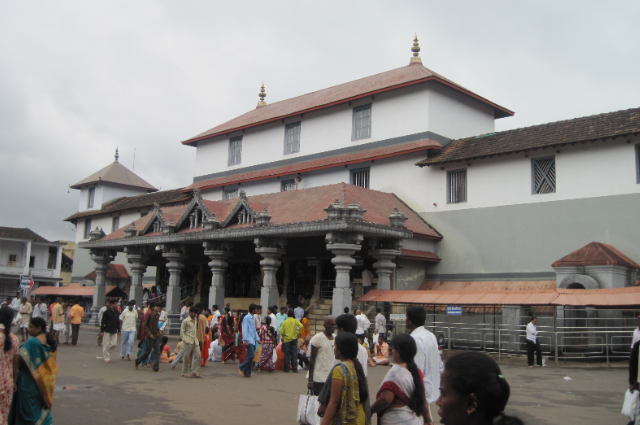
In July 2025, a soft-spoken former sanitation worker walked into a magistrate's court in coastal Karnataka and made an allegation that would eventually shake one of India's most revered pilgrimage sites. He said that between 1995 and 2014, he had been forced — under threat of death — to bury hundreds of bodies, including a schoolchild and a 20-year-old acid attack victim, many bearing signs of strangulation and sexual assault, along the banks of the Netravathi River near the Dharmasthala temple town. He said he had lived in hiding for twelve years before coming forward.
It is, at its core, a story about the distance between power and evidence — about how the person with the least standing in an institution can end up being the only one who knows where the bodies are.
The allegations
The complainant said he had worked in Dharmasthala between 1995 and 2014, during which time he was forced to bury bodies, some of which showed signs of sexual assault. He was not the only voice. A local activist filed a separate complaint in August 2025 alleging he had witnessed a body being buried fifteen years earlier, and the temple had already been the subject of protests since 2012, after the murder of a teenage girl.
A police case was registered against temple authorities on 4 July 2025, and mounting public pressure — including a delegation of lawyers led by senior advocate S. Balan meeting Karnataka Chief Minister Siddaramaiah — pushed the state government to hand the matter to a Special Investigation Team headed by senior police officer Pronab Mohanty.
A gag order, a recusal, and a complicated judiciary
Almost immediately, the case ran into the same institutional web it was investigating. A court granted an injunction sought by a relative of temple leadership, suppressing over 8,800 items of media coverage about the allegations. That gag order was later lifted, but not before scrutiny fell on the presiding judge himself: journalists and activists pointed out he had been educated at institutions run by the temple and had previously worked at a law firm representing the family that owns it. The judge recused himself on 4 August 2025.
Digging began — and the record turned messy.
The complainant identified thirteen burial sites, later expanded as excavation proceeded. The results were inconsistent and, at times, contradicted his own claims. Excavations at several locations along the Netravathi River found no human remains at all, while partial skeletal remains — fifteen bones, no skull, some broken — were found at one site, and a skull and bones turned up near a site called Banglegudde. At another, more than 114 bones and a skull were recovered, with preliminary indications the remains belonged to a man who may have been strangled, a red sari found nearby.
One of the earliest complications: a PAN card and debit card found at an excavated site were traced to a man from Nelamangala who had actually died of jaundice and been cremated in his own village — not buried at all.
The whistleblower is arrested.
By late August 2025, the case took a sharp turn. The SIT arrested the complainant on 23 August, citing inconsistencies in his statements, and charged him with providing false information and submitting fabricated evidence. He had produced skull and bones before a magistrate claiming they belonged to a woman, but forensic testing found they were male. Officials said some of the samples he had provided were fake and had been sourced from a medical institution.
The SIT was careful to say his arrest did not end the inquiry. Officials stated that, at the time, only about 25 per cent of the investigation had been completed and forensic work was still underway, adding that allegations of deaths, rapes, murders and disappearances in Dharmasthala still needed to be fully investigated. Other threads emerged and unravelled around the same time — one complainant, Sujata Bhatt, gave contradictory accounts about her supposedly missing daughter, first claiming she was murdered before saying the girl belonged to a friend — while a YouTuber who had amplified the story came under investigation for allegedly using AI tools to sensationalise it.
Where the case stands now
Nearly a year later, the investigation remains open, contested, and politically charged. The complainant, publicly identified in more recent reporting as C. N. Chinnaiah, has himself gone to the Karnataka High Court, filing a petition alleging a conspiracy to malign the temple and naming several activists as having "orchestrated a campaign" against it. The High Court has directed the SIT to submit a status report, and Karnataka's Home Minister has said the matter is now court-monitored and cannot be discussed publicly until the SIT responds to the court's questions.
Opposition politicians have pressed for transparency from a different angle. BJP state leaders have demanded the government make the SIT's findings public, arguing the temple has been left under a cloud of suspicion without resolution, while a senior BJP MLA noted in the state assembly in January 2026 that a Supreme Court judge had dismissed a related petition as "not a Public Interest Litigation," even as the SIT's final report continued to be delayed. Reports in November 2025 indicated the SIT had submitted a probe report to a local court, though its findings have not been made fully public.
The through-line
Strip away the competing political narratives, the forensic ambiguity, and the credibility questions now surrounding the complainant himself, and what remains is a familiar pattern: an institution with deep local and political influence, a set of allegations too serious to ignore, and a witness with almost no power of his own who nonetheless became the fulcrum on which the entire case turned — for better and for worse. Whether the Dharmasthala case ultimately proves those allegations, or unravels them, the past year has shown how difficult it is for truth to travel cleanly from the powerless to the public when it must first pass through courts, police, and institutions entangled with the very power being investigated.
Sources:
- Wikipedia, "Dharmasthala mass burial case"
- Outlook India
- Deccan Herald
- Deshabhimani
- The Federal
- Vartha Bharati
- The Hans India
- SocialNews.XYZ
- The News Minute
- ProKerala/IANS.