
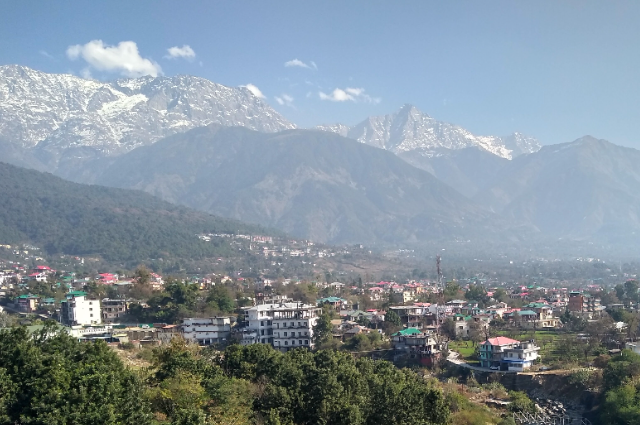
Travel stories often begin with a burst of excitement, but for me, my journey to Dharamshala began with quiet curiosity. Nestled in the Kangra Valley of Himachal Pradesh, Dharamshala had always fascinated me — not only for its connection with Tibetan culture and the Dalai Lama but also for its rich natural environment. I had seen pictures of its misty hills, colourful monasteries, and dense pine forests, but I knew that truly understanding Dharamshala would require walking its paths, breathing its mountain air, and observing the diversity that coexists there.
The Journey to the Hills.
It was a crisp morning in late spring when I boarded the bus from Pathankot, the nearest railway connection. The winding road to Dharamshala seemed like a silver ribbon curling through emerald-green hills. As the bus ascended, the warm plains gave way to cool mountain air, and the scent of pine and deodar filled the atmosphere. Small villages appeared along the way, their slate-roofed houses blending naturally with the landscape. By the time I reached Dharamshala, the sun was dipping behind snow-capped peaks, painting the sky in shades of orange and violet. The town itself had a tranquil charm — its streets lined with prayer flags fluttering in the wind, the murmur of monks in deep meditation echoing from the monasteries. My hotel room faced the Dhauladhar range, and as I looked out, the silent majesty of the mountains made me forget the fatigue of travel.
Exploring McLeod Ganj: The Cultural Heart
The next morning, I made my way to McLeod Ganj, often called “Little Lhasa.” The air was crisp and carried a distinct herbal fragrance — a mix of incense, butter lamps, and the nearby cedar forests. The streets were alive with a delightful fusion of Tibetan and Indian culture. Colourful shops sold woollen shawls, Thangka paintings, and wooden handicrafts. Monks in maroon robes walked past travellers sipping ginger tea at roadside cafes.
I began my exploration at the Tsuglagkhang Complex, the official residence of His Holiness the Dalai Lama. The monastery exuded peace; the rhythmic chanting of monks resonated in the background, and the spinning prayer wheels clicked softly, symbolising the circulation of positive energy. Around me, people from every part of the world meditated, prayed, or simply sat in reflection — an example of Dharamshala’s unique ability to unite people beyond boundaries. Walking around McLeod Ganj, I realised how the town’s environment shaped its culture. The elevated terrain and cool climate allowed Himalayan flora to thrive, from rhododendron trees to wild daisies and rare herbs used in Tibetan medicines. The residents seemed to live in harmony with this diversity — they respected the forest, avoided plastic waste, and promoted sustainable living through small eco-cafés and organic farms.
The Kangra Valley Below
One afternoon, I took a local cab to explore the lower Dharamshala region and the mesmerising Kangra Valley. The descent revealed lush, terraced fields carved along the hillsides, where farmers grew tea, wheat, and rice. The famous Kangra tea estates looked like a green carpet stretching toward the horizon. Watching women pluck tea leaves delicately under the morning sun felt like witnessing a centuries-old tradition carried forward in balance with nature.
I visited the Norbulingka Institute, a centre dedicated to preserving Tibetan art and culture. The institute itself was a masterpiece of environmental design — crafted with bamboo structures, blossoming gardens, and small water channels that mirrored traditional Tibetan landscapes. The sound of flowing water harmonised with the faint tapping of artisans painting intricate Thanka artworks. Every element seemed to reflect Dharamshala’s deep ecological consciousness.
Trekking Through Diversity
To truly experience Dharamshala’s environmental diversity, I decided to trek up to Triund — one of the most popular trails in the region. Starting from McLeod Ganj, the trail meandered through dense forests of oak, deodar, and rhododendron. Birds flitted among the branches — the Himalayan bulbul, green-backed tit, and the occasional black drongo. The crisp air grew thinner with every step, and waterfalls whispered beside the path.
What struck me most during this trek was the shifting ecosystem. At the lower levels, the forest canopy was thick and green, but as I climbed higher, the trees grew sparse, replaced by meadow grasses and wildflowers. Small hamlets appeared occasionally, their inhabitants collecting firewood or herding goats — living in perfect symbiosis with nature.
When I finally reached the Triund ridge, the view took my breath away. The Dhauladhar peaks stood just beyond reach, their snowy crowns glistening in the midday light. Below, the Kangra Valley stretched endlessly, blanketed in shades of green and gold. Standing there, surrounded by raw nature, I felt a rare kind of stillness — the kind that comes only when one feels truly connected to the world.
The Climate and Environmental Awareness
Dharamshala experiences a distinct range of climates due to its elevation — from lush monsoon valleys to cold alpine slopes. This variation nurtures countless species of plants and animals. During my visit, I learned that the area serves as a biodiversity hotspot within the Western Himalayas. It hosts species like the Himalayan black bear, barking deer, and a variety of butterflies and birds that thrive in micro-habitats scattered across the slopes.
However, the locals and NGOs I met also spoke about the challenges the region faces — rapid tourism, waste management issues, and melting glaciers affecting spring water sources. Dharamshala’s authorities have adopted several eco-friendly initiatives, such as banning plastic bags, promoting rainwater harvesting, and organising regular cleanliness drives. I also visited a café that used only solar energy for cooking and encouraged travellers to refill water bottles instead of buying plastic ones. The collective awareness of environmental preservation was inspiring — it made me realise how deeply nature is woven into Dharamshala’s identity.
Peace in Nature’s Embrace
On my final evening, I visited Bhagsunag Waterfall near McLeod Ganj. The sound of cascading water echoed through the gorge, blending with the soft murmurs of the forest. I sat on a rock and watched as the waterfall tumbled down, misting the air with cool droplets. Around me, young travellers were meditating or sketching the scenery, while others played guitars, their music mingling with the rhythm of the flowing stream.
As the light faded, the forest transformed — the sunset painted the sky in pink and gold hues, while the chirping of crickets signalled the coming of night. A few meters away stood the ancient Bhagsunath Temple, a symbol of the region’s deep spiritual roots that coexist harmoniously with its natural beauty.
That moment captured everything Dharamshala meant to me — peace, balance, and coexistence. Here, every mountain peak, every prayer flag, and every gleaming stream seemed to sing of unity — between people, cultures, and the environment.
Reflection: Lessons from Dharamshala
When I left Dharamshala, I carried more than memories; I carried lessons. The trip reminded me that environmental diversity is not just about the number of species or landscapes but about how life sustains itself through delicate interconnections. Dharamshala thrives because its people understand this connection and respect it.
In the busy chaos of modern cities, nature often feels distant. But in Dharamshala, it’s present in every breath — in the whisper of pines, the flutter of butterflies, the chants from monasteries carried by mountain winds. It teaches one the value of simple living, mindful travel, and ecological responsibility.
As the bus descended again toward the plains, I looked back one last time at the fading silhouette of the Dhauladhar range. The mountains stood still, like silent guardians of a land where culture and ecology breathe together. I knew then that Dharamshala was not just a destination on a map — it was a living example of how humanity and nature can exist in harmony when we choose respect over exploitation.