
Iran's Supreme Leader Ayatollah Khamenei has been killed in strikes by the US and Israel. One of the most serious escalations the region has seen in decades.
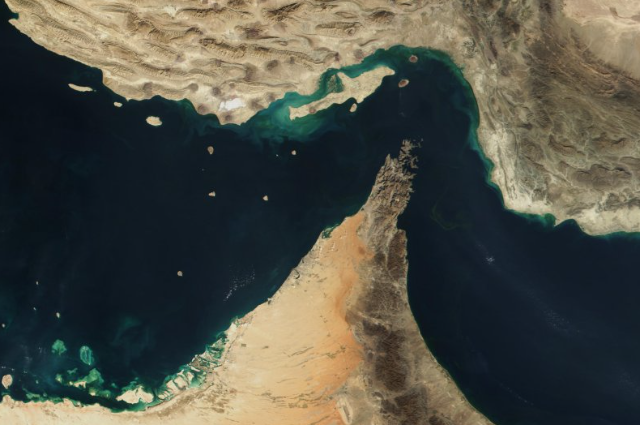
Iran has vowed what it calls the most devastating response and is already attacking Israel and US military bases across the Gulf. As the world focuses on the strikes and rising tensions, attention is also turning to one narrow stretch of water with global impact. The Strait of Hormuz. At its narrowest point, it is about 33 km wide.
Yet around a fifth of the world's oil, roughly 20 million barrels a day, passes through it along with a significant share of global liquefied natural gas or LNG. It is the main export route for Gulf producers, and more than 80% of the oil that leaves it heads to Asia. China is Iran's biggest oil buyer, importing more than 1.8 8 million barrels a day last month, according to ship tracking company Vortexa.
Reuters reports that ships in the Gulf have received radio warnings from Iran's Revolutionary Guard, saying no vessel is allowed to pass through the Strait. Iran has long threatened to block it if attacked. With tensions high and the risk of disruption looming, we turn to how critical this waterway is for South Asian countries that depend heavily on Gulf energy.
The Strait of Hormuz has extreme significance for South Asian countries. For instance, in the case of Pakistan, over 90% of the country's oil imports come from the Gulf, and essentially all of them are routed through this strait. Similarly, for LNG, the figure stands anywhere between 70 to 75%. For India, over 60% of its oil imports come from the state of Hormuz. In 2019, attacks on two tankers in the Gulf pushed oil prices up and sent shipping costs higher within days. If something similar happens again along this route, what could that mean for South Asian economies? In case of a long-term closure, the impacts on South Asian countries can be drastic. For instance, for only a $1 increase in oil prices, India's import bill can jump by $2 billion. Now, if the Strait is closed for more than a week or something, we can see oil prices essentially jumping to $100 or, in extreme cases, $150 dollar. Similarly, for Pakistan, we can witness a jump of about 30 to 40% in food inflation.
Closing the Strait shuts 20% of the world's oil in one move, a geopolitical bomb Iran has primed for years. But it's a double-edged sword. Gulf allies like Saudi Arabia and the UAE export via alternative routes; Iran itself needs the Strait for its own oil sales to fund retaliation. A blockade invites US naval hammer—remember Operation Earnest Will in the 1980s? China, hooked on Gulf crude, would pressure Tehran. Long-term, alternatives like Russia's pipelines or US shale ramp up, diluting the pain after months.
For South Asia, the stakes are sky-high. This narrow waterway isn't just Gulf drama—its ripples crash into our pumps, plates, and pockets thousands of miles away. World watches; we brace.
Overall, it also serves as an important node in global trade. And therefore, we can also say that global trade in terms of goods and merchandise for South Asian countries will also be impacted.
. . .
References: