
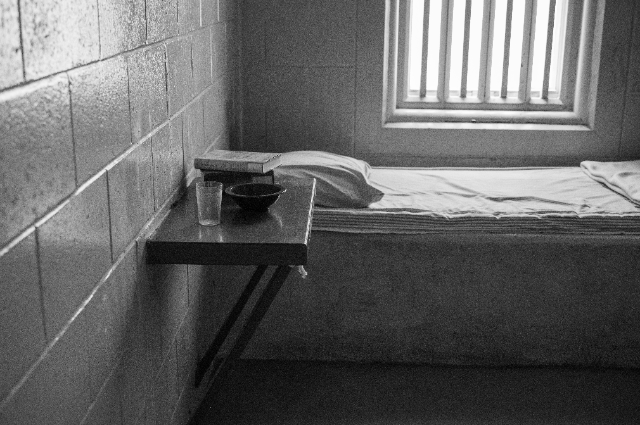
The “Feel the Jail” or Jail Anubhavam initiative introduced by the Telangana Prisons Department at Chanchalguda Central Jail on 12th May 2026 is a unique concept designed to give ordinary people a real-life prison-like experience. Visitors can stay in simulated prison barracks for 12 hours by paying ₹1,000 or for 24 hours by paying ₹2,000, where they are provided with the same basic facilities given to actual prisoners, including prison uniforms, bedding, utensils, soap, towels, and simple washrooms. The complex includes separate barracks for men and women, group accommodation, high-security cells, work areas for tailoring, embroidery, carpentry, sewing, farming and even a dark cell that remains completely dark except when opened from outside by staff. Participants can also engage in activities commonly performed by
prisoners, such as farming, tailoring, embroidery, sewing, carpentry, and spinning. The initiative aims to help people understand the harsh realities of prison life, the loss of freedom experienced by inmates, and the consequences of committing crimes. The facility also contains a museum showcasing the history of prisons and the treatment of prisoners in earlier times, explaining how prisoner labour contributed to projects such as the Nagarjuna Sagar Dam during the 1960s, making the project both an educational and experiential program.
Officials describe the programme as both an empathy-building exercise and a deterrent against crime, claiming that the revenue generated will support prisoner welfare and rehabilitation. However, the initiative also raises deeper moral and social questions because a simulated
prison experience remains a choice, unlike the reality faced by most inmates in India’s overcrowded prisons, where nearly three-fourths of prisoners are undertrials who have not yet been convicted and often remain jailed simply because they cannot afford bail or adequate legal aid. Dalits, Adivasis and Muslims are massively over-represented in this population.
Critics argue that while the programme could encourage civic awareness about prison conditions, legal inequality and the criminal justice system, it also risks
reducing incarceration (the act of putting someone into prison) into a form of performative “dark tourism” where temporary discomfort becomes spectacle rather than a catalyst for reform.
There are two ways the “Feel the Jail” experiment could unfold. In the best-case scenario, someone spends a night inside Chanchalguda Central Jail and walks out thinking seriously about India’s prison system, about overcrowding, undertrials, poor legal aid and the need for reform. That discomfort could push people to support faster trials, better bail systems, or organisations working with prisoners. But there is also the risk of performative empathy. People may treat it as dark tourism, spending a night in a barrack, posting pictures online and believing they now understand prison life. In that version, the state appears transparent and
progressive while deeper structural problems remain untouched. Supporters believe the initiative could become meaningful if it encourages public engagement with issues such as prison overcrowding, undertrial rights, legal aid, rehabilitation and prison reform, but without transparency and sustained action, it may ultimately remain a symbolic experience that comforts visitors without changing the realities faced by those who cannot walk out once the prison gates close.
Reference: