
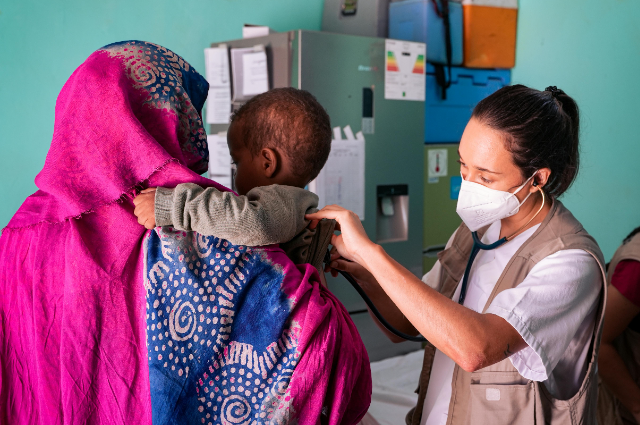
In the rugged hills of Melghat, Maharashtra, one family's resolve turned despair into hope for thousands of tribal families. Dr Ravindra Kolhe and Dr. Smita Kolhe left comfortable lives to serve the Bhil and Korku tribes, showing how dedication can reshape a region.
Dr. Ravindra Kolhe finished his MBBS in Nagpur in 1985, inspired by Gandhi, Vinoba Bhave, and David Werner's Where There Is No Doctor. Instead of a lucrative practice in Shegaon, he chose Melghat's remote Bairagarh village, where infant mortality hit 200 per 1,000 births due to poverty, malnutrition, and no healthcare.
Dr Ravindra was specific about his life partner:
- She should walk 40 km to Bairagarh
- Agree to a ₹5 court marriage
- manage on ₹400 monthly
- willing to beg for others' welfare.
Many women declined, but Dr. Smita, an Ayurveda and Homeopathy practitioner from Nagpur, accepted. They married in 1989, and she joined him in Bairagarh as the region's second doctor.
Dr Smita Kolhe joined him soon after, charging just one rupee per patient. They built a small clinic from scratch, treating malaria, infections, and childbirth complications with limited tools.
Their early days were tough. Patients arrived on foot or makeshift stretchers from 30 miles away, often too late. Dr Ravindra, realising his MBBS limits, pursued further training in surgery and public health. Together, they focused on maternal and child health, training local women as birth attendants and promoting hygiene.
Nitin Gadkari served as Maharashtra's Public Works Department (PWD) Minister from 1996 to 1999. During his tenure, he visited Bairagarh after learning of Dr Ravindra and Dr Smita Kolhe's efforts in Melghat, impressed by their simple lifestyle and impact on tribal health.
While offering to build them a home, Dr Smita requested roads instead for better connectivity. Gadkari facilitated all-season roads linking over 90% of villages, aiding healthcare access and reducing infant mortality by enabling timely medical aid.
This infrastructure boost complemented the Kolhes' health initiatives, transforming remote areas.
The Kolhes slashed infant mortality to under 40 per 1,000 over decades through prenatal care, vaccinations, and nutrition drives. They tackled malnutrition by distributing millets and teaching balanced diets suited to tribal farming. In Bairagarh, they established a 50-bed hospital with solar power, labs, and an ambulance, serving 200 villages. How did the Kolhis reduce infant mortality in Melghat?
The Kolhe family dramatically reduced infant mortality in Melghat from around 200 per 1,000 live births in the 1980s-1990s to under 40 per 1,000 today. Their efforts centred on tackling root causes like poverty, malnutrition, and poor maternal care in the tribal Bhil and Korku communities.
They prioritised maternal and child health with improved prenatal and postnatal care, including regular check-ups, safe deliveries, and vaccinations at their low-cost clinic in Bairagarh. Dr Smita empowered local women as birth attendants, while Dr Ravindra's training in preventive medicine ensured early detection of issues like pneumonia and diarrhea. Malnutrition was a major killer, so they promoted balanced diets using local millets, distributed supplements and linked better health to sustainable farming. Training villagers in hygiene and weaning practices further cuts deaths from infections and undernutrition.
By building trust, starting with just a few patients in 1985, the Kolhes gained community buy-in, shifting reliance from traditional healers to medical care. Their holistic approach, including agricultural advice for economic stability, sustained long-term gains.
Dr Smita's work empowered women, reducing maternal deaths via safe deliveries and family planning. Their sons followed suit: elder Rohit pioneered soybean farming and mixed crops, boosting incomes; younger Ram trains to become a surgeon for Melghat. By 2019, their efforts earned the Padma Shri, India's fourth-highest civilian honour.
Healthcare alone wasn't enough. The Kolhes improved infrastructure, roads, electricity, schools, and water systems—rallying government aid and NGOs. They fought deforestation, promoting sustainable practices in this tiger reserve area.
In agriculture, Rohit introduced profit-oriented methods. Soybean, once unknown here, now yields IIT-level earnings for farmers who grow food first for self-sufficiency. The family developed fungus-resistant seeds and demonstrated techniques, lifting entire communities from subsistence.
Social change followed. Literacy rose, child marriages dropped, and women gained skills in tailoring and poultry. The Kolhes fostered self-reliance, not dependency, proving holistic development works.
Over 40 years, the Kolhes touched 3 lakh lives, proving one family's sacrifice can spark systemic change. Their story echoes Gandhi's village upliftment, reminding us that true power lies in service. Today, Melghat thrives healthier and stronger, a testament to their vision.
Reference
- PubMed Central (PMC) (.gov): https://share.google
- https://share.google
- The Better India https://share.google