
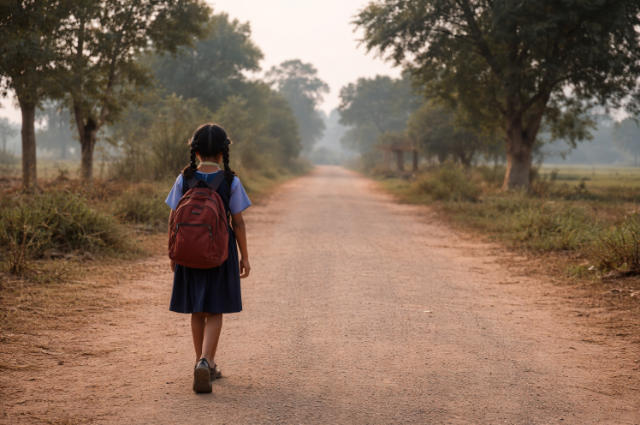
The Jogini system originated between the 7th and 13th centuries AD. It took root in Telangana and Karnataka under Rashtrakuta, Chalukya, Kakatiya, and Hoysala dynasties, tied to Veerashaiva and early Jain traditions where girls were dedicated as "Yoginis" to deities.
Jain influence first shaped it in the 7th-9th centuries -girls as temple servants. Veerashaivism solidified it by the Kakatiya era (9th-13th centuries), with French accounts confirming Joginis during their reign. Post-Kakatiya decline, it spread from Karnataka's Basaviaranya into united Andhra, hitting Dalit families hard.
Village crises sparked dedications: illness or drought meant "offering" a girl to Yellamma for mercy. Evolved from noble temple arts into feudal sex slavery.
The Jogini system traps young Dalit girls in a cruel paradox of divine honour and human slavery. Married to Goddess Yellamma as children, they become eternal brides to a deity, but lifelong property to village men who sexually exploit, abandon in old age and then joginis die alone.
Poverty strikes a Dalit family in rural Telangana. Illness lingers. Crops fail. The village priest whispers: the Goddess demands your daughter. At age 6-12, she is bathed like a bride, a thaali tied around her neck in a temple ritual. Now "Nitya Sumangali," eternally married, she can never wed a man. Some become Jogini at 6,8,12..and so on.
Superstition seals it. Families believe this wards off evil and brings prosperity. But it dooms the girl. In Telangana's Mahbubnagar and Nizamabad, thousands endure this, mostly the Scheduled Caste girls from Madiga or Mala communities. Official estimates 14,879 Joginis in Telangana alone as of 2014-15, though activists say up to 50,000.
She hits puberty. A ritual unfolds. Her virginity, the "first night" is auctioned or claimed by upper-caste landlords, headmen, or priests. They pay her family a pittance: sarees, cash, groceries. From then, she serves any man who calls. No consent. No refusal.
In Narayanpet, Telangana, men from "higher" castes, who shun her as untouchable by day, exploit her at night. She lives with her parents but depends on these patrons financially. Pregnancy brings stigma; children are often fatherless, daughters sometimes are forced into the cycle, ending up becoming a Jogini.
Festivals honour her. She carries the bonam pot, villagers touch her feet as she channels the divine. But daily? Worse than a sex worker. Ostracised, no rights, no steady income. Alcohol is forced on young Joginis by parents or villagers to make them compliant and numb to sexual exploitation. Started at puberty to ensure she won't resist patrons, dulls trauma, breaks spirit early. Leads to addiction, depression, and affects over 80% affected.
Just imagine a fragile child in the village temple, not more than 6 years old, draped in a saree too heavy for her shoulders. The priest ties the thaali around her neck. People say to her that she is now married to Goddess Yellamma and has become “Nitya Sumangali”, but god never reaches down to wipe away her confusion or hold her trembling hand through the long nights ahead. As years pass, she hits puberty, village men show up one by one claiming their right. She is there during the night and by morning empty hut, empty arms, leaving her curled in the dark of her parents' hut, body aching, heart hollow, she wonders why no one lingers, no one sees the girl beneath the duty.
A 32-year-old Jogini named Lakshmi moves like a ghost among the living. Dedicated at age 7 to Goddess Yellamma, she felt briefly like a bride chosen by the divine. But that joy faded fast, replaced by solitude that has shadowed her every step since. Now, she roams alone in those fields, after endless days, harassed by men who see her as property, shunned by women who fear her touch will bring a curse. Her own son, born from one of those forced unions, turns away when she reaches out, his eyes filled with a shame he didn't choose. "No respect," she whispers with a breaking voice, as the village spits at her feet. It's a pain leaving an emotional void where clients come and go, but no true connection is ever formed.
Vaishnavi breaks down in tears, sobbing that her life as property means no real belonging, just endless utility. (watch the video through the link given below)
These joginis dream of a gentle husband, children calling her "Amma" with pride, a peaceful life with shared sunset forever.
The main law banning the Jogini system is the Andhra Pradesh Devadasis (Prohibition of Dedication) Act, 1988, adopted by Telangana post-bifurcation. It criminalises dedication ceremonies (up to 2 years jail), sexual exploitation of dedicated women (5 years), and temple/village propagation. Still, it persists in secret. Weak enforcement: no dedicated officers, poor awareness. Karnataka counts 40,600-80,000 Devadasis & Andhra 16,624.
STD rates soar. HIV is 5 times higher in Devadasi districts (2.6% vs 0.52% state average). Jogini mortality from AIDS is 10 times India's female average, as no condoms are used.
Old and "useless," she begs at Yellamma temples as "Jogwa." Rehabilitation promises pensions, housing, and loans. Nizamabad rehabilitated 3,300 by 2020, but many were denied, like one widow, despite qualifying for government aid like pensions and housing under post-1988 schemes, her village sarpanch (head) blackmailed and denied her benefits, claiming she must resume "services" or face exclusion. She ended up destitute, begging like many others.
. . .
References:
- The Gods Are Not Going To Save Us Just Because We Are ... https://tribe.article-14.com
- Joginis: The religious sex slaves of Telangana https://www.thenewsminute.com
- Status of Jogini System and Rehabilitation of ... https://cess.ac.in
- 25-year-old Telangana woman rescued from being forced ... https://www.thenewsminute.com
- Devadasi System, History, Practices, Reforms, Challenges, ... https://vajiramandravi.com
- Policy Brief on Devadasi Legislation https://clpr.org.in
- HIV in India: the Jogini culture - PMC https://pmc.ncbi.nlm.nih.gov
- International Dalit Solidarity Network https://www.ohchr.org
- Socio-economic Condition and Rehabilitation of Joginis in ... https://journals.sagepub.com
- DALIT WOMEN IN INDIA https://www.ijnrd.org
- Telangana Jogini Vaishnavi Emotional Words About Her Life https://www.youtube.com