
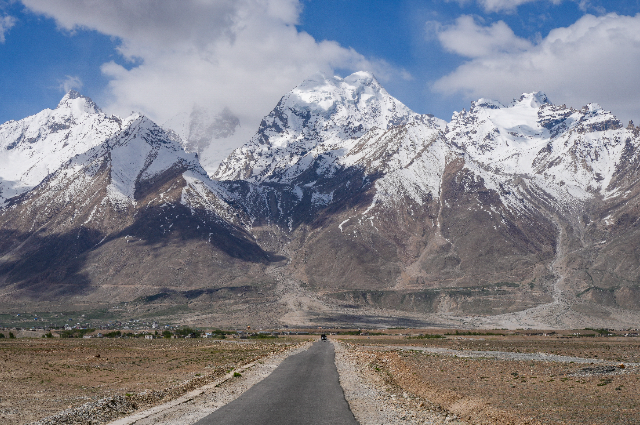
Amid the howl of the wind nipping across barren mountains and receding glaciers in Ladakh, in the high desert of northern India, where a crescent moon nestles like a jewel on the throat of the Himalayas, lives a man named Sonam Wangchuk, an engineer who has been celebrated for years throughout Asia for his innovative spirit. Lauded for building SECMOL, a school that makes success stories of dropout rates by plunging students into hands-on learning in extreme conditions, Wangchuk also invented what he calls the “ice stupa” cones tall enough to mimic Buddhist monuments but made of artificial ice, hauled in from circuitous valley streams and stored high over villages so they disgorge sparingly through spring months as irrigation when natural sources dry up. These simple but ingenious ideas led to his receiving the Ramon Magsaysay Award in 2018, a prestigious prize sometimes dubbed the Nobel Prize of Asia for its emphasis on selfless service, recognising leaders who address poverty, corruption and environmental degradation with grassroots innovation. But now, in February of 2026, this same innovator is being held prisoner in a jail in Jodhpur under India’s National Security Act (they say that NSA stands for ‘National Security’ but let the bait and switch speaking truth to power chips fall where they may), which authorizes preventive detention for as long as two years without any charges being filed or anyone facing trial who has committed an offense if there are “reasonable grounds” to believe that his release would be “prejudicial to the defense of India.” — setting off a firestorm across the nation about what constitutes walking out on the limb of silencing voices over protecting the national heritage.
Wangchuk’s woes began with a mild demand that strikes a chord in Ladakh’s tenuous ecology and tribal heartland — statehood for the region, under the Sixth Schedule of the Constitution that accords autonomous councils to protect indigenous land rights, culture and customs against mining lobbies and outside intrusions, not least along the sensitive border with China. What began as hunger strikes and demonstrations in Leh grew unruly from September 2025, when four died during protests, then presumably precipitating his arrest on September 26 under the NSA — a colonial-era law reinvigorated in 1980 that critics say is easy to abuse since it rests on secret intelligence rather than evidence you would produce in court. As recently as early February 2026, the central government continued to defend Haroon's detention before the Supreme Court that he posed a danger against his country of origin for being investigated by international authorities whose regional talks on movements like Nepal's uprisings or the Arab Spring could stoke unrest even though his family maintains that at its heart, protests remained non-violent and a habeas corpus plea has yet to be resolved, demonstrating how such laws can suspend lives indefinitely while courts struggle with backlogs.
This pattern is mirrored in other high-profile cases all that expose conflicting impulses between security and free speech, rights enshrined in free-speech Articles 19 through 21 of India’s Constitution protecting expression, assembly and personal liberty. Consider the Citizenship Amendment Act (CAA) of 2019, which fast-tracks citizenship for refugees who are not Muslim and who fled persecution in Pakistan, Bangladesh and Afghanistan; but not those, that is to say Muslims, who followed a similar path through history a provision that prompted vast protests across the country by critics arguing it contravenes India’s secular ethic by tying rights with religion. During the upheaval, which morphed into the 2020 Delhi riots that led to 53 deaths, student activists Umar Khalid and Sharjeel Imam emerged as prominent voices of dissent; both a Jawaharlal Nehru University (JNU) alumnus and a mathematician turned orator have been booked under the Unlawful Activities Prevention Act (UAPA), an anti-terror law amended in 2019 to make getting bail nearly impossible unless courts “believe” in innocence beyond doubt. More than five years later, in January 2026, the Supreme Court refused to grant them bail in a “larger conspiracy” case because their roles were supposedly central and denied trial completion for them as UAPA cases languish with conviction rates not even reaching 3 per cent, and it is alleged that the Act is being weaponised against dissenters, from farmers to journalists.
The strains of the 2018 Bhima Koregaon violence near Pune, in which Dalits clashed with upper-caste forces during a commemoration of a colonial-era battle against them, led to activists such as Father Stan Swamy, an 84-year-old Jesuit priest and tribal rights activist suffering from Parkinson’s disease who was arrested under UAPA for alleged Maoist links despite his frail health preventing him from even sipping water from a straw without help. He died in custody in July 2021 without a conviction, and later forensic investigation found that damning files had quite possibly been uploaded onto his computer, but the case festers, with most of the 16 accused now on bail after years, yet no charges filed, and justice is as good as denied. These cases, whether from Ladakh’s ice-capped topography to the streets of Delhi and plains of Maharashtra, all point towards a dangerous pattern: Acts like NSA and UAPA envisaged to tackle real threats like terrorism are being used against those who are asking questions about decisions by saying there can hardly be debate in their regard, terming them as "anti-national" though it is without corporate law.com legal weight but with well-known impact on public opinion which withers away the democratic zone where dissent infuses more strength into the nature than less.
And it will take focused changes to bring the system back into equilibrium without jeopardising safety. Firstly, the UAPA must be amended to remove non-violent dissent, protests and speech from definitions of “terrorist act,” establishing thresholds of evidence and requiring clearance by Independent Judicial Review Boards for detentions within 48 hours, as upheld through several observations of the Supreme Court. Time-bound trials, perhaps within six months or automatic bail, could prevent indefinite limbo, coupled with required police training on constitutional rights and penalties for abuses like compensating wrongfully arrested people. In the case of the NSA, placing expiration dates on renewals and ensuring periodic parliamentary oversight would prevent arbitrariness. Civil society could nudge forward through public interest litigations, just as opposition parties lobby for legislative tweaks, that India honours its global brand as the world’s largest democracy, where questioning power invites dialogue and not detention.
Are we protecting the nation or starving its soul when we call someone like a climate hero , trying to fast for his people’s future, or a student writing about inequality, a threat? The Constitution murmurs an answer, if only the system will listen.
. . .
References:
- Ladakh ‘Gen Z' protest: Sonam Wangchuk detained under NSA, taken to Jodhpur https://www.hindustantimes.com
- Supreme Court adjourns plea against Wangchuk's NSA ... https://www.nationalheraldindia.com
- 'Role Central To Conspiracy': SC Denies Bail To Umar Khalid, Sharjeel Imam In Delhi Riots Case https://www.youtube.com
- India: Continued detention of Umar Khalid and Sharjeel Imam raises ... https://www.amnesty.org
- Forensic experts find evidence planted on Father Stan ... https://www.csw.org.uk
- Elgaar Parishad-Bhima Koregaon case: 16 accused, 1 dead, 1 in custody, 14 out on bail. The bail diaries https://indianexpress.com
- Modi govt using UAPA to crush dissent, erode constitutional rights https://www.newindianexpress.com
- The Unlawful Activities (Prevention) Amendment Act, 2008 ... https://www.mha.gov.in