
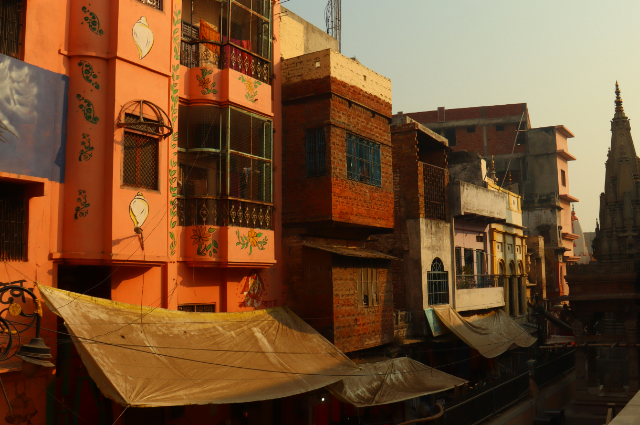
“Kashi Marnam Mukti”
Death — the most uncertain phenomenon in this world — and yet, people wait for it.
Not by accident. Not helplessly. But consciously.
In a world obsessed with beginnings—new careers, new cities, new versions of the self—why would someone choose to sit beside an ending? Why would people abandon familiar homes, shared meals, and everyday routines to wait for something that cannot be scheduled, predicted, or controlled?
This question leads us to Mukti Bhawan, a quiet guest house in Banaras, where entry is granted only when death is believed to be near. Here, no one checks in with hope for recovery. They arrive with something far rarer—acceptance. Money cannot buy a room, comfort is not advertised, and time is never promised. The only qualification is readiness.
Mukti Bhawan does not pretend to save lives. Its walls do not echo with medical urgency or whispered optimism. Instead, they hold a different promise: peace. These are not hospitals, where life is fought for breath by breath, nor lodges meant to pause before another journey. They are spaces created solely for the final passage—where waiting becomes sacred, silence becomes language, and time is measured not in days, but in prayers and chants.
Inside, death is not hidden or feared. It is spoken of openly, like an inevitable guest who will arrive when it chooses. Families sit together, not drowning in despair, but wrapped in quiet understanding. Grief exists, but it does not scream. Chants drift through corridors, replacing anxiety with devotion. What the outside world calls an end, this place understands as freedom.
Waiting here is not surrendering to darkness. It is trusting that the final moment—however uncertain—can still carry meaning. It is believed that letting go, when done consciously, can be the bravest journey of all.
The Purpose
According to Hindu scriptures, the soul must pass through 8.4 million rebirths to finally attain a human life—the only form capable of seeking liberation. Human existence is seen not as a destination, but as an opportunity: a narrow doorway through which Moksha may be attained.
It is believed that dying and being cremated in Kashi (Varanasi) releases the soul from the endless cycle of birth, life, death, and rebirth governed by karma. In this belief system, Mukti—liberation from worldly suffering—is the highest goal, far beyond wealth, status, or even longevity.
For those who come to Mukti Bhawan, death is not a failure of the body. It is the fulfillment of a spiritual journey.
The Rule
Mukti Bhawan is small—only twelve rooms—and it does not announce its rules on boards or walls. They are understood the moment one steps inside.
Time here is limited. A stay usually does not exceed two weeks. If death does not arrive within that span, families are gently asked to leave. Not out of cruelty, but necessity—because many others are waiting for the same final chance at liberation. Even death, here, follows a discipline.
Life inside is deliberately stripped of excess. The rooms are bare, the food simple, the surroundings quiet. Luxury has no meaning when attachments are being loosened. Detachment is not preached—it is practiced, daily, silently.
No doctors are rushing through corridors, no machines measuring breaths or heartbeats. Instead, mantras replace medicine, prayers become routine, and faith stands as the final companion. Families remain close—not to hold life back, but to help the soul move forward.
Silence is respected. Grief is contained. Death is neither dramatized nor denied. It is acknowledged calmly, as an inevitable visitor who deserves dignity, not fear.
In Mukti Bhawan, people do not come to die because they have lost hope.
They come because they believe that even the last moment of life can be meaningful— that endings, when accepted, can be sacred— and that sometimes, the most profound journey a human can take is not toward survival, but toward release.
. . .
References:
- Varanasi guru
- Wikipedia
- Times of India