
A Documented Incident from Rural India (Pre-1980)
This incident is believed to have occurred sometime before 1980. I came across its account during research into unusual yet recorded real-life events from rural India.
The family involved was living in extreme poverty. Their financial condition was so dire that food was a constant source of tension in the household. Arguments among the children over portions were common—not out of greed, but because there was never enough to eat. This was not merely poverty; it was a state of chronic malnutrition.
The head of the family earned his living by breaking stones—an exhausting and dangerous form of manual labour. Day after day, working amid heavy rocks, his body had slowly begun to give way. His wife was severely ill, physically weak and suffering from multiple ailments. At the time, they had a four-year-old son, and the woman was pregnant with their second child. The mother and both children were malnourished and frail.
Then, suddenly, news spread that the man had died.
No clear cause of death was ever recorded. There was no documented accident, no confirmed illness—only a vague account that something happened while he was returning from work and that he was presumed dead.
The family and the villagers accepted that his life had ended. There was no visible movement in his body, no apparent breathing, and he was declared dead.
Preparations for the funeral began.
As the funeral pyre was being arranged and the process of cremation had already started, something happened that left everyone present in complete shock.
The man who had been presumed dead suddenly sat up.
According to eyewitnesses, he spoke clearly and said,
“Why are you burning me? I am alive.”
For a few moments, no one could comprehend what they were witnessing. A body that had shown no signs of life just moments earlier was now breathing. Slowly, the man even stood up.
The incident was beyond belief—not only for the family, but for everyone present. A person who had been declared dead and for whom the last rites had already begun was, in fact, alive.
To this day, the event raises unsettling questions:
Was it a medical error?
Could it have been a case of extreme malnutrition causing a temporary shutdown of bodily functions?
Or does it point to a serious failure in identifying death in rural settings with no medical supervision?
After the incident, chaos spread throughout the village. The same people who had been preparing the funeral moments earlier were now staring at the man standing alive before them. Confusion, fear, and disbelief filled the air. Some dismissed it as an illusion, others saw it as a divine sign, and for many, it remained an inexplicable event—something they would never fully understand.
People began questioning him one after another.
“How is this possible?”
“Was he truly dead?”
“Or is this some kind of divine miracle?”
Some declared it an act of God’s grace, others called it a miracle. Yet there was no joy or excitement on the man’s face. He looked utterly exhausted and disoriented. After a while, he spoke only a few words:
“I am very thirsty… I need water.”
His voice was weak, as though he were speaking after a very long silence.
The villagers decided not to keep him there. They took him to a quieter place where he could sit comfortably and speak without disturbance. He was seated on clean ground, and someone brought him a pot of water.
He drank slowly. His hands trembled as he held the pot. When he finished it, he took a deep breath—one that felt as if life itself had returned to his body after a long absence.
For a few moments, he remained silent.
Then he began to speak.
He said that he had truly died. According to him, his soul had left his body. He stated clearly that he had died and come back. There was no fear in his words—only a strange sense of certainty.
He went on to explain that while his body lay motionless, his soul was wandering elsewhere. He felt an intense thirst. He kept searching for water, moving from place to place, but found none. The thirst grew unbearable.
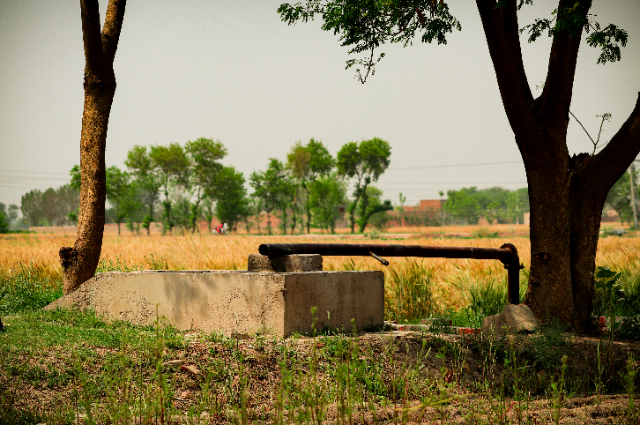
As he wandered in search of water, he said, he went so far that he eventually saw a well in the distance. He believed his thirst would finally be quenched there. But the moment he reached the well, he heard a voice.
He could not tell where the voice came from. No one was visible. He did not know who it was. Yet the voice was clear and commanding.
It said,
“Go back from here. You will not find water here. Only when you return will you receive water.”
According to the man, he obeyed without asking a single question. He immediately turned away from the well and began walking back along the same path he had taken.
As he walked, sudden thoughts filled his mind. He said that at that very moment, the image of his small children appeared before him. He remembered his wife’s face. He realised that he could not die like this. The thought struck him with such force that he did not even notice when he slipped out of that state of awareness.
He said he had no memory of how he returned to his body. He only remembered that in the very next moment, he was inside it—breathing, alive, and standing in front of everyone.
He added that it was likely the memories of his family—his children and his wife—that pulled him back.
For the villagers, this account was deeply unsettling. This was no longer just a case of someone being mistakenly declared dead. It had become an experience that people interpreted according to their own beliefs and understanding.
Continuing his story, the man said that the fear in his heart was not only about life or death—it was something far greater: poverty.
In his words, the circumstances were already unbearable. He said that the country had been independent for many years—freedom had come in 1947—but the lives of ordinary people were still bound by the chains of poverty. For him, freedom was not a political term. True freedom would come only when a family no longer had to struggle for two meals a day.
He said that if he had truly died, his wife would have been left alone—weak, ill, and responsible for small children: a four-year-old son and a daughter still growing in her womb. The thought of how his wife would raise them in such a condition was eating him from within.
That concern, he said, troubled him more than anything else. He could not accept leaving his family behind in such a state. According to him, it was this very anxiety and the pull of his family that forced him to return.
In the end, he said that perhaps it was those memories—the struggle of his wife and the future of his children—that became the reason he came back to life.
The villagers listened in silence. Some called it a miracle. Some believed it was the will of God. Others saw it as an example of the mysterious bond between the mind and the body—a connection that science, even today, has not fully been able to explain.