
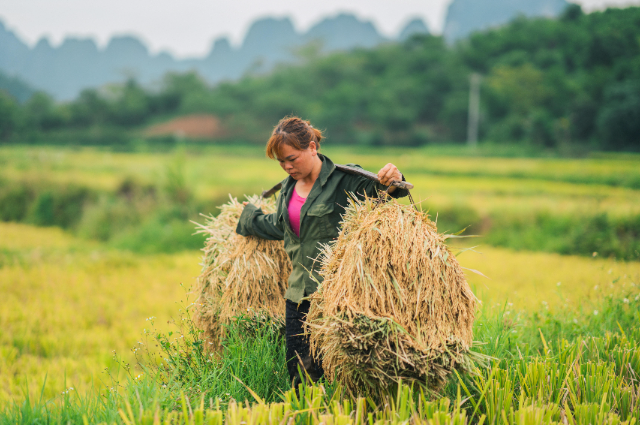
India’s agricultural crisis is often conversed in terms of numbers, acres of land, crop production, debt numbers, and suicide statistics. Perhaps human lives lie behind these numbers and stories of loss that rarely receive persistent consideration. Among the most invisible victims of this crisis are the widows of farmers who die by suicide. Where the death of a farmer marks the end of one life, it often indicates the beginning of eternal hardship for those who survived. Understanding the scale, reasons, and outcomes of farmer suicides is crucial to identifying why widows and children are among the most at-risk populations in rural India.
The Scale of the Crisis
Farmer suicides in India are not detached or uncommon occurrences; they are part of a constant national tragedy. According to data from the National Crime Records Bureau (NCRB), around 10,000–11,000 people involved in farming lose their lives by suicide annually. In 2023 alone, 10,786 farmers died by suicide, accounting for about 6.3% of all suicides in the country. This leads to an average of one death per hour, underscoring how deeply rooted and continuous the disaster is.
The problem is not equally distributed across the country. Certain states endure a disproportionate burden. Maharashtra has persistently been adversely influenced, more specifically, the districts of Vidarbha and Marathwada, sometimes accounting for almost 35% of farmer suicides globally and nationally. Karnataka follows closely, especially in drought-prone areas where cultivation is dependent on unpredictable heavy rainfall. Andhra Pradesh and Telangana also report increased suicide rates, particularly in cotton-growing areas risky to crop failures and cost changes.
A significant and worrying shift has occurred over the years. Previously, land-owning farmers were the most affected group. Now, agrarian workers, people who do not own land but work on others’ farms, account for more than 55% of suicides in the farming sector. This difference shows how poverty and distress have propagated beyond landowners to those with even less resources and safety measures.
A Cascade of Distress:
Root Causes
There is not even one genuine reason why farmers take their own lives. Instead, the shift is driven by a “cascade of distress,” where more than one factors build upon one another until the pressure becomes unendurable.
Indebtedness lies at the heart of the problem. Farmers often borrow money to buy seeds, fertilisers, pesticides, and machinery. When crops fail or prices decrease, they are unable to pay back these loans. Formal banking systems are often inaccessible or weak, leading many to rely on local moneylenders who charge extremely high interest rates. Over time, this leads to a debt trap, where loans are taken simply to repay previous debts.
Climate change has worsened the agricultural uncertainty. Unpredictable weather changes, such as long-term droughts, unexpected floods, and unseasonal rainfall, can destroy entire crops in a single season. Pest attacks, like the pink bollworm infestation in cotton, have further devastated yields. When crops fail, farmers lose not only their income but also the means to invest in the next season.
Rising input costs compound the problem. The prices of seeds, fertilisers, diesel, and electricity continue to rise, while the prices farmers receive for their produce often do not keep pace. As a result, many farmers find themselves earning little or no profit, even after months of hard labour.
Market volatility adds another layer of risk. Global price fluctuations for crops such as cotton or soybeans can sharply reduce earnings. Farmers, who have little control over these markets, are often left unable to recover even their basic expenses.
Beyond economics, social and mental health factors play a crucial role. Farmers face immense pressure to fulfil family responsibilities, such as funding children’s education, arranging marriages, or paying for medical treatment. Financial failure carries social stigma, leading to feelings of shame and isolation. Mental health services are scarce in rural areas, leaving farmers with little emotional or psychological support during crises.
Government Responses: Help with Limits
Over the years, the Indian government has introduced several schemes to address agrarian distress. While these initiatives provide some relief, their impact remains limited.
The PM-KISAN scheme provides ₹6,000 per year as direct income support to farmers. While helpful for small farmers, this amount is insufficient to offset large debts or significant crop losses. The PM Fasal Bima Yojana (PMFBY), a crop insurance program, aims to compensate farmers when crops are destroyed by natural disasters. However, delays in payouts, exclusions, and complex procedures often reduce its effectiveness.
State governments occasionally announce loan waivers, offering temporary relief to indebted farmers. Critics argue that these waivers do not address the structural causes of debt and may even encourage future borrowing without long-term solutions. Similarly, increases in the Minimum Support Price (MSP) are intended to ensure farmers earn at least 50% profit over production costs. In practice, many farmers still sell their produce below MSP due to market conditions or lack of access to procurement centres.
The Hidden Aftermath: Widows and Children
When a farmer dies by suicide, the immediate focus often remains on the death itself. Far less attention is paid to the aftermath—the lives of widows and children left behind. For many widows, the loss of their husband also means the loss of the family’s primary or sole source of income. In patriarchal rural settings, women may not have land titles in their names, limiting their access to compensation, credit, or government schemes.
Children are deeply affected as well. Many are forced to drop out of school to work and support their families, perpetuating a cycle of poverty. Emotional trauma, combined with financial hardship, shapes their prospects in profound ways.
Widows often face social stigma and isolation. They may be blamed for their husband’s death or treated as a burden by extended family members. Mental health struggles are common, yet support systems are weak. While NGOs and local support groups attempt to assist with counselling, education, and livelihood programs, their reach is limited and uneven across regions.
Breaking the Cycle
Farmer suicides are not just individual tragedies; they are symptoms of systemic failure. Addressing the crisis requires more than temporary financial aid. Long-term solutions must include sustainable farming practices, better access to affordable credit, stable markets, and robust mental health services in rural areas. Equally important is ensuring that widows and children receive social protection, education, and opportunities for economic independence.
The widows of India’s farm crisis stand as silent witnesses to a broken system. Their struggles remind us that every statistic represents a family left behind, grappling with loss and uncertainty. Until policies address both the economic and human dimensions of agrarian distress, the cycle of suffering is likely to continue, quietly, relentlessly, and at an unbearable cost.
References
- National Suicide Records Bureau (NCRB) data shows that in 2023, 10,786 farmers and agricultural labourers died by suicide, constituting approximately 6.3% of all suicides in India. The Times of India +1
- Among these, agricultural labourers outnumber cultivators, showing how distress has spread beyond landowners. Elearn.legacyias.com
- States such as Maharashtra and Karnataka have historically borne the highest number of farmer suicides, with Maharashtra often contributing the largest share. Down To Earth +1
- Long-term NCRB data indicate that hundreds of thousands of farmers and agricultural labourers have died by suicide between 1995 and 2023. Down To Earth
- Climate change-related impacts, such as drought, heatwaves, and crop failures, have worsened agricultural instability, particularly in regions like Marathwada and Vidarbha. Malay Mail
- The PM-KISAN scheme provides direct income support to farmers, intended to supplement income, though critics argue it is insufficient relative to debt burdens and losses. Navbharat Times
- The Pradhan Mantri Fasal Bima Yojana (PMFBY) crop insurance programme aims to offer compensation for crop losses but often faces issues with delays and low uptake in practice. Indiatimes