
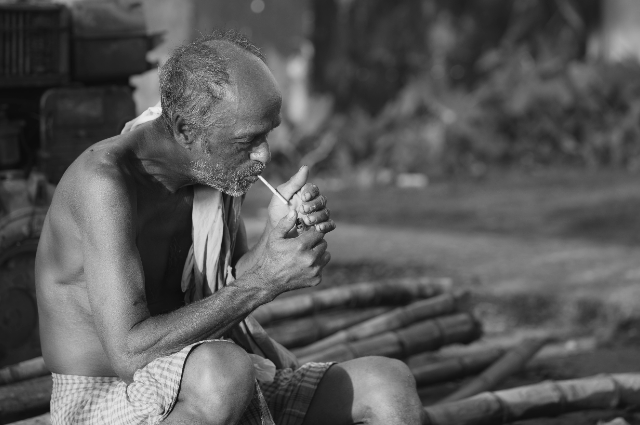
Poverty is usually described as a simple shortage of money. When in reality, it is a complex cycle shaped by income, surrounding, habits, and limited choices. One of the most overlooked contributors to constant poverty is how households plan their spending. Recent findings from India’s Household Consumption and Expenditure Survey (HCES) 2023–24 highlight a troubling pattern: rural households spend only about 2.5% on education, while nearly 4% goes toward tobacco products.
This imbalance is not just a statistic. It highlights a deeper issue where short-term coping behaviours are prioritised over long-term investments like education and nutrition. At the centre of this problem lies a widely consumed product: gutka.
The Gutka Explosion
Gutka has, within a short period of time, become the most dominant form of tobacco consumption in rural India. Over time, its use has increased dramatically. The share of rural households consuming gutka has risen nearly sixfold, from 5.3% to 30.4%. Today, it accounts for 41% of total rural tobacco expenditure, making it the single largest tobacco product by value.
Its spread and addiction are especially high in India’s central belt, including states like Madhya Pradesh, Uttar Pradesh, Bihar, Chhattisgarh, and Rajasthan. In some areas, the numbers are alarming; more than 60% of rural households in Madhya Pradesh and over 50% in Uttar Pradesh report consuming gutka.
This surge is not accidental. Gutka is less costly, easily available, and packaged in small, affordable sachets. Its availability and easy access makes it particularly convenient to consume to low-income households, where even a small expense can feel manageable but accumulates significantly over time.
It’s Getting Worse Over It
The situation is not constant. It is getting out of control gradually. When adjusted for inflation, per capita spending on tobacco has increased significantly over the past decade. Between 2011–12 and 2023–24, tobacco expenditure rose by 58% in rural areas and 77% in urban areas.
At the same time, the number of households consuming tobacco has also increased. In rural India alone, tobacco-consuming households rose from 9.9 crore (59.3%) to 13.3 crore (68.6%), marking a 33% increase.
This shows that tobacco use is not declining with economic growth or awareness. Instead, it is becoming more widespread and deeply embedded in everyday life, making it harder to break the cycle.
Who Is Most Affected: The Poor
The burden of tobacco consumption falls disproportionately on the poorest population of society. In rural India, more than 70% of households in the bottom 40% income group consume tobacco. In states like Uttar Pradesh, Madhya Pradesh, and Bihar, this figure rises to over 85%.
What makes this more concerning is that poorer households spend a larger share of their income on tobacco compared to wealthier households, 1.7% versus 1.2%. While this difference may seem small, it is essential for families already struggling to meet basic needs.
The opportunity cost is severe. If the money spent on tobacco were redirected toward food, it could provide an additional 500 calories per day for one or two children. In communities where malnutrition is common, this could make a meaningful difference in health and development.
The Health Fallout
Tobacco intake has worsening health consequences. It is a leading cause of non-communicable diseases such as lung cancer, chronic obstructive pulmonary disease (COPD), heart disease, and oral and oesophageal cancers, particularly from smokeless products like gutka.
According to the Ministry of Health and Family Welfare, tobacco contributes to approximately 13 lakh deaths every year. These are not just numbers; they represent families losing earning members, children growing up without support, and communities facing long-term economic strain.
The financial impact is equally severe. For every ₹100 earned by the government through tobacco taxes, society incurs a cost of ₹816 in healthcare expenses and lost productivity. This highlights how tobacco not only harms individuals but also places a heavy burden on the entire economy.
Why It’s So Hard to Stop
Despite its harmful effects, quitting tobacco is extremely difficult, especially for low-income individuals. Addiction plays a major role, but there are deeper social and economic reasons as well.
For many labourers and migrant workers, gutka serves as a quick and affordable form of relief after long hours of physically demanding work. A small sachet costing ₹5 offers temporary stress relief and even acts as a hunger suppressant, helping individuals get through the day when they cannot afford enough food.
Cultural and social factors also reinforce its use. Tobacco is often part of social interactions, creating a sense of bonding among workers. It is also linked to traditions, ceremonies, and rituals. Additionally, widespread myths, such as gutka aiding digestion, relieving stress, or acting as a mouth freshener, make it seem less harmful than it actually is.
These factors combine to create a strong dependency that is not easily broken.
The Regulatory Failure
Efforts to control gutka consumption have faced significant challenges. Although gutka was officially banned in 2012, manufacturers quickly found a loophole. They began selling the product in two separate pouches, one containing pan masala and the other containing tobacco, which consumers mix themselves.
This “twin-sachet” strategy effectively bypasses the ban while keeping the product widely available. Despite being flagged by the Supreme Court ” as early as 2016, this practice continues openly even today.
The failure to enforce regulations highlights a gap between policy and implementation. Without strict enforcement, bans lose their effectiveness, allowing harmful products to remain accessible to vulnerable populations.
The Bigger Picture
Tobacco consumption is not just a health issues, it is deeply connected to poverty. By diverting income away from essential needs like food, healthcare, and education, it reinforces a cycle that is difficult to escape.
What is particularly concerning is that as incomes rise, households are not significantly reducing their tobacco expenditure or reallocating it toward better nutrition or education. This suggests that existing policies are not addressing the real trade-offs households face.
Health, nutrition, and economic policies often operate in isolation, failing to consider how they interact within household budgets. As a result, efforts to improve well-being may be undermined by unaddressed consumption patterns.
The uncomfortable truth is that poverty is not sustained by low income alone; it is also shaped by how limited resources are used under difficult circumstances.
Tobacco consumption, especially gutka, plays a significant role in this cycle by draining financial resources, damaging health, and limiting opportunities for future growth.
However, this is not simply a matter of individual choice. These behaviours are influenced by addiction, cultural norms, economic stress, and weak regulatory systems. Addressing the issue requires a comprehensive approach, stronger enforcement of laws, targeted public health campaigns, improved access to nutrition, and better support systems for vulnerable populations.
Breaking the cycle of poverty demands more than economic growth. It requires confronting difficult realities and addressing the hidden factors that keep people trapped. Until then, the path out of poverty will remain far more complicated than it appears.
References:
- Ministry of Statistics and Programme Implementation — Household Consumption and Expenditure Survey (HCES) 2023–24
- Ministry of Health and Family Welfare — National Health Profile & tobacco-related mortality data
- World Health Organization — Global Tobacco Epidemic Reports
- Indian Council of Medical Research — Studies on tobacco burden and disease impact in India
- Global Adult Tobacco Survey — Prevalence and patterns of tobacco use in India