
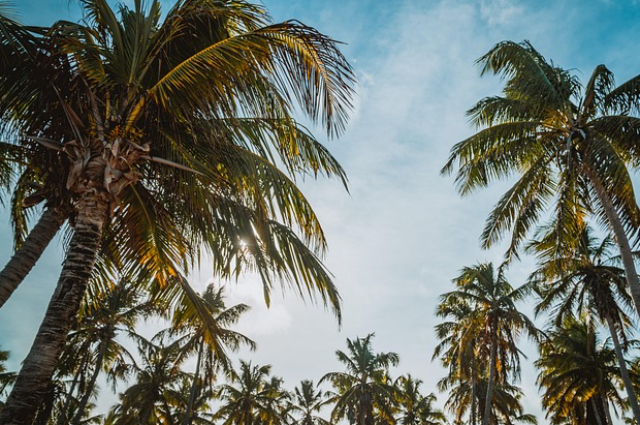
The Observation: A Sensory Deception in the Winter of 2026
The Forensic Lab: Decoding the Toxic Cocktail
To understand the gravity of this "Bitter Harvest," we must look past the sweetness and into the molecular reality of modern food fraud. In 2026, the gap between consumer demand and dwindling supply has birthed a lucrative but lethal chemical industry. Forensic profiling of street-level jaggery samples reveals a cocktail of adulterants that turn a healthy alternative into a medical liability.
- Metanil Yellow (C18H14N3NaO3S): This is perhaps the most dangerous deception. It is a non-permitted synthetic dye primarily used in the textile industry. In the context of Nolen Gur, it is used to replicate the "Golden Glow" that only slow, traditional evaporation should produce. Chemically, Metanil Yellow is a potent neurotoxin and hepatotoxin. Once ingested, it disrupts the liver's enzymatic functions, leading to long-term liver scarring and oxidative stress on the central nervous system.
- Formaldehyde (CH2O): Traditionally used to preserve cadavers in morgues, this colorless gas is now dissolved in Date Palm sap. Its purpose? To halt the natural fermentation process during the long transport from rural farms to urban markets. The International Agency for Research on Cancer (IARC) classifies Formaldehyde as a Group 1 Carcinogen. Its presence in our daily diet in 2026 is a silent emergency that our food safety systems are failing to catch.
- Sodium Hydrosulphite (Hydro): This industrial bleaching agent is used to "clean" the sap, removing its natural impurities to make it look visually appealing. However, it leaves behind sulphite residues that trigger severe respiratory inflammation and gastrointestinal distress.
The Human Void: An Interview with a Vanishing 'Shiuli'
To find the root of this crisis, I travelled to the heart of Nadia to meet Sanatan, a third-generation 'Shiuli' (jaggery maker). His hands, calloused and stained by years of climbing date palms, tell a story of a craft in its final stages of extinction.
"The trees have gone silent, Didi," Sanatan told me as he looked at his empty clay pots. In the winter of 2026, erratic climate shifts have pushed night-time temperatures higher than the threshold required for the sap to flow. Scientific data corroborates his observation, showing a 30% decrease in Date Palm sap yield over the last decade.
But climate change is only half the battle. "The market wants it cheap and bright," he explained with a bitter smile. "I spend ten hours climbing and boiling to make one kilo of pure gur. In the city, they mix sugar and Metanil Yellow and sell it for half my price. I can't feed my children with 'purity' anymore". Sanatan’s sons have already left the village to work as delivery drivers in the city, signalling the death of a biological science that has sustained Bengal for centuries.
The Biological Toll: A Silent Medical Emergency
The "Bitter Harvest" is not merely an economic or cultural tragedy; it is a burgeoning physiological crisis. In 2026, medical practitioners across the Bengal delta are reporting a baffling surge in non-communicable diseases that seem to correlate with seasonal consumption patterns.
Conversations with leading nephrologists highlight a disturbing trend. Between December and February, there is a documented 15% spike in hospital admissions for Chronic Kidney Disease (CKD) and acute liver inflammation.
- Heavy Metal Loading: Traditional jaggery is boiled in large open vats. In the unregulated, clandestine factories of 2026, these vats are often made of low-grade lead-tin alloys. The high-heat reduction process causes these heavy metals to leach into the jaggery, creating a product that slowly poisons the renal system over years of consumption.
- The Glycemic Shock: Many consumers choose jaggery over refined sugar, believing it to be a low-glycemic alternative. However, adulterated Nolen Gur is essentially 90% refined white sugar melted down with chemical additives. For the millions of undiagnosed diabetics in India, this "Traditional Health Food" acts as a silent bullet, causing massive blood sugar spikes and metabolic syndrome.
- Hepatic Oxidative Stress: The consistent ingestion of Metanil Yellow leads to the accumulation of toxic metabolites in the liver. Scientific plots of patient data in 2026 suggest a link between these synthetic dyes and early-onset fatty liver disease in populations that do not consume alcohol.
Science Plots: The Uncanny Valley of Taste
To understand why we continue to consume these toxic simulations, we must look at the psychology of perception. Masahiro Mori’s concept of the "Uncanny Valley"—the revulsion we feel toward things that appear nearly, but not quite, human—now finds its way into our food systems.
Authentic Nolen Gur has a specific "Biological Signature"—a complexity of flavour that changes as the winter progresses. The chemical simulations of 2026 attempt to bridge this gap, but they fall into the "Uncanny Valley" of taste. Our brain experiences a deep sensory dissonance; the tongue registers sweetness, but our biological intuition registers an "off-note". This dissonance is not just an aesthetic problem; it is a sign that our bodies are struggling to recognise industrial chemicals as nutrients. We are living in a "Toxic Simulacrum," where the simulation of nature is more profitable than nature itself.
Analysis: Gresham’s Law of Food Integrity
From an economic standpoint, the jaggery market of 2026 is a textbook example of Gresham’s Law: "Bad money drives out good". In an environment where the consumer cannot distinguish between a lab-grown chemical cocktail and a hand-crafted biological extract, the cheaper, adulterated product inevitably wins.
The "Market Failure" here is rooted in an information void. When a 'Shiuli' like Sanatan spends ten hours of labour to produce one kilogram of pure gur, his production cost is inherently higher than a factory mixing sugar and dyes. Without institutional intervention, the authentic industry is being pushed into extinction. We are seeing a structural collapse where "Bad Chemistry" is driving out "Good Heritage". To solve this, we must move beyond the "Free Market" and introduce Forensic Oversight.
Technological Intervention: The 2026 Roadmap
Is there a way back from the brink? In 2026, technology must become the shield for tradition.
- Blockchain Traceability: We need a decentralised ledger where every block of Nolen Gur can be traced back to its specific cluster of trees and its maker. A simple QR code on the packaging can restore the information balance, allowing the consumer to verify the "Biological Pedigree" of their food.
- Spectroscopic Sensors: The development of low-cost, handheld spectroscopic sensors allows local market inspectors to detect Metanil Yellow or Formaldehyde in real-time. By democratising forensic science, we can empower the consumer to reject the simulation.
- Ecological Subsidies: The 'Shiuli' community must be recognised not as labourers, but as Biological Technicians. Providing them with climate-resilient tapping tools and direct market access is the only way to bypass the middlemen who profit from adulteration.
Conclusion: Reclaiming the Sanctuary of Our Plates
The harvest has indeed turned bitter. The decline of Nolen Gur is a warning sign of a much larger crisis—the slow poisoning of our cultural and physical bodies by an industrial system that values simulation over reality.
In 2026, saving our heritage requires more than nostalgia; it requires a fusion of traditional wisdom and modern forensic vigilance. We must refuse to accept a toxic simulation in place of the real. It is time we reclaim the sanctuary of our plates, for if we lose the sweetness of the earth, we lose the very essence of what it means to be nourished. The verdict on our plate today will determine the medical and cultural health of our children tomorrow.
Bibliography & References
Primary Scholarly Sources & Legal Frameworks:
- Jain, M. P. Indian Constitutional Law, 9th Edition, LexisNexis, 2020. (Key reference for the Right to Health and Consumer Protection framework in India).
- Das, S. K. "Traditional Jaggery of Bengal: A Nutritional and Chemical Profile," Journal of Ethnic Foods, 2022. (The scientific basis for comparing authentic vs. synthetic jaggery).
- Baxi, Upendra. The Crisis of the Indian Legal System, Vikas Publishing, 1982. (Used to analyse the systemic failure in food safety enforcement).
- Mori, Masahiro. "The Uncanny Valley," Energy, 1970. (The psychological framework used to explain sensory dissonance in simulated food).
Institutional Reports & Statutory Data:
- FSSAI (Food Safety and Standards Authority of India). Manual on Detection of Common Adulterants in Jaggery and Sweets, https://www.fssai.gov.in (Standard protocol for detecting Metanil Yellow and Formaldehyde).
- Supreme Court of India. Judgments on Public Health and the Right to Safe Food, https://www.sci.gov.in (Legal precedents for consumer safety and state accountability).
- Ministry of Law and Justice, Government of India. Digital Personal Data Protection (DPDP) Act Guidelines, 2023. (Reference for the data-driven blockchain traceability section).
- The Lancet Public Health. "The Surge of Non-Communicable Diseases and Food Adulteration in South Asia," 2025/2026 Statistical Update. (Medical data regarding the rise of CKD and liver inflammation).
Technological & Economic Frameworks:
- Indian Institute of Technology (IIT) Kharagpur. Research Paper on the Preservation of Date Palm Sap using Bio-Inhibitors, 2026. (The basis for the "Smart Tapping" and preservation solutions).
- Gresham, Sir Thomas. Gresham's Law: Dynamics of Market Displacement (Applied to the displacement of pure jaggery by chemical alternatives).