
A Book That Should Not Exist
Somewhere in India today, there is a book that the British Empire tried to erase from history.
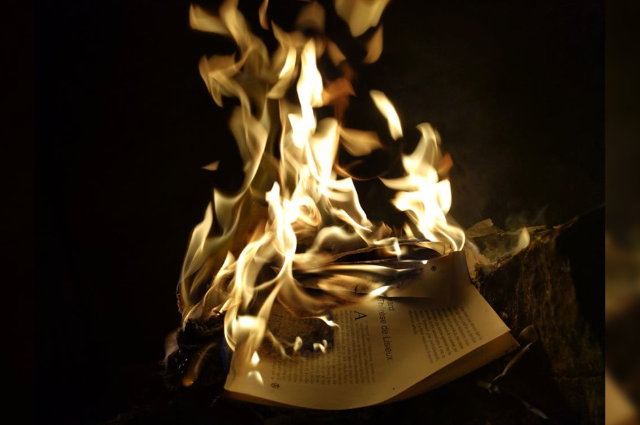
In November 1943, five thousand copies of a small publication called Hungry Bengal — A Tour Through Midnapur District were printed and immediately seized by British authorities and burned. Every single copy, destroyed. The colonial government had read what was inside, and they understood that what was inside was dangerous — not because it was fiction, not because it was propaganda, but because it was the truth.
One copy survived. Chittaprosad Bhattacharya had sent it to his mother.
His sister Gouri Chatterjee later described the moment it arrived: "A few days later, a parcel reached my mother from Bombay. She showed it to my father, to us all — it was my elder brother's book. Perhaps that single copy sent to my mother survives as the sole evidence of the awful terror of the times."
That one surviving copy — passed between trembling hands, hidden from British eyes, eventually locked away for decades — is today the primary visual testimony of one of the most devastating events of the twentieth century.
Three million people died. And yet not a single memorial, museum, or even a plaque — anywhere in the world — commemorates the millions who perished.
This is their story. And the story of the man who refused to let it be forgotten.
The Land That Ate Itself
To understand 1943, you must understand what Bengal was, and what it was being made to become.
Bengal in the early 1940s was not a land in drought. When a team of researchers from the Indian Institute of Technology Gandhinagar, the Indian Meteorological Department, and the University of California, Los Angeles reconstructed soil samples from 1943 Bengal, they found that moisture levels in the soil were above normal. The land was not failing. The crops were not dying. The rain had come.
What was killing people was not nature. It was policy.
The Bengal Chamber of Commerce, composed mainly of British-owned firms and with the approval of the Government of Bengal, devised a Foodstuffs Scheme to provide preferential distribution of goods and services to workers in high-priority roles — armed forces, war industries, civil servants — preventing them from leaving their positions. The food was there. It was simply being directed elsewhere.
Even in 1943, the year Britain officially declared famine in India, Churchill exported 70,000 tonnes of rice to Britain. Grain moved out of Bengal by ship while Bengalis died on the streets of Calcutta for want of a handful of rice.
The provincial government never formally declared a state of famine, and its humanitarian aid was ineffective through the worst months of the crisis. Price controls created black markets. Black markets encouraged hoarding. Hoarding caused hyperinflation. And hyperinflation meant that even the rice that remained in Bengal was priced beyond the reach of the farmers who had grown it.
When the Delhi government sent a telegram to Churchill depicting the horrible devastation generated by the famine and briefing him about the total number of deaths, his response was: "Then why hasn't Gandhi died yet?"
Three million people were dying. And the man with the power to redirect a single shipload of grain made a joke.
The Man Who Walked Into the Fire
While politicians debated and bureaucrats filed reports, a twenty-eight-year-old self-taught artist from Chittagong made a different decision.
Chittaprosad Bhattacharya had always believed that art-making was inherently a political act. He had spent his early career making posters and cartoons for the Communist Party of India, using his pen the way others used fists — as an instrument of resistance. But in 1943, when the famine swept through Bengal's countryside, he understood that this moment demanded something different. Not a poster. Not a cartoon.
A witness.
In 1943, when the Bengal Famine struck, Chittaprosad was sent to Midnapore as a dedicated journalist for the Communist Party to document the effects of the famine in Bengal's villages and towns. He travelled by bus, by boat, and on foot — into the very heart of the dying land. He carried no camera. He carried a sketchbook, cheap paper, and black ink.
Travelling through the Midnapore district, Chittaprosad reported on and drew hunger, illness, forced prostitution, abandoned villages, and uncaring, corrupt officials in the famine-struck districts. He did not draw from a distance. He sat beside the dying. He asked their names. He wrote those names down.
In one sketch from June 1944, the artist describes his subject: "This is hungry, disease-ridden, and virtually naked Rabi Raut, a kisan boy of Kadamdanga village, Balagor, Hooghly district."
Rabi Raut. A name. A child. A face in the middle of a catastrophe that the British government was desperately trying to keep nameless, faceless, and invisible.
Chittaprosad passed deserted villages and barren fields only to find vast scatterings of skulls, bone debris, and looted homes. In a filmed interview years later, he described what drove him: "I represent the tradition of moralists and political reformers. To save people means to save art itself. The activity of an artist means the active denial of death."
He drew skeletal men cradling equally emaciated wives. He drew children whose ribs protruded like scaffolding beneath skin. He drew women standing in rice queues with the hollow eyes of people who had already stopped believing that the queue would reach them. And beneath each sketch, in careful Bengali and English, he wrote what he saw — names, locations, the specific texture of each person's suffering.
He was not one to seek fame or fortune. In a letter to a friend, he wrote: "No one knows it better than me that I am not a genius like Van Gogh. And precisely because I am not, my heart and life lie in the country's revolutionary struggles."
The Book They Burned
Out of his sketches and reports, twenty-two were selected and published in a booklet titled Hungry Bengal — A Tour Through Midnapur District in November 1943.
The British government read it. And panicked.
Five thousand copies. Seized. Burned.
A government that burns books does so because it fears what those books contain. What Hungry Bengal contained was undeniable, unmanipulable, unspinnable proof — not statistics, not economic reports, not political arguments, but human faces. Named, drawn, described, witnessed.
You cannot argue with a child's name written beneath a sketch of his starving body.
The copies were immediately seized by the British and burned, except the one that Chittaprosad had sent to his mother. That copy — hidden first in a home in Bengal, later in an archive — was republished in facsimile by Delhi Art Gallery in 2011, nearly seven decades after it was written. Today it circulates again, slow and steady, finding readers who open it and sit with it in silence for a long time.
What Nine-Year-Old Amartya Sen Saw
Chittaprosad was not the only witness. Amartya Sen was nine years old in 1943, living in Santiniketan with his grandparents, 100 miles north of Calcutta, sent there from Dacca to avoid potential Japanese bombings.
He later described one of his earliest encounters with the famine. A man arrived at his school — skeletal, starving, mentally broken by weeks without food. Young Amartya and his friends tried to intervene when other children were tormenting the man. He asked his grandmother how much rice he could give.
She handed him a cigarette tin. She said he could give up to half of it — but warned him that if he tried to share more among all the hungry people he would see on his street, he would not be able to cope.
That image — a nine-year-old boy with a cigarette tin of rice, standing before a dying man, learning that there was not enough — stayed with Amartya Sen for the rest of his life. It is widely believed to have shaped the work for which he won the Nobel Prize in Economics in 1998: his theory that famines are rarely caused by food shortage, but by failures of entitlement — of who has the right to eat, and who is denied it.
Bengal in 1943 had rice. The right to eat it had simply been taken away.
Three Million Names With No Memorial
Deaths from starvation declined when effective relief finally arrived, yet over half the famine-related deaths occurred in 1944 — after the food security crisis had abated — as a result of disease. The famine did not end cleanly. It bled into the following year, killing through cholera and malaria the bodies that starvation had already hollowed out.
In only two days of August 1943, at least 120 corpses were removed from public thoroughfares in Calcutta alone. In the countryside, bodies were often disposed of in rivers and water supplies. As one survivor described: "We couldn't bury them or anything."
Three million people. No memorial. No plaque. No museum dedicated solely to their memory anywhere in the world.
In Britain, the Bengal famine of 1943 is little known. The teaching of the Bengal famine does not figure in the English students' curriculum. The nation that administered Bengal during those years, that made the policy decisions that directed food away from starving mouths, has not yet formally reckoned with what happened. The Imperial War Museum in London recently opened new World War Two galleries and dedicated a small corner to the Bengal famine — framing it within the context of the war, as though the war were the story and the three million dead a footnote.
They are not a footnote. They are the story.
The Book That Came Back
I came to this story the way most hidden histories are found — by accident, while looking for something else. I was researching real stories from Bengal's past when I encountered a passing reference to a book that the British burned. Something in that detail stopped me cold. A government that burns a book about a famine is a government that knows it caused the famine.
The more I read, the more the scale of what had been suppressed became clear. This was not a footnote. This was not a local agricultural crisis caught in the crossfire of global war. This was three million people — real people, with names that Chittaprosad wrote beneath their portraits — who died while grain left their shores on British ships.
And there is still no memorial.
What Chittaprosad understood, walking through Midnapore with his sketchbook, was something that every generation has to relearn: that the most powerful thing you can do for the dead is refuse to let them be nameless. To write down Rabi Raut. To draw a mother holding her child. To send one copy of a book to your mother in Bombay, just in case.
That copy survived. We are reading it now — eight decades later, in a world that still argues about whether the famine was intentional, while three million graves remain unmarked.
Conclusion: The Weight of a Name
History is not made of events. It is made of people — specific, named, unrepeatable people who lived and ate and loved and, in 1943 Bengal, starved. The Bengal Famine of 1943 is not a chapter in a textbook. It is three million individual human endings, each one as complete and devastating as any other death in any other war that the world has chosen to remember, memorialise, and teach its children about.
Chittaprosad Bhattacharya understood this. He did not go to Midnapore to document a famine. He went to document people — Rabi Raut, and hundreds like him, each with a name, a village, a face that deserved to be seen.
The British burned his book. But they missed the copy he sent home.
And so today, eight decades later, we can still look at those faces. We can still read those names. We can still sit with the weight of what was done, and what was hidden, and what one man with a sketchbook and cheap ink refused to let disappear.
"To save people means to save art itself," he said.
"The activity of an artist means the active denial of death."
Three million people died in Bengal in 1943. They were never given a memorial.
Consider this one.
REFERENCES & BIBLIOGRAPHY
- Bengal Famine of 1943: https://en.wikipedia.org
- Stories from the Bengal Famine: https://strangersguide.com
- Chittaprosad Bhattacharya: The Bengal Famine: https://illustratedjournalism.substack.com
- The Art and Activism of Chittaprosad: https://prinseps.com
- Churchill's Bengal Famine: https://openthemagazine.com
- Colonial Biopolitics and the Great Bengal Famine of 1943: https://pmc.ncbi.nlm.nih.gov
- An Eye-Witness Account of Disaster: Chittaprosad's Hungry Bengal: https://daak.substack.com
- Chittaprosad — The Chronicler of the Hungry and Forgotten: https://artmomag.com