
Image by Enrique from Pixabay
The Silent Echoes of Salal
While the global community celebrates the "White Gold" rush as a triumph for clean energy, the reality in the rugged foothills of Reasi is far more complex. In February 2026, as the Geological Survey of India (GSI) concludes its advanced G2 stage exploration in the Salal-Haimana block, the headlines of the Daily Excelsior speak of a national game-changer. Yet, for an investigative researcher, the true data is not just found in mineral grades, but in the documented anxieties of the 330 families living atop these reserves.
Testimonies collected by independent journalists like Rohit Upadhyay reveal a community caught in a "double displacement" trap. Residents like Ramchand, a 78-year-old farmer who remembers the upheaval of the Salal Dam in the 1980s, have voiced a haunting concern: “They want to move us again, but where will we go?” His words echo a sentiment common among the villagers—that while the lithium is beneficial for the government, for the local agrarian society, the impact feels like a final severance of their generational connection to the land. This research aims to analyse this paradox, examining how the race for "Green" mobility risks creating a new class of ecological refugees in the very heart of the Himalayas.
The Ground Zero: Salal’s 11th-Generation Disruption
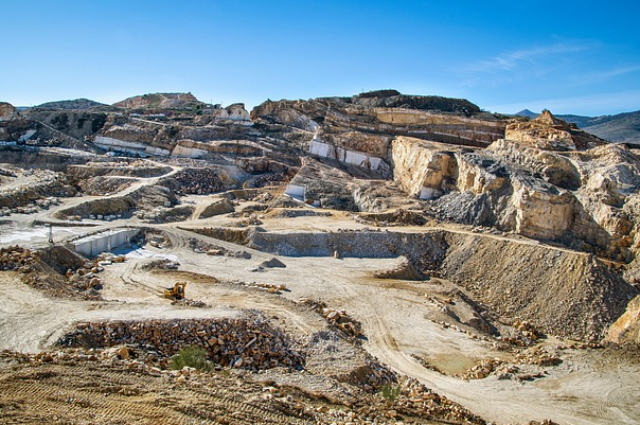
The village of Salal in Reasi is a landscape of rugged, rusty-brown rocky terrain, distinct from the lush green hills traditionally associated with the lower Himalayas. For centuries, this land has been tended by families who consider themselves the stewards of the Chenab River basin. Mahatam Singh, an 11th-generation farmer in Salal, describes the recent influx of government vehicles, mining experts, and international media as a "rush that feels like preparation for war."
The "Real Story" of Salal is one of recurring displacement. This community has already survived the construction of the Salal Hydroelectric Power Station decades ago. During that period, the villagers were relocated from the fertile riverbanks to the higher, more arid terraced terrains. This move forced a radical shift in their fundamental survival: they lost their paddy fields—their cultural and nutritional staple—and were forced to switch to wheat and maize, which require significantly less water but offer far lower market returns.
Now, with the G2 stage of lithium exploration concluding in January 2026, these same families face a second, perhaps final, displacement. The tragedy of the Salal farmer is the irony of being displaced twice by "Green Energy"—first by a dam to provide clean electricity, and now by a mine to provide clean mobility.
The Environmental Ledger: A Scientific Analysis of Extraction
To understand the magnitude of this paradox, one must examine the chemical and geological costs of lithium extraction from hard-rock deposits. Unlike the brine-based extraction seen in the Atacama Desert, the Jammu reserves are primarily contained in bauxite-associated ores (specifically LiAl₂SiO₆).
As a researcher, the data on water consumption is particularly staggering. Global benchmarks indicate that extracting one tonne of lithium through conventional mining and refining can consume up to 500,000 to 2,000,000 litres of water, depending on the processing efficiency. In a region like Reasi, which has seen a 29% shortfall in annual rainfall as recently as 2024, the introduction of a water-intensive mining industry is an ecological gamble.
Furthermore, the geological sensitivity of the Himalayas cannot be overstated. The Reasi district sits in a high-seismic zone. Extensive open-pit mining involves not just the removal of topsoil—which destroys local biodiversity—but also the deep penetration into the water table. When mining reaches the groundwater level, the surrounding aquifers act as a "drain," pulling water away from village wells and agricultural irrigation systems into the mining pit. This process, known as "drawdown," could potentially turn the already water-stressed villages of the Chenab basin into literal ghost towns.
The Chemical Shadow: Tailings and Toxicity
Beyond water depletion lies the concern of "tailings"—the waste material left after the lithium has been chemically separated from the ore. The refinement process typically requires precursors like sulfuric acid or sodium hydroxide to precipitate the minerals. In a mountainous region with steep slopes and high runoff, the risk of these toxic chemicals leaching into the local water supply or the Chenab River is a statistically significant threat.
Research conducted in early 2026 by environmental scientists highlights that "heavy metal leaching" is often the invisible killer of mining-adjacent communities. For the people of Salal, whose livelihoods depend on the purity of their soil for wheat and maize, even a minor contamination of the groundwater could render their ancestral lands permanently barren.
The Global Mirror—Lessons from the Lithium Triangle
The 2026 Legislative Landscape: National Interest vs. Local Rights
The year 2026 marks a turning point in India’s mineral governance. With the full implementation of the National Critical Minerals Mission (NCMM) and the MMDR Amendment Act, lithium has been reclassified from an "atomic mineral" (reserved for the state) to a "strategic mineral" open for private auction.
From a legal-research perspective, this shift creates a "Transparency Gap." When a mineral is labelled as "Strategic" or in the "National Interest," government bodies are often empowered to bypass certain environmental impact assessments (EIA) to fast-track development. In the case of Reasi, the second attempt to auction the Salal-Haimana block was annulled in late 2025 due to a lack of investor interest—not because of environmental concerns, but because of the great technical difficulty of extracting lithium from hard-rock pegmatite.
As a student of policy, one must ask: Is the lack of "bidder interest" a hidden blessing? It provides a rare window—a "pause button"—to implement what the NITI Aayog’s January 2026 Report calls the "Circular Economy of Critical Minerals."
The Circular Alternative: From Extraction to Recovery
The most compelling research in early 2026 suggests that India does not need to destroy its Himalayan ecology to meet its EV targets. According to the Battery Waste Management Rules (BWMR) 2022, which reached full maturity this year, India has a ₹75,500 crore market opportunity in battery recycling.
Instead of fresh extraction in Reasi, "Urban Mining"—the recovery of lithium, cobalt, and nickel from end-of-life electronics—could potentially meet 25% of India’s domestic demand by 2030. This is the "Researcher’s Solution": a transition from a linear "extract-use-discard" model to a closed-loop system that respects the sanctity of the Chenab river basin.
The Geopolitical Tightrope—Mining in a Sensitive Frontier
One cannot conduct a rigorous research analysis of the Reasi lithium reserves without addressing the "Geopolitical Elephant in the Room." The Salal-Haimana block is situated in the Jammu region, a territory that has historically been the epicentre of cross-border tensions and internal security narratives. From a strategic perspective, the discovery of 5.9 million tonnes of lithium in a region proximal to the Line of Control (LoC) transforms the landscape from a purely ecological one to a high-stakes national security asset.
As a student of international relations, it is evident that "Resource Nationalism" is on the rise. In 2026, the global supply chain is increasingly fragmented. China’s dominance over the lithium processing industry (controlling nearly 60% of global refining) has forced India to accelerate domestic mining, even if the social costs are high. However, mining in a sensitive frontier like Jammu and Kashmir presents unique challenges. Large-scale open-cast mining requires a massive influx of non-local labour, heavy machinery, and permanent infrastructure changes. In a region with a complex socio-political fabric, the "Real Story" involves navigating the delicate balance between federal economic goals and local aspirations for autonomy and land protection.
If the local populace perceives the mining project as "extractive colonialism"—where the minerals are shipped out to fuel the green ambitions of distant cities while the local community is left with dry wells and toxic tailings—it could exacerbate existing social fissures. Therefore, the researcher argues that the Social License to Operate (SLO) is just as critical as the mining lease itself. Without the informed consent and profit-sharing of the Reasi locals, the project risks becoming a flashpoint for civil unrest.
Conclusion: The Ethical Synthesis of the 21st Century
The "Real Story" of the Lithium Paradox is not merely a chronicle of minerals and money; it is the definitive ethical challenge of our generation. As we stand in February 2026, we are forced to confront a haunting question: Is the salvation of the global climate worth the sacrifice of the local Himalayan ecosystem?
Through this research, we have seen that the transition to "Green Energy" is currently functioning on a model of displacement. We are trading the "Carbon Debt" of the past for a "Social and Ecological Debt" in the future. For the 11th-generation farmers of Salal, the EV revolution is not a symbol of progress, but a herald of erasure.
However, a path forward exists. By prioritising Urban Mining (recycling), implementing Hydrometallurgical extraction (which uses less water than traditional smelting), and ensuring that the Reasi community remains the primary beneficiary of the "White Gold" under their feet, India can set a global benchmark. We must move beyond the "Extractivist" mindset of the 19th century and adopt a "Restorative" model for the 26th.
The lithium in the heart of the Himalayas should not be the reason for Salal’s disappearance. Instead, it should be the catalyst for a new kind of development—one where the "Green" in the energy revolution finally includes the green of the hills, the purity of the Chenab, and the dignity of the people who call it home.
Comprehensive References & Research Bibliography
- Geological Survey of India (GSI), 2023/2025 Reports: Inferred Resource Categorisation of Lithium in Reasi District.
- NITI Aayog, January 2026: The Circular Economy Roadmap for Critical Minerals in India.
- International Work Group for Indigenous Affairs (IWGIA), 2025: Socio-Environmental Impact of Lithium Mining in the Global South.
- Ministry of Mines, Government of India: The MMDR (Amendment) Act, 2023-2026: Strategic Mineral Reclassification.
- Central Ground Water Board (CGWB): Aquifer Mapping and Management Plan for the Chenab River Basin.
- Journal of Sustainable Mining (2025): Comparative Analysis of Hard-Rock vs. Brine-Based Lithium Extraction.
- Battery Waste Management Rules (BWMR) 2022-2026: Compliance Guidelines for Recycled Content in EVs.