
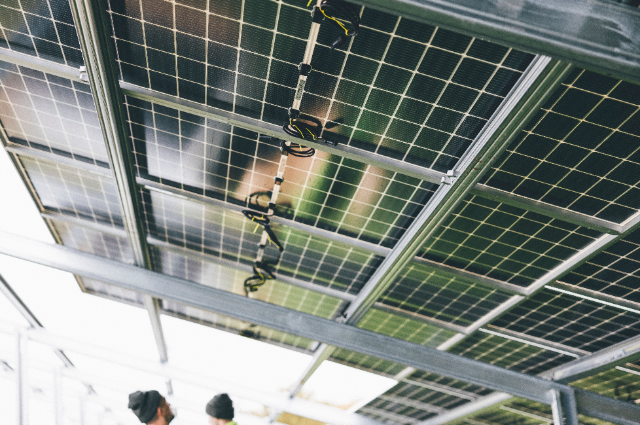
In June 2011, a journalist visiting a village in Rajasthan described a young woman climbing onto the roof of her home to clean the solar panels she had installed herself. Her name was Santosh Devi. She was nineteen, had limited formal schooling, and had become a solar engineer through the Barefoot College in Tilonia. The Guardian reported that she was the first Dalit solar engineer in India. The same people who had once looked down on her because of caste now came to her for help when their lights needed repair. [1]
The change was visible in a simple act: a woman on a rooftop, maintaining equipment that brought light into her village. But the bigger change was harder to photograph. Santosh was no longer only a recipient of a development project. She had become the person who understood the technology, repaired it, and was trusted to keep it working. She told the reporter, “I never imagined this would have been possible.” [1]
Her story points towards an unusual experiment in rural development: what happens when women from communities often excluded from technical education are trained not merely to use solar technology, but to design, assemble, install and maintain it? In Rajasthan, the answer has travelled far beyond one village. It has become associated with the women known as the “Solar Mamas.”
A different kind of engineering classroom
The institution at the centre of this story is Barefoot College, based in Tilonia, a village in Rajasthan. Its approach challenges the conventional idea that technical expertise must begin with formal degrees, advanced laboratories or fluency in written manuals. The College trains women from remote and marginalised communities to become solar engineers, with practical instruction in solar lanterns and home-lighting systems. [2]
Barefoot College describes its current flagship residential model as a six-month course; the Government of India–CEEW compendium describes five-month modules, while some later regional projects have used shorter formats. The training is hands-on. Participants work with electronic components, wires, batteries, charge controllers and inverters. They learn to assemble lighting systems, test connections, identify faults and repair equipment. The College explains that its teaching methods are designed for women who may be semi-literate or have had little access to formal technical education. [2]
A 2024 study by Jennifer Patterson and Francia Kinchington gives a sense of what this learning looks like. During fieldwork at Tilonia, the researchers observed around twenty women from different countries working at long benches, assembling electronic components. There was little shared spoken language, yet the women learned through diagrams, repeated practice, demonstration and gesture. Instead of treating literacy as the gate through which all technical knowledge must pass, the classroom made room for visual memory, patient instruction and learning by doing. [6]
This is not an argument that literacy or formal engineering education is unimportant. It is a reminder that people can possess practical intelligence and problem-solving ability even when conventional institutions have not recognised their qualifications. The Solar Mamas model begins by asking what people can learn when the teaching method is adapted to them, rather than assuming that only one kind of learner can become technically skilled.
From a training bench to a village workshop
The training is only the first stage. The women return to their communities with equipment and spare parts and are expected to help establish local workshops. They assemble and install solar home-lighting systems, maintain them, and provide repair services. The intention is to create a continuing local service, not a one-time distribution of solar lamps. [2][3]
This distinction matters. A solar panel can generate electricity for years only if the system around it continues to function. Batteries age. Connections loosen. A controller may fail. Dust, weather and poor installation can reduce performance. When a repair requires a journey to a distant town or a technician from outside, a small fault can become a long interruption. A trained village engineer changes that relationship: the knowledge needed to diagnose and repair a system is closer to the household using it. The Government of India’s 2023 compendium on decentralised renewable energy describes the programme’s rural electronic workshops as a way to ensure that equipment is maintained. [3]
The International Renewable Energy Agency reported in 2022 that more than 1,700 women from 15 Indian states and 96 countries had been trained through the programme. It reported that the model had helped electrify 75,000 homes and 1,300 villages, while avoiding the use of an estimated 45 million litres of kerosene. These are programme-reported figures cited by IRENA, not a fresh independent household survey, but they convey the scale the initiative had reached. [5]
The Barefoot College’s own impact page reports 1,708 rural women trained from 96 countries and more than 75,000 households reached. The Government of India and the Council on Energy, Environment and Water also included the Barefoot Solar Engineers programme in their 2023 compendium of decentralised renewable-energy practices, describing its work in training rural women and supporting local maintenance workshops. [2][3]
A recent example from Manipur
The model has not remained fixed in one place or one training format. In June 2024, Barefoot College reported the graduation of thirty women from eighteen villages across six districts of Manipur. They had completed a three-month programme supported by HDFC Parivartan. Their training covered the assembly, installation, repair and maintenance of solar lanterns, torches and home-lighting systems, as well as mini- and micro-grid technologies. The organisation said the women’s work was intended to bring solar lighting to 550 homes in remote areas with no electricity or very limited supply. [4]
The Manipur example is important because it shows how the model can be adapted to a particular region. It also demonstrates why it would be misleading to describe every Solar Mama course as the same length: the flagship residential programme is described by Barefoot College as six months, while this Manipur initiative ran for three. The underlying idea remained consistent—train local women in practical energy technology and support them as they take those skills back to their own communities. [2][4]
The programme’s reach is also international. IRENA’s account of the partnership between the agency and Barefoot College describes women in India and Ethiopia who returned from training able to install and maintain solar home systems. It reported that a woman named Saheb in Bihar was known by neighbours as “Saheb the solar engineer.” An Ethiopian participant, Fatuma, spoke of wanting to train others in her community. The value of the training, in other words, is not exhausted by the first system installed; it can grow when the knowledge is passed on. [5]
What changes when a woman becomes the expert?
Electricity is often discussed as a question of infrastructure: how many connections exist, how many megawatts are generated, and how far the grid has reached. The Solar Mamas story adds another question: who has the authority and skill to keep energy systems working? In remote settlements, a local technician can be as important as the panel itself. The woman who once had to ask someone else to fix a lamp may become the person her neighbours call when the light goes out.
The social meaning of that change can be profound. In the Guardian’s account, Santosh Devi described how people from higher castes who had previously treated her with disdain now approached her as an engineer. Her technical role did not erase caste inequality, nor should one woman’s story be presented as proof that discrimination disappeared. But it changed the terms of a local relationship: people had to recognise her knowledge because they depended on it. [1]
Research helps explain why the effect may extend beyond income. Giulia Mininni’s 2022 study of the Barefoot College “eco-village” approach argues that women’s participation in energy technology and the learning environment can support women’s entrepreneurship and transformative empowerment. Patterson and Kinchington’s 2024 study also describes how practical learning can foster self-actualisation and community agency. A related 2024 article by Neda Parvin Shaikh examines the programme through feminist theory, highlighting how colour coding, sign language and practical experience can challenge restrictive ideas about who is capable of technical work. [6][7][8]
The point is not that a solar certificate automatically produces equality. The stronger claim is that technical knowledge, when combined with community recognition and access to resources, can create new possibilities for women to act and lead. A woman’s confidence may grow because she can solve a problem that matters to her neighbours. Her social standing may change because her skill is visible and useful. Her work may also generate an income, depending on the local arrangement for fees, maintenance and support.
The limits behind the light
An inspiring story becomes more credible when it acknowledges what remains difficult. Installing a solar system is not the same as guaranteeing reliable electricity forever. Systems need replacement batteries, compatible parts, safe wiring, technical support and money for repairs. The village workshop needs tools and stock. The engineer needs continuing access to training and the authority to make decisions. If these elements are absent, the responsibility can fall on the woman without the resources required to fulfil it.
There is also a risk in celebrating women’s unpaid or underpaid labour as empowerment. A woman should not be expected to maintain essential infrastructure simply because she is described as a community champion. The economic model must be transparent: who pays for the equipment, who collects service fees, who owns the system, who pays for replacement parts, and how much does the engineer earn? These are not minor administrative questions. They determine whether the work can become a sustainable livelihood or another responsibility added to women’s already heavy workload.
Mininni’s research is useful precisely because it avoids treating empowerment as a simple result of training. As summarised by Patterson and Kinchington, her study of thirty-three participants identified unequal access to economic resources and persistent gender discrimination in Rajasthan. It concluded that salaries and resources alone do not guarantee empowerment, even though becoming a Barefoot engineer can support positive changes in confidence and self-realisation. [6][7] This is a necessary qualification: the achievement is real, but it does not abolish the structures that made the opportunity unusual in the first place.
The wider decentralised-energy sector faces similar questions. The 2023 Government of India–CEEW compendium identifies financing, technical capacity, policy support, community engagement and long-term maintenance as important conditions for the success of decentralised renewable-energy projects. In other words, local knowledge is essential, but it cannot substitute for functioning institutions, predictable funding and reliable supply chains. [3]
The real power is local.
The women trained at Tilonia are sometimes introduced through the language of surprise: women with little formal schooling becoming engineers. But the deeper story should not be that engineering is miraculous when a woman does it. The deeper story is that a narrow definition of expertise had overlooked skills and potential that were already present in rural communities. Practical training gave those abilities a technical direction and a public role.
The Solar Mamas initiative also invites a broader understanding of energy access. A household does not gain meaningful energy security merely because a panel is installed. It needs working equipment, affordable service, someone nearby who can repair a fault, and a community system that can finance maintenance. When women are trained and supported to provide these services, energy access becomes connected to local livelihoods, skills and decision-making.
The story that began with women learning to identify wires and assemble solar lights has become a story about who is allowed to be called an engineer, whose knowledge is trusted, and who gets to shape the technologies that enter a village. Santosh Devi’s rooftop was one small stage on which that change became visible. The women who followed her, including the Manipur graduates and Solar Mamas in communities across countries, show how it can travel.
A solar panel catches sunlight. A local engineer turns that sunlight into a dependable service. The most important achievement of the Solar Mamas may therefore be more than the light inside a house. It is the transfer of technical knowledge into the hands of people who have too often been asked only to wait for development to arrive. These women are not simply receiving the future. They are learning how to build, repair and power it.
References:
- Bhowmick, Nilanjana. “The women of India’s Barefoot College bring light to remote villages.” The Guardian, 24 June 2011. https://www.theguardian.com
- Barefoot College. “Solar.” The Real Barefoot College. https://barefoot.college/impact/solar/ (accessed 13 November 2026).
- Khalid, Wase, Abhishek Jain, Selna Saji, and Sharath Rao. Decentralised Renewable Energy for SDG7: A Compendium of Global Good Practices. Council on Energy, Environment and Water, with the Ministry of New and Renewable Energy, Government of India, July 2023. https://static.pib.gov.in
- Barefoot College. “Lighting Lives: Manipur Women Become Barefoot Solar Engineers!” 12 June 2024. https://barefoot.college
- International Renewable Energy Agency. “IRENA–Barefoot College Partnership Leaves Rural Footprint with Skilled Energy Champions.” 15 June 2022. https://www.irena.org
- Patterson, Jennifer, and Francia Kinchington. “Learning sustainability at the Barefoot College: local and global community values in action.” Sustainable Earth Reviews 7, article 16 (2024). https://doi.org/10.1186/s42055-024-00086-7
- Mininni, Giulia M. “The Barefoot College ‘eco-village’ approach to women’s entrepreneurship in energy.” Environmental Innovation and Societal Transitions 42 (2022): 112–123. https://doi.org/10.1016/j.eist.2021.12.002
- Parvin Shaikh, Neda. “Feminism in Practice: Learning from the Barefoot ‘Solar Mamas’.” Journal of International Women’s Studies 26, no. 3 (2024), article 14. https://vc.bridgew.edu/jiws/vol26/iss3/14