
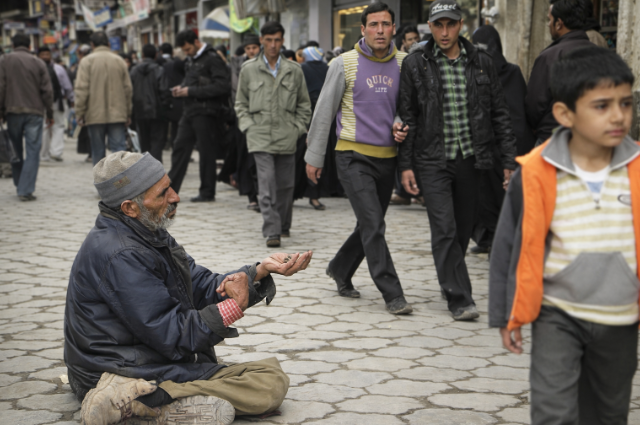
Imagine this: a man scooting along the crowded lanes of Indore’s Sarafa Bazaar, propped on a wooden plank with wheels. His disability is plain to see. People pause, drop a few coins or notes into his box, and move on, feeling like they’ve done their good deed for the day. But here’s the twist: behind that “helpless” façade, this man owns three houses, three auto-rickshaws, and even a Maruti Suzuki Dzire with a personal driver. His net worth? We’re talking crores. This is India’s strange reality, where poverty and prosperity get so tangled up, you start to question what begging really means.
THE WOODEN CART THAT HID A FORTUNE
Back in January 2026, Indore’s authorities kicked off a rescue operation as part of their “Beggar-Free Indore” campaign. Nobody expected the story that would unfold. Mangilal, a leprosy patient who’d become a regular sight at Sarafa Bazaar, was picked up one Saturday night by the Women and Child Development Department. What should have been a routine rescue quickly turned into something nobody saw coming.
Turns out, Mangilal owned a three-storey building in Bhagat Singh Nagar, a 600-square-foot house in Shiv Nagar, and a one-bedroom flat in Alwasa that he got under the Pradhan Mantri Awas Yojana scheme for people with disabilities. But his property stash didn’t stop there. He also had three auto-rickshaws bringing in rental income, plus a Swift Dzire with a driver on his payroll. And those daily collections from begging, anywhere from Rs 500 to Rs 1,000, weren’t his only money stream. Mangilal had turned his begging cash into a side business, lending money at steep interest rates to small traders and jewellery shopkeepers in the same market where he begged.
The real genius? Mangilal never actually asked for money. He just parked himself in the right spot, let his disability speak for itself, and watched as people, moved by sympathy, filled his box. This quiet act made him seem less like a seasoned beggar and more like someone genuinely down on his luck, boosting his earnings while skirting the law. Dinesh Mishra, who led the rescue, put it plainly: pretending to be helpless to collect money is an offence, especially when someone’s financially set and tapping into government benefits meant for people who really need them.
THE MUMBAI MILLIONAIRE WHO REFUSES TO QUIT
Mangilal’s story shook up Madhya Pradesh, but he’s not the only one living large off begging. About 1,400 kilometres away in Mumbai, there’s a man who’s turned begging into a full-blown empire. Meet Bharat Jain, he’s known as the world’s richest beggar, and he’s been at it for over forty years.
Jain is 54 now. Every day, you’ll find him at Mumbai’s Chhatrapati Shivaji Maharaj Terminus or Azad Maidan, putting in 10 to 12-hour shifts, seven days a week. No holidays, no breaks. He works harder than most salaried folks, pocketing between Rs 2,000 and Rs 2,500 a day. That’s about Rs 60,000 to Rs 75,000 a month. It’s the kind of steady income that would make many office workers jealous, except Jain earns it in ragged clothes, hand outstretched to strangers in the crowd.
He didn’t start with much. Jain grew up poor and couldn’t afford school. He started begging just to survive. But here’s where things get interesting: instead of blowing his money, he invested it, bit by bit. Now, he owns two flats in Mumbai worth Rs 1.4 crore. He lives there with his wife, two sons, father, and brother. On top of that, he owns two shops in Thane that bring in Rs 30,000 a month in rent, plus another shop that he rents to a juice centre for Rs 10,000 a month.
But maybe the wildest part is how his family feels about the whole thing. His kids went to top convent schools in Mumbai and now help run the family’s stationery business. They keep telling him to quit begging and just focus on their legit businesses. Still, Jain won’t budge. When people ask why he keeps doing it, even with all his money, he just shrugs and says, “I enjoy begging, and I don’t want to give it up.”
THE PSYCHOLOGY BEHIND THE PARADOX
Why would someone with assets worth crores still choose to sit on the streets, facing people’s pity and dealing with social stigma every day? The reasons run deeper than most people think. After you spend decades living a certain way, it’s almost impossible to change, no matter how much money you have. Begging isn’t just a job anymore; it becomes part of your identity, your daily routine, and honestly, your comfort zone.
Take Bharat Jain. For him, begging means steady money with almost no risk. Businesses can crash. Investments can tank. But he knows he’ll go home with Rs 2,000 to Rs 2,500 every single day. That kind of predictability is rare, even for people running successful companies. After forty years spent mastering where to sit, what time to show up, and how to approach people, walking away from that feels like throwing away years of expertise.
There’s also the story these wealthy beggars tell themselves. Bharat Jain gives money at temples and insists he’s not greedy. He says he feels a real connection to this way of life. Maybe that’s just self-justification, or maybe it’s genuine faith. Either way, it gives him a sense of purpose that goes beyond just stacking up cash.
THE INVISIBLE EMPIRE OF A RS 1.5 LAKH CRORE INDUSTRY
Now, it’s easy to get shocked by individual stories like Bharat’s, but the real surprise is how huge this whole world is. India’s begging industry is worth about Rs 1.5 lakh crore, yeah, that’s more than some of the country’s biggest companies pull in. It’s not just random people asking for help; it’s an organised system, running in every big city and small town.
The numbers are eye-opening. In 2011, the Census counted 413,670 registered beggars and vagrants, but everyone knows the real number is much higher, probably over half a million. West Bengal leads with over 81,000 beggars, then Uttar Pradesh with 65,835, Andhra Pradesh with 29,723, and Madhya Pradesh with 28,695. And a lot of these folks aren’t working alone. Many are part of syndicates, carefully placed to bring in the most money possible.
A study in Delhi found that the average beggar brings in about Rs 24,000 a month. Multiply that by 400,000 beggars, toss in the extra money made from informal lending, and the total yearly revenue shoots past Rs 1.25 billion. That’s on par with what some big companies make. Begging isn’t just about asking for spare change anymore. Now, you’ve got people picking prime spots, using clever ways to tug at heartstrings, saving and investing what they collect, and sometimes getting swept up in organised crime rings that prey on the desperate.
Groups on the ground, like Aashray Adhikar Abhiyan, say stories about folks like Bharat Jain and Mangilal, who’ve made headlines for living large off begging, are rare. In reality, 97 to 99 per cent of beggars are just plain desperate. Most turn to begging because they’re dirt poor, have fled from rural hardships, can’t find work, are living with disabilities, or have no family to lean on. But the stories of wealthy beggars fuel public doubt. That makes people less likely to help, and it pushes the government toward crackdowns instead of real help.
THE GOVERNMENT'S BATTLE - SMILE SCHEME AND BEYOND
Seeing that begging is both a social problem and a humanitarian emergency, the Indian government rolled out the SMILE Scheme in February 2022. The name stands for “Support for Marginalised Individuals for Livelihood and Enterprise,” with a special focus on fully rehabilitating people who beg for a living.
SMILE aims to actually break the cycle. It starts with surveys to figure out who’s begging, then sends teams to bring them into rehabilitation centres. Once there, people get shelter, food, medical help, and help with things like getting Aadhaar cards or opening bank accounts. The program also offers skills training and connects people to jobs or small business opportunities, so they have a shot at starting over and moving away from life on the streets.
The SMILE-75 Initiative kicked off in 2022, picking 75 cities across India for an ambitious mission: to make them beggar-free by 2026. Indore, Delhi, Bangalore, Hyderabad, Lucknow, Nagpur, and Patna jumped in first. Indore, for one, really went all-in; it actually made begging illegal starting in 2025. The city’s already counted more than 6,500 people living on the streets and has helped nearly 5,000 start new lives. Over 170 kids now go to school, and plenty of adults have found jobs thanks to government programs.
But the whole thing isn’t as smooth as it sounds. Take Mangilal, for example, a so-called “beggar” who owned several properties and still managed to get government housing by claiming a disability. Stories like his make you wonder if anyone’s really checking who gets these benefits. Plenty of cities still don’t have enough shelters, job programs, or people to keep tabs on everyone trying to start over. Success rates are all over the place: a few cities are doing great, but others can’t keep people from slipping back onto the streets.
THE DARKER SIDE OF FORCED BEGGING AND EXPLOITATION
And while the news loves to talk about rich beggars, it’s just the tip of the iceberg. The real tragedy is what happens to the most vulnerable, especially kids. Back in 2016, police guessed that around 300,000 children in India were stuck in forced begging rings run by traffickers. Some get kidnapped. Others are rented out by desperate parents. A lot end up in criminal gangs and never see a rupee of what they collect.
It gets worse. In some cases, children are even mutilated to make them look more pitiful, just to squeeze more money out of passersby. Investigations in Mumbai turned up cases where parents send their kids to beg, sign them up for school just to grab government benefits, and then, after rescue, pull them right back onto the streets. The cycle just keeps going.
This kind of exploitation isn’t limited to kids. Organised begging rings send out people with real disabilities, older folks, and women with babies to the busiest spots in town. Most of these beggars aren’t working for themselves. They’re basically employees, handing over most, or all, of what they collect to the people running the show. These so-called “controllers” give back almost nothing, just enough to keep things going. It’s a kind of modern slavery, only now it’s dressed up as charity. The sad part? Well-meaning people end up fueling these criminal rackets, thinking they’re helping someone in need.
THE MORAL DILEMMA IS TO GIVE OR NOT TO GIVE
The whole “crorepati beggar” phenomenon throws regular folks into a real moral mess. When you see someone on the street with an outstretched hand, how do you know if they actually need help or if it’s just another piece of a bigger scam? Give money, and you might just be greasing the wheels of some shady business. But if you walk by, you might leave someone genuinely desperate with nothing.
Economists who study begging have spotted patterns that make it clear: for a lot of people, begging isn’t just a last resort. It’s a business. Panhandlers act strategically. They show up when foot traffic peaks. They move around to avoid too much competition. They even tweak their pitch based on how people react. All these points point to begging as a calculated way to earn money.
More and more, experts urge people to skip the handouts and support organisations that actually help. When you donate to a legit NGO or a rehab centre, your money gets to people who really need it, and it goes into programs with an actual plan. Pushing for better government support and making sure those programs do what they promise, that’s how you tackle the real problems. And if you see forced begging, especially involving kids, reporting it can help bust up these criminal networks. On top of that, backing job training and employment programs gives people a real way out.
If you still want to help someone directly, give them food or water, not cash. It’s a lot harder for someone to misuse a sandwich than a few bills. Pointing people toward shelters or rehab centres offers real help instead of just a quick fix. And always keep an eye out for kids being forced to beg; reporting those cases can keep them safe.
THE UNRESOLVED QUESTION
India’s so-called “crorepati beggars” really mess with your head, don’t they? People like Bharat Jain and Mangilal make you wonder: are these guys street-smart businesspeople who’ve turned begging into a goldmine, or are they just gaming the system and taking advantage of sympathy and government aid meant for those who actually need it? Do you admire their financial smarts, or call it a scam?
The truth isn’t so black and white. Begging in India isn’t just one thing. Some people are desperate, some are basically professionals, some have been trafficked, and plenty fall somewhere in between. What’s clear is that finding out that some beggars are rich changes how everyone sees the whole thing. Suddenly, people start doubting whether anyone asking for help really needs it. That hurts those who do. It also exposes just how weak our systems are at figuring out who needs help and who doesn’t, and it screams for a more thoughtful, thorough way to handle the problem.
REFERENCES
Bharat Jain (World's Richest Beggar)
- The Economic Times: Meet Bharat Jain: How he turned pennies into a fortune
- Times of India: Bharat Jain: A net worth of ₹7.5 crore
- Hindustan Times: Mumbai's wealthiest beggar and his property details
Mangilal (Latest News: January 2026)
- The CSR Journal: Indore's 'Crorepati Beggar' who owns 3 homes and a Dzire
- The New Indian Express: Elderly beggar at Indore's Sarafa Bazaar turns out to be crorepati
- News24: Meet Mangilal: The beggar running a money-lending business
Official Government Resources (SMILE Scheme)
- SMILE-Beggary Portal: Official SMILE Scheme for Beggary Rehabilitation
- Ministry of Social Justice: Guidelines for the SMILE Scheme
- Official Handbook: SMILE-Beggary Implementation Handbook (PDF)
General Reports on Rich Beggars in India
- The Enterprise World: Top 7 Richest Beggars in India List
- Jagran (Hindi): World's richest beggar lives in Mumbai; house and net worth details