
On February 28, 2026, the Middle East woke up to a moment that would immediately enter the history books.
Ayatollah Ali Khamenei — Iran’s Supreme Leader and one of the most powerful political figures in the region for more than three decades — was killed in a coordinated U.S.–Israeli airstrike on a heavily guarded compound in Tehran.
According to multiple international reports, the strike targeted a high-level meeting of senior Iranian leadership. Within hours, news spread across the world: the man who had shaped Iran’s political direction since 1989 was gone.
For some Iranians, the moment felt almost unreal.
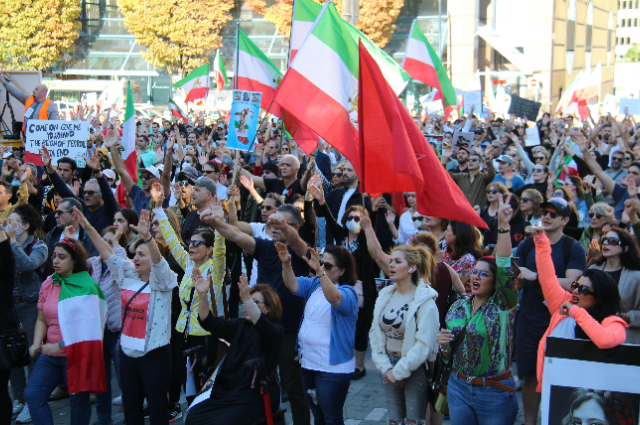
Videos began circulating across social media showing scenes that would have been unimaginable just days earlier. In some neighbourhoods, people honked their car horns late into the night. Groups gathered quietly in the streets. A few even danced, celebrating what they believed might be the end of an era defined by strict control and political repression.
After years of protests, arrests, and crackdowns, many hoped that this moment might finally mark the beginning of a new chapter.
But history has a way of complicating moments like these.
Because the fall of a leader does not always mean the fall of the system that the leader built.
And that raises a deeper question — one that now hangs over Iran’s future.
If Khamenei is gone, is Iran truly free?
The Man Who Became the System
To understand the significance of Khamenei’s death, it helps to understand just how much power he held.
Ali Khamenei became Iran’s Supreme Leader in 1989, following the death of Ayatollah Ruhollah Khomeini, the revolutionary cleric who led the 1979 Islamic Revolution that transformed Iran from a monarchy into an Islamic Republic.
Unlike elected officials such as presidents or members of parliament, the Supreme Leader occupies the highest authority in Iran’s political structure.
The position combines religious authority with political control.
Over the years, Khamenei’s office oversaw the country’s armed forces, influenced the judiciary, shaped state media narratives, and maintained close ties with powerful religious institutions. Perhaps most significantly, the Supreme Leader also held influence over the Islamic Revolutionary Guard Corps (IRGC), one of the most powerful military and economic institutions in Iran.
In practice, this meant that no major political decision in Iran existed entirely outside the Supreme Leader’s influence.
For supporters of the government, Khamenei represented stability and ideological continuity.
For critics, however, he symbolised something very different.
Human rights organisations and international observers repeatedly accused the Iranian state of suppressing dissent, restricting freedom of expression, and punishing political activism. Protest movements were often met with mass arrests, internet shutdowns, and heavy security responses.
To many young Iranians, the system felt rigid — controlled by an older religious establishment that seemed disconnected from the realities of a rapidly changing society.
And over time, that frustration only grew.
A Generation That Wanted Change
Long before the airstrike that killed Khamenei, Iran had already been experiencing deep internal tensions.
One of the most significant moments came in 2022 with the death of Mahsa Amini, a 22-year-old Kurdish woman who died after being detained by Iran’s morality police for allegedly violating the country’s strict dress codes.
Her death sparked outrage across the nation.
Protests quickly spread from city to city. University campuses erupted with demonstrations. Women publicly removed their headscarves in defiance of the authorities.
The movement adopted a slogan that soon became internationally recognized:
"Woman, Life, Freedom."
What began as a protest over morality laws soon evolved into something far broader.
People spoke about economic hardship, government corruption, political repression, and the widening gap between the country’s younger generation and its ruling elite.
The protests were met with force. Thousands were arrested, and many demonstrators were killed.
But the movement revealed something undeniable.
Beneath the surface, Iranian society was changing.
And for many protesters, Khamenei had come to represent the system itself.
Yet systems rarely collapse simply because one leader disappears.
Power Does Not Vanish Overnight
Following the airstrike, Iran’s political structure moved quickly to avoid instability.
Within hours, government officials announced the formation of an interim leadership council. Meanwhile, the Assembly of Experts — a powerful clerical body responsible for selecting the Supreme Leader — began preparing to appoint a successor.
The transition happened faster than many observers expected.
Within days, Mojtaba Khamenei, the son of the late Supreme Leader, emerged as the new leader.
The decision stunned political analysts.
After all, the Islamic Revolution of 1979 had been built on opposition to hereditary monarchy. The revolution’s leaders had promised a system guided by religious authority rather than dynastic power.
Yet the leadership had effectively passed from father to son.
Critics quickly described the move as the birth of a new kind of political dynasty inside the Islamic Republic.
More importantly, the institutions that shaped Iran’s political system remained fully intact.
The Islamic Revolutionary Guard Corps still holds enormous military and economic power.
The Basij militia continues to operate as a domestic security force, often deployed during protests.
The Guardian Council still oversees elections, determining which candidates are allowed to run for office.
And the judiciary remains closely aligned with the country’s religious leadership.
In other words, the architecture of power did not disappear when Khamenei died.
It simply continued under new leadership.
War Changes the Equation
Khamenei’s assassination also did not occur in isolation.
The strike took place during a rapidly escalating conflict involving Iran, Israel, and the United States.
The same wave of attacks that killed the Supreme Leader also targeted military bases, oil infrastructure, and several senior Iranian commanders.
Iran quickly retaliated with missile and drone strikes across the region.
The conflict intensified almost overnight.
Airstrikes damaged fuel depots, industrial facilities, and transportation networks. Smoke from burning oil storage sites filled parts of Tehran’s skyline, raising environmental and health concerns.
Thousands of civilians have reportedly been killed or displaced as the conflict spreads.
History suggests that during times of war, governments often become more centralized and more authoritarian.
External threats can strengthen the argument that strong leadership and strict security measures are necessary for national survival.
For Iran’s leadership, the conflict may actually reinforce the power of the very institutions protesters once challenged.
Freedom Is Complicated
History offers many examples of what happens when powerful leaders suddenly disappear.
In Iraq, after Saddam Hussein
In Libya, after Muammar Gaddafi.
In Afghanistan, after the collapse of the previous regimes.
The removal of a ruler can sometimes open the door to democracy.
But it can also create instability, power struggles, or even stronger authoritarian systems.
Iran’s political structure makes the situation even more complex.
The Supreme Leader is not just a political leader.
He is also a religious authority who sits at the ideological centre of the state.
Changing such a system requires more than removing one individual.
It requires transforming institutions, redistributing power, and redefining the relationship between religion, politics, and society.
Those changes rarely happen quickly.
The Long Road Ahead
For ordinary Iranians, this moment feels uncertain.
Some see Khamenei’s death as the beginning of something new — a crack in a system that once seemed unbreakable.
Others worry that the government may tighten its grip even further in order to maintain control during wartime.
Between geopolitical tensions, economic struggles, and political uncertainty, millions of people simply hope for stability and dignity in their daily lives.
The celebrations that followed the news of Khamenei’s death showed something powerful: a deep hunger for change.
But revolutions are rarely defined by a single day.
They unfold slowly.
Sometimes painfully.
Sometimes unpredictably.
So yes, Iran may now be free of Khamenei.
But whether it will become truly free remains one of the most important unanswered questions of our time.
. . .
References:
- Reuters. (2026). Iranian Supreme Leader killed in U.S.–Israeli strikes. https://www.reuters.com
- Associated Press. (2026). Iran appoints new Supreme Leader after Khamenei’s death.
- The Washington Post. (2026). U.S.–Israel strikes escalate conflict with Iran.
- United Nations Human Rights Council. (2024–2025). Reports on human rights conditions in Iran.
- Human Rights Watch. (2024). Iran: Women’s Rights and Protest Crackdowns.
- Amnesty International. (2024). Iran’s morality law and protest repression.
- Council on Foreign Relations. Iran Political System Overview. https://www.cfr.org
- Brookings Institution. Iran Political Structure Analysis. https://www.brookings.edu
- BBC News. Iran country profile and political structure. https://www.bbc.com