
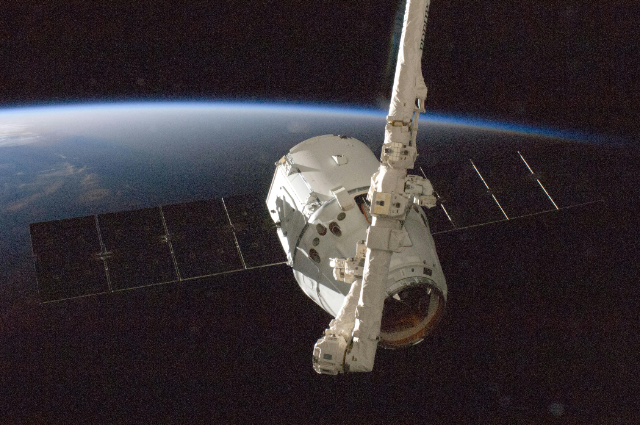
April 2026 slipped by without fanfare, yet marked a shift unseen since the 1970s. Beyond low Earth orbit, crewed spacecraft moved again - this time headed moonward. Landing wasn’t on the list; instead, systems got checked under real conditions. Some now label NASA’s Artemis II flight an outsized trial run: billions spent just to rehearse the steps back into distant space.
A Mission Designed to Fly Without Landing
April 1, 2026, saw NASA send four astronauts into space inside Orion - not to claim ground like past missions - but to push boundaries quietly. This trip lasted about ten days, looping around the Moon before returning home. Its job wasn’t symbolic; it focused on checking vital gear under real conditions. Life support had to hold up, navigation needed precision, communications could not fail, plus humans had to endure the strain of deep space travel. Each piece mattered just as much as the next.
Among those on board were Reid Wiseman, then Victor Glover, next came Christina Koch, followed by Jeremy Hansen - each bringing skill, yet together showing something wider: a move beyond old patterns in who gets to reach orbit. Their presence quietly reshaped what space missions have looked like before.
The Journey Through Uncharted Loops
Out there, the journey stuck to a route worked out well ahead. Every move had been mapped before anything launched into space
- Days 1–2: High Earth orbit testing and system validation
- Days 2–5: Translunar injection and deep-space travel
On day six, the spacecraft loops around the Moon. Passing behind it, out of contact with Earth. The view shifts to endless black, dotted with stars. Around the curve, sunlight returns slowly. Shadows stretch across craters and ridges. Cold silence wraps the vehicle as it moves farther. Then, the planet appears again - blue, distant, hanging in space
Return phase using gravity to assist Earth arrival
This free-return path let the craft coast behind the Moon, then slide back toward Earth, needing little push to turn around - a smart setup that left no room for mistakes.
Far out past the Moon, the crew edged beyond every person who’d ever flown before. That moment broke Apollo 13’s old mark. Distance hit more than a quarter million miles from home.
Why We Say Test Drive?
- Built not for fame, Artemis II reached instead for evidence.
- Was it possible to keep going when everything said stop
- Earth orbit - can people go past it without danger now?
Out past Earth's shield, Orion and its SLS launcher faced what space throws at machines. Radiation spikes hit during long stretches beyond protection. When the Moon blocked signals, silence followed - each gap logged precisely. Testing unfolded not in labs, but in cold, raw orbits. Every twist of voltage, every delay in response, tracked without pause.
Back on Earth, the fall itself counted as a trial run. Engineers watched every second as temperatures soared, tracking how well the outer shell held up under pressure.
A Historic First Since 1972
Back in orbit near the Moon, people again - last time was during Nixon’s final year. This flight means more than just machines working right.
Yet far from ending there, this journey marks just the first step in something lasting. What comes next isn’t a finish line - instead, it opens a path forward. Artemis II connects what we’ve done to what waits ahead
- Artemis I (uncrewed test in 2022)
- Artemis III (planned lunar landing mission)
This time, ideas turn into real skills. Where once there was only thought, now action takes shape.
The Emotional And Human Element
Out there past numbers, something quietly struck home. From way up, the planet looked strange yet familiar, crew said - so far away it brought everyone closer just the same.
Out there, past the Moon’s distant edge, signals fade. Earth shows up again - a small blue speck hanging in blackness. That quiet view pulls thought forward, showing just how thin our hold really is when reaching into space.
The Bigger Picture Preparing for What Comes Next
Back on the lunar surface, Artemis II sets up what comes next. This flight tests how humans live with deep space travel - opening doors wider than before. Instead of quick visits, longer stays start here. Going farther begins with learning to stick around
- Establishing a sustainable human presence on the Moon
- Testing tech for Mars missions
- Building international collaboration in space
One step at a time, real progress begins when plans meet proof. Moon landings, living quarters on dusty ground, journeys beyond - these dreams now face the test of flight. With Artemis II, guesswork gives way to what actually works. What comes next stands on firmer ground.
A Test That Changes Everything
That first trip out past low orbit - Artemis II - isn’t just practice, though some call it that. Instead, think of it like stepping onto unfamiliar ground after years indoors. What matters is coming back safely. This flight shows people still know how to leave home, briefly, then find their way back.
Without the rush that marked Cold War days, yet aiming to remain.
One step beyond, Artemis II becomes more than a flight plan - it mirrors what comes next, when the Moon shifts from goal to gateway. Not merely hardware in motion, it reflects how lives might unfold further out, framed by gravity not of Earth alone.
References:
- NASA – Artemis II Overview https://www.nasa.gov
- NASA – Artemis II Crew Announcement https://www.nasa.gov
- European Space Agency (ESA) – Artemis II Mission https://www.esa.int
- Wikipedia – Artemis II (for general mission structure & timeline overview) https://en.wikipedia.org
- NASA – Orion Spacecraft Details https://www.nasa.gov
- NASA – Space Launch System (SLS) https://www.nasa.gov
- Reuters – Artemis mission updates & technical insights https://www.reuters.com
- The Guardian – Coverage on Artemis II lunar flyby https://www.theguardian.com
- Times of India – Astronaut experience & human perspective https://timesofindia.indiatimes.com
- NASA – Artemis Program (Overall roadmap) https://www.nasa.gov