
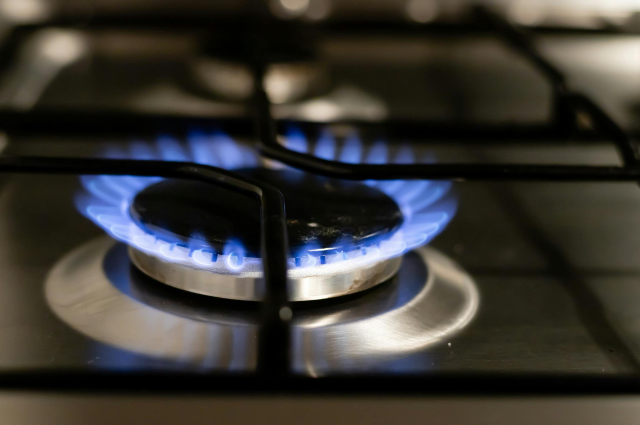
For millions of Indian households, cooking gas is not just a fuel.
It is routine. It is comfort. It is the quiet certainty that dinner will be cooked on time and tea will be ready in the morning.
But in early 2026, something unusual began happening across India.
People started checking their LPG cylinders more often than usual. Restaurants began calculating how long their remaining gas stock would last. Delivery workers were suddenly overwhelmed with calls.
The reason was simple — LPG supplies were tightening.
And the cause lay thousands of kilometres away.
A Global Conflict Reaches the Indian Kitchen
The ongoing geopolitical tensions involving Iran, Israel, and the United States began disrupting one of the most important shipping routes in the world: the Strait of Hormuz.
This narrow waterway, located between Iran and Oman, is one of the most critical energy corridors on the planet. Nearly one-fifth of the world’s petroleum and a massive share of LPG shipments pass through this route.
For India, the Strait of Hormuz is particularly important.
India is the world’s second-largest importer of LPG, and a significant portion of those supplies originates from countries in the Middle East. In fact, roughly 80 per cent of India’s LPG imports typically pass through the Strait of Hormuz.
So when tensions in the region began disrupting shipping routes, the ripple effects travelled far — all the way into Indian kitchens.
India imports around 65 per cent of its LPG requirements, which amounts to nearly 25 million tonnes every year. When global supply dipped even slightly — by just around 5 per cent — the delicate balance between supply and demand began to strain.
And in tightly balanced energy markets, even small disruptions can cause major consequences.
The Situation on the Ground
Across several Indian cities, the early signs of the shortage became visible in different ways.
Restaurant associations in Maharashtra, Karnataka, and West Bengal began warning that eateries could be forced to shut down temporarily if commercial LPG supplies did not stabilise.
Many restaurants rely heavily on large commercial gas cylinders, which are essential for cooking at high volumes.
In Mumbai, reports suggested that nearly 20 per cent of smaller hotels and restaurants had temporarily halted operations because their LPG supplies ran out.
One restaurant owner in Andheri described the situation bluntly.
“We normally pay around ₹1,600 for a commercial cylinder. But when supplies dried up, we were asked to pay ₹3,000 or more. One of my friends even paid ₹6,000 for a single cylinder just to keep his kitchen running.”
The shortage also affected major cities like Bengaluru, Chennai, and Kolkata, where delivery delays became increasingly common.
Households that normally received LPG refills within a day or two began waiting as long as a week.
For many families, especially those who rely entirely on LPG for cooking, the uncertainty created anxiety.
Real-Life Impact on Households
Take the case of Meena Sharma, a school teacher in Jaipur.
Her family of four depends entirely on LPG for cooking. When her cylinder ran out, she immediately booked a refill through her distributor. Normally, the cylinder would arrive within two days.
But this time, the wait stretched to five days.
During those days, Meena had to improvise.
She borrowed a small induction cooktop from her neighbour and cooked limited meals. However, electricity costs rose, and many traditional dishes that require high heat became difficult to prepare.
“It reminded me of stories my mother used to tell about the old days when gas connections were rare and people cooked on coal or kerosene,” she said.
Across India, millions of households faced similar disruptions.
The impact was especially severe for small food vendors and street food sellers.
A dosa stall owner in Bengaluru reported that he had to reduce his operating hours because his LPG cylinder supply became unpredictable.
“When the cylinder runs out, the business stops immediately,” he explained. “There is no backup.”
The Price Shock
Supply disruptions inevitably influence prices.
In early March 2026, the price of a domestic 14.2-kg LPG cylinder increased by roughly ₹60 in several regions.
Commercial cylinders saw even sharper increases, rising by approximately ₹110 in some markets.
While these numbers may seem modest on paper, the impact on businesses that use multiple cylinders daily can be significant.
For example, a mid-sized restaurant may use three to five commercial cylinders every day. Even a ₹100 increase per cylinder can add thousands of rupees to monthly operating costs.
In some extreme cases during the shortage, desperate buyers turned to informal markets where prices skyrocketed.
Reports from Mumbai indicated that some restaurant owners paid nearly ₹6,000 for a single commercial cylinder during peak scarcity.
Government Measures
In response to the growing crisis, the Indian government activated several emergency measures.
On March 6, authorities invoked the Essential Commodities Act, directing oil refineries to maximise LPG production and prioritise domestic supply.
Officials also temporarily extended the refill booking cycle from 21 days to 25 days to manage demand and prevent panic buying.
At the same time, India increased LPG imports from alternative sources that do not rely on the Strait of Hormuz shipping route.
Government officials stated that these efforts could increase supply from non-Hormuz sources by up to 70 per cent.
Domestic production was also boosted by around 10 per cent.
Prime Minister Narendra Modi publicly addressed the issue, assuring citizens that sufficient LPG stocks existed for at least 12 to 16 weeks.
However, on the ground, shortages and panic buying in some areas suggested that the situation remained fragile.
Industries at Risk
While households experienced inconvenience, several industries faced more serious consequences.
One example is the textile processing sector.
Many textile units rely on commercial LPG for heating and dyeing processes. Unlike households, these industries cannot easily switch to alternatives such as electricity.
Industry associations warned that prolonged LPG shortages could force factories to halt production temporarily.
Restaurants were another vulnerable sector.
The National Restaurant Association of India advised members to conserve fuel, reduce menu items that require long cooking times, and adopt induction cooking wherever possible.
However, for many traditional Indian dishes, LPG remains the most efficient cooking method.
Why Energy Security Matters
The LPG shortage served as a reminder of how deeply global geopolitics can affect everyday life.
A conflict unfolding thousands of kilometres away can eventually influence the cost of cooking dinner in an Indian household.
Energy security — the ability of a country to reliably access fuel supplies — is increasingly becoming one of the most important challenges of the modern world.
India has already been investing in diversifying its energy sources, including renewable energy, natural gas infrastructure, and domestic refining capacity.
But LPG remains a critical fuel for more than 300 million Indian households.
Ensuring a stable supply will continue to be a national priority.
A Crisis Still Unfolding
At the moment, the LPG situation remains fluid.
Much depends on how geopolitical tensions in West Asia evolve and whether shipping routes stabilise.
If global supply chains recover quickly, the shortage could ease within weeks.
But if the conflict intensifies, disruptions may persist.
For millions of Indians, however, the lesson is already clear.
Energy crises do not only exist in news headlines or policy discussions.
Sometimes, they appear in the most ordinary moment — when someone walks into the kitchen, turns the stove knob, and wonders whether the flame will light.
. . .
References:
- Reuters. (2026). Energy shipping disruptions in the Strait of Hormuz. https://www.reuters.com
- International Energy Agency (IEA). Global LPG Market Report. https://www.iea.org
- Ministry of Petroleum and Natural Gas, Government of India. LPG Supply Data and Import Statistics. https://mopng.gov.in
- The Hindu. (2026). LPG shortage fears across Indian cities.
- Economic Times. (2026). Commercial LPG prices rise amid supply concerns.
- National Restaurant Association of India. Advisory on LPG conservation during supply disruptions.