
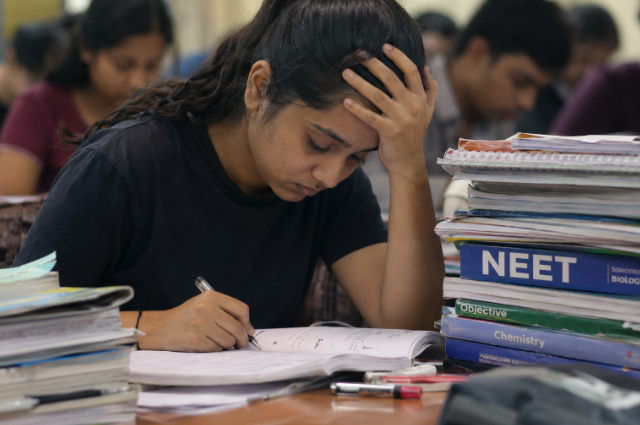
For lakhs of students across India, the NEET exam is not just a test; it is also a way of life. Birthdays are skipped. Phones are switched off. Teenagers spend years in coaching centres learning biology diagrams and chemistry equations, while their families quietly spend savings they cannot afford to lose. Cracking the NEET examination will lead them to a better future.
The cancellation of NEET UG 2026 has, thus, deeply impacted the students.
Following the paper leaks across the country on May 3, 2026, the National Testing Agency had cancelled the NEET UG exam, which was held on this date. The agency's hypothesis was based on speculation by agencies probing the means of leakage, including Haryana Police, who thought that crucial material may have done rounds before taking the exam, similar to how it was hypothesised at the time.
The news was surreal for millions of students.
Many had already begun to calculate expected scores using unofficial answer keys issued by coaching institutes. Some were finally sleeping peacefully after two years of gruelling preparation, and waiting for counselling dates and college cut-offs. And then, everything stopped.
The exam was gone.
Rajasthan Police reportedly found a "guess paper" containing around 140 questions similar to those in the actual exam. Other reports claimed handwritten copies of NEET questions were circulating through WhatsApp and Telegram groups before the exam. But soon, the news went beyond rumours.
The Centre handed over the investigation to the Central Bureau of Investigation, while the NTA said it did not want to continue the examination process and worried that it would endanger the public trust in the system.
The controversy became even crazier when the CBI announced that a professor of chemistry in Pune, believed to have been involved with the examination itself, had been arrested by the police. Investigators said he had secretly met with candidates just before the exam and drafted questions and answers that appeared on the actual paper. And there were intermediaries accused of promising leaked papers and medical admissions in exchange for lakhs of rupees.
If true, it was not cheating in the exam hall; it was a system failure at the highest level.
In social media, in coaching centres, in libraries, and in hostel rooms, I keep hearing: Is the system fair anymore?
For aspirants who are honest, the emotional cost is heavy. Every year, a limited number of government medical seats come up for grabs. A staggering 22 lakh students apply for these seats. Many spend two or three years preparing, some take gap years several times, and some leave their home and spend their teenage years in coaching centres like Kota, Delhi, Patna, and Hyderabad.
Now, many feel they are paying for the wrong choice.
In interviews with reporters after the exam was cancelled, many students described the ordeal as traumatic. Some had already stopped studying after the exam and had mentally disappeared from preparation, while others described how hard it was to re-train in a storm of revision when they thought it was over.
Even worse, this is not India’s first major exam controversy.
NEET faced allegations of paper leaks and irregularities in 2024 as well. Protests broke out nationwide that year over reports of leaked papers and unusually high scores. The Supreme Court refused to cancel the examination then, arguing that the evidence does not prove a nationwide breach.
But 2026 feels different.
This time, the exam was cancelled by the NTA nationwide. Honest students will have to sit through a month of terror because someone allegedly sold the exam for cash.
For middle-class families, NEET preparation is a gamble. Coaches, hostel costs, books, travel, and online test series cost thousands of rupees. Some parents take loans or sell jewellery in the hope that their children will land a government medical seat.
Then comes the fear no one wants to be known for: what if hard work is no longer enough?
When students start seeing answer keys on Telegram before the exam, they question the merit itself. They wonder if years of discipline can compete with corruption and organised leak networks.
The loss of trust could be worse than the leak.
The government has now announced reforms. NEET is going to be administered via computer from next year. According to the officials, this will help in reducing leaks and improving monitoring. NEET UG 2026 is scheduled for re-examination on June 21.
Even these reforms are troubling.
Will online systems really stop corruption? Can India carry out such a massive examination digitally without technical glitches? Why did it take numerous controversies before the authorities took this seriously?
Despite the rage, many aspirants have already reopened their books.
Libraries are back to full capacity. Coaching centres are running revision sessions again. The students who were in tears when they heard that the exam was called off are again crunching mock tests until late at night because they realise there is no other option.
The most difficult part of this debate update may be its unanticipated turn.
The system might break repeatedly, but students can’t afford to stop.
And somewhere in the stifling coaching rooms across India, thousands of exhausted teens continue to ask the same question: “What do you know?”
If the paper can leak before the test begins, was it fair?
References:
- https://dailypioneer.com
- https://dailypioneer.com
- https://pcpsikar.com
- https://indianexpress.com
- https://www.bbc.com
- https://brilliantpala.org
- https://www.ndtv.com
- https://timesofindia.indiatimes.com