
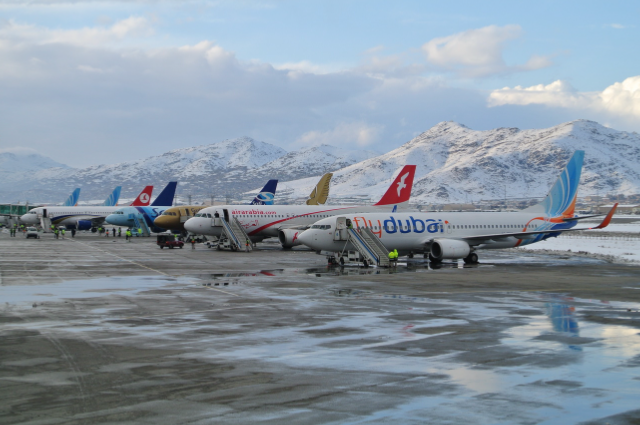
Flydubai flight FZ1073 was flying from Dubai to Tel Aviv on September 30, 2026, when it suddenly became a battle for life. Two and a half hours into the flight, the co-pilot allegedly attacked the Indian captain Smit Machchhar in the cockpit, sending the plane soaring thousands of feet, triggering a hijacking alert, and leaving more than 170 passengers facing a disaster.
The plane had just left Dubai and had mainly Israeli passengers. One source told CNN that the pilot, who was believed by several to be Omani, had attacked Machchhar as the plane was over Saudi Arabia. He allegedly attacked him with an emergency crash axe kept in the cockpit. Machchhar later described feeling a heavy blow to the back of his head and realised he was being attacked by the person sitting beside him.
As the battle continued, the aircraft quickly started to drop from altitude. At one point, it had dropped nearly 25,000 feet. It had become a medical emergency. The crew first called for an emergency signal from air traffic control, and then, on the 5th fret, the plane screeched 7500, the international transponder code that indicated a hijacking. The change in signal was a signal that signaled that something more serious than just a mechanical glitch was occurring.
Machchhar was badly injured and was bleeding, but he knew it was worse than just fighting for his life. The aircraft was carrying more than 170 passengers, and its control could be in danger. He survived his wounds and got to the cockpit door and opened it. Others on board and crew members entered the cockpit and pushed back against the attacker.
Machchhar later told Indian Prime Minister Narendra Modi that he was determined not to let the other passengers die. He told Modi that he was still being attacked when he realised the plane was sinking and he had to try again to open the door. His decision allowed others to intervene, and the reserve Flydubai pilot on board took control of the aircraft.
The damaged aircraft landed safely at 6:58 a.m. local time in Tabuk, in northwestern Saudi Arabia. The captain was taken to the hospital, while the suspect was detained. Machchhar is in stable condition, according to media reports. His actions and those of the passengers, crew and reserve pilot are widely credited with saving the day.
The incident quickly raised another question: what was the alleged attacker trying to do? Israeli officials and sources familiar with the investigation suggest that Ben Gurion Airport, Israel’s main international airport, may have been the target. Later reports revealed that the co-pilot may have planned the attack before leaving Flydubai and was looking for an airline that flew to Tel Aviv. But the investigation is still ongoing, and certain details about his motive are unknown.
Some have identified him as Hamam al-Hammami, although authorities have yet to confirm his identity. They said he worked for Oman Air and was moved to a desk job after concerns about extremist views. He then tried to find another job before joining Flydubai. Investigators are studying his history, including time spent in Australia and New Zealand, as well as his online activity.
What about the security of the flight? Was someone with expressed fears about extremism able to be a co-pilot for an international airline that flew to Israel? How were crew members vetted before the flight? The answers are especially challenging given that Oman and Israel do not have diplomatic relations. Israeli officials have said that information on crew members is available to officials, but the agency responsible for checking foreign airline crew members apparently has different agencies.
UAE investigators have launched a probe. They said the attack was an attempted terrorist act; Flydubai said that it was still investigating the motive. Israeli police officials called it terrorism, but need to investigate whether it was the attacker who planned it and who else was involved. So far, investigators have not found any connection to a larger terrorist group.
The immediate outcome for now is that the attempted hijacking was stopped before the plane got there. A captain, badly injured in his cockpit, opened a door for passengers and crew to get out. The plane was subsequently flown safely into another country by a reserve pilot.
The Flydubai attack is therefore not only a story about an alleged hijacking. It is also a story about what happens when the security systems surrounding international aviation are tested in extreme circumstances. The investigation will have to determine how the attacker passed through those systems, whether warning signs were missed, and whether existing procedures are strong enough to prevent a similar incident. For the 174 people on board, the answer came down to a few critical moments inside a cockpit. Machchhar's decision to keep fighting, even while seriously injured, gave everyone else a chance to survive.
References: