
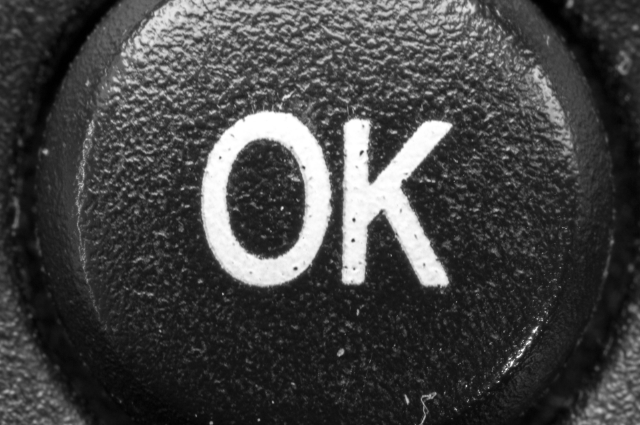
“OK” is one of the most popular expressions in the world. It is often used to indicate agreement, approval, confirmation that something is understood, or acknowledge a message. It is found in conversations, texts, books, and even computer screens. But it has a fascinating history. The word was first printed on March 23, 1839, in a Boston newspaper as part of a joke.
The story began during a time when people in the United States—especially those in educated groups—loved to come up with funny acronyms. In the late 1830s, many authors mispronounced words and shortened them into initials, essentially producing a kind of slang, much like the shortened words and online expressions that we use today. Newspapers embraced the trend by publishing abbreviations in humorous articles.
One newspaper joined this bandwagon. Boston Morning Post editor Charles Gordon Greene often used playful language in his writing. On March 23, 1839, Greene published a satire about his rival, the Providence Journal, complaining that the competitor editor had apparently misread a report on a group going to New York.
Greene then repeated “all correct” in the final sentence of his explanation using the letters “o.k.” The letter was not pronounced “oll korrect,” which seemed to fit the playful spelling style of the time. The abbreviation was part of the joke, but it became a much bigger joke than Greene expected. It is the earliest known printed use of OK identified by the linguist who later learned its meaning.
Though its appearance in the newspaper is now well known, this word has a long and murky history. For many years, many suggested that the word came from the French name Aux Cayes, a port town in Haiti. Some suggested it came from a German military title, “Oberst Kommandant,” meaning “open key” (used in telegraph service), and one person suggested it came from the Choctaw word “okeh,” which means agreement or confirmation.
A number of others also connected OK with Andrew Jackson, the seventh president of the United States. One story had it that Jackson used the abbreviation because he couldn’t spell “all correct.” Others believed the word came from a biscuit sold to soldiers in the American Civil War. None of these explanations had the kind of documentation as the Boston newspaper record.
Allen Walker Read, a scholar and professor of English at Columbia University, explored the mystery in greater detail. Read sifted through old newspapers and documents in the 1960s to trace the word’s earliest appearances. Reading before digital newspapers made searching millions of pages easier; he analysed how OK appeared in different publications and how its meaning and popularity shifted over time.
By and large, Read noted the use of the word “o.k.” by the Boston Morning Post—which also came to fit the abbreviation craze of the day—is also followed by “KG” (“know go,” a humorous translation of “no go”), and “SP” (“small potatoes”). Many of these went quickly, but OK survived; Read helped establish the etymology as “oll korrect,” or “all correct.”
The acronym was not immediately popular, but was brought to national attention during the 1840 United States presidential election. President Martin Van Buren was seeking re-election. His supporters used the slogan “Vote for OK.” Van Buren was known by his nickname “Old Kinderhook,” a reference to his birthplace, Kinderhook, in New York. The initials of this nickname corresponded with the abbreviation.
Supporters formed “OK Clubs” to promote Van Buren’s campaign. With the slogan, OK had another meaning: both “Old Kinderhook” and the phrase used in the Boston newspaper. Van Buren lost the election, but the campaign spread the abbreviation across the country. His political opponents also used OK in jokes about his connection with Andrew Jackson and the claim that Jackson had mispronounced “all correct.”
OK grew beyond newspapers and political campaigns into a common way to express agreement, approval, or acceptance. In fact, its meaning has evolved. Saying “OK” in any situation can mean that something is good, acceptable, understood, or not a problem. It can be a response, a question, or a verb, as in, “The manager OKed the request.”
The word is used far beyond the United States. It is used in many different languages, sometimes with different spelling or pronunciation. It is used in technology, from the OK buttons on computer screens to confirmations of successful online requests.
March 23, 1839, marks an important moment in the history of everyday language. A small abbreviation used in a newspaper joke gradually became one of the most recognizable words in the world. Greene was making fun of a rival publication, not creating a word intended to last. Yet that brief appearance gave OK a recorded starting point and began its journey from a Boston newsroom into conversations around the globe.
References:
- https://www.smithsonianmag.com
- https://www.bostonmagazine.com
- https://www.history.com
- https://en.wikipedia.org