
In the latest Global Gender Gap Report, Iran was ranked 143 out of 146 countries for gender parity. The report looks at how much discrimination women face in four different areas: economic participation and opportunity, educational attainment, health and survival, and political empowerment.
Iran’s ranking is indicative of a complex system of legal, cultural, and political obstacles that people in the country face when participating fully. Iranian women are also legally, politically, and civically engaged, astonishingly well-educated, but don’t have equal rights.
Historical Background
The state of affairs presented here cannot be understood without a brief examination of the history of Iran's modern politics. Before the Iranian Revolution, women marched ahead in the political and social arenas under the leadership of the king, gaining women's suffrage, improved access to education, and limited family law protections.
But the revolution in 1979 ushered in the Islamic Republic in place of the monarchy and radically altered the legal structure of the country. The new regime established laws based on its version of Islamic ideals. A number of the freedoms women had gotten used to were either curtailed or abolished. Women were subjected to a formal dress code, family law was changed, and gender roles became ever more rigidly defined by law.
Compulsory Dress Laws
Perhaps the most obvious of these laws is the compulsory hijab law. Since the early 1980s, Iranian women have had to wear a hijab and baggy clothing in public.
Morality Police are the ones who carry out this work and monitor public areas to deal with supposed transgressions. Women who violate the law may receive a warning, a fine, be taken into custody, or be sentenced to prison. The opposition has begun to coalesce into a visible resistance, spikier defiance on the part of younger women who are challenging these laws with civil disobedience or subtler acts of defiance.
Legal Inequality
Gender inequality in Iran goes beyond dress codes. The law applies to women and men in different ways in areas of marriage, divorce, inheritance, and child custody.
In some cases, the testimony of a woman is worth only half that of a man. A married woman requires her husband's permission to travel abroad. A husband can prevent his wife from working if he believes her job is not in the family's interests. These laws underpin a social structure that confers higher status on men in families and many other institutions.
Child Marriage
Another problem is child marriage. The legal age for marriage for girls in Iran is thirteen and for boys, fifteen; even lower ages are possible with parental consent and court permission.
As a result, thousands of girls under the age of 15 are married each year. Poorer populations and regions where such pressures of custom and tradition outweigh economic aspirations are to blame for this statistic. Once married, these young girls are treated as adult wives, their roles and lives under scrutiny from critics who charge that their human rights are being violated.
Education vs. Employment
Gender statistics from Iran reveal a remarkable paradox. Women excel in educational attainment but experience significant obstacles in labour force participation.
Women are in the majority in most universities. They study in almost all branches of engineering and medicine, and graduate in large numbers every year. But female labour force participation is very low.
Less than one-fifth of Iranian women participate in the official labour market. Many employers prefer male workers, and there are jobs that women may not carry out either officially or unofficially. Women face social pressure to focus on their family over professional aspirations. Many highly educated women cannot find secure employment.
Limited Political Representation
Female participation in Iranian politics is similarly very scarce. Females are not permitted to run for certain positions. For example, females are prevented from competing for the position of Supreme Leader of the country, the most powerful seat in the political structure.
Although women may stand for election to parliament, women fill only a small number of parliamentary seats. Only a small proportion of the members of parliament are women. There are hardly any female ministers or women in other senior government posts. Women have little influence on national policies that affect their rights.
Violence and Legal Protection
Another is women’s right to be protected from violence. Under Iranian law, marital rape is not recognised as a crime, and protection against domestic violence remains insufficient.
Evidentiary burdens are placed on victims that, in sexual assault cases, are rarely able to be met. Victims need multiple corroborating witnesses or a confession by the accused. Many women choose not to participate in sexual assault reporting for this reason. In some cases, if the court determines that the encounter constituted an illicit sexual relationship, women can find themselves charged as well.
Women’s Activism and Resistance
However, activism and social change efforts have long been highly active among Iranian women. For over a century, women have been actively involved in political movements, civil society initiatives, and reform efforts.
Education has facilitated this activism. Journalism, social media, academic research, and public advocacy are employed by a generation of highly educated women who are actively challenging gender inequality. Even under a repressive political system, many more women are fighting discriminatory laws.
The Impact of Mahsa Amini’s Death
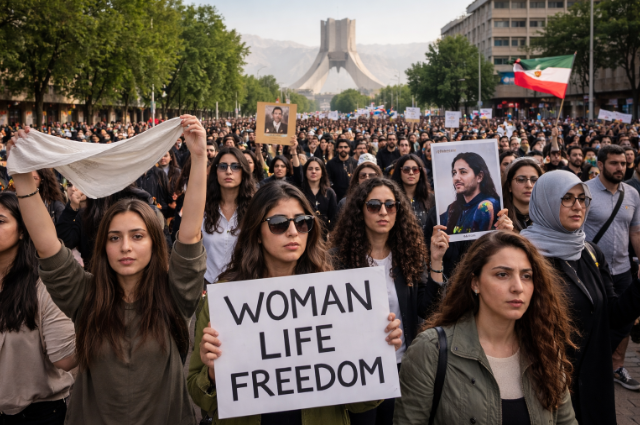
The case drew international attention after the death of Mahsa Amini in 2022. A 22-year-old woman died in custody after being detained by morality police for allegedly breaking the nation’s dress code. Her death led to widespread protests that rocked cities across the country. When they took off their head scarves illegally in protests against the government, and calls for social and political change. The protests faced a violent response.
Security services routinely arrested thousands of demonstrators, and many activists, journalists, and demonstrators were jailed. While the uprisings eventually sputtered and fell under pressure, they revealed the depths of resentment in Iranian society and reignited a global interest in women’s rights in Iran.
A System Under Pressure
Iran's 143rd out of 146 countries' allocation in this field shows how much gender discrimination is caused in the country's laws and political institutions. But that doesn’t make it surprising. Highly educated women with robust social lives and active cultural and intellectual engagements live in Iran.
This gap between their abilities and their legal status has set the stage for change, and such a change in the laws by political leaders could be revolutionary for the women of Iran. Women in Iran have demonstrated incredible bravery fighting for change. Not only do they rise in protest, but they also choose to resist imposed orders through their everyday lives.
. . .
References: