
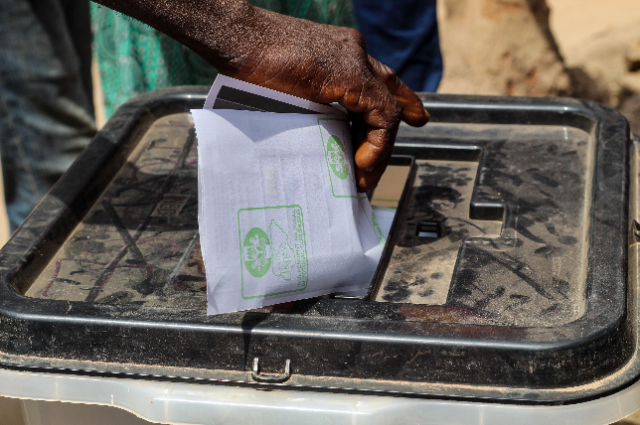
India’s Chief Election Commissioner, Gyanesh Kumar, has been at the centre of a political scandal over the Special Intensive Revision (SIR) of electoral rolls. The SIR was introduced to update voter lists, but some citizens fear they will lose their right to vote. Opposition parties have accused Kumar and the Election Commission of India (ECI) of bungling the process, while the ECI maintains it is in line with the law. The conflict has risen to become a bigger issue about the independence and credibility of one of India’s most important constitutional institutions.
Kumar, a Keralan Indian Administrative Service officer since 1988, took the post of Chief Election Commissioner in February 2025. Before joining the Election Commission, he held several senior government posts, including a role in the Union Home Ministry. As an election officer, he is expected to ensure fair voting and restore public faith in the Election Commission.
SIR’s controversies started in Bihar in June 2025 and are expected to spread to other states and Union Territories later in the year. The Election Commission said the process removes duplicate or unqualified names while maintaining genuine voters on electoral rolls. Opposition parties and activists believe the process places too much on the citizens to prove their eligibility. More than 13 crore names have been removed from the draft electoral roll of 30 states and Union Territories. There are fears that eligible voters may be excluded, although not every name removed necessarily belongs to an eligible voter.
Rahul Gandhi, leader of the Congress, has accused the Election Commission of safeguarding what he calls “vote chori” (election fraud). He has questioned the handling of voter lists, pointing to Karnataka’s Aland constituency, where the state Criminal Investigation Department had not received data for its investigation. The Election Commission has denied accusations of election rigging for political ends. The Supreme Court upheld the validity of SIR in May 2026, but the process of carrying it out is uncertain.
The controversy got more serious in September 2026 when The Indian Express reported that the two other Election Commissioners, Sukhbir Singh Sandhu and Vivek Joshi, had complained at least 14 times over the past ten months about changes to Form 6 for new voters to fill in for registration, access to the electoral-roll database, and complaints of deleted voters in West Bengal. They also wondered whether certain decisions were taken without their knowledge or approval. Were the decisions taken collectively or was the Commission becoming too dependent on its chief?
The Election Commission has always claimed that there are differences of opinion and its decisions are unanimous, but the reported objections raise concerns about transparency. After all, the ECI is a constitutional body of three members, and disagreements need to be resolved through established procedures. If the objections show that there are problems, the issue reaches far beyond SIR to India’s elections.
There are also concerns regarding Kumar’s relationships with opposition parties. Rahul Gandhi claims he shielded electoral frauds while some opposition leaders have called meetings with the Commission dismissive. In April 2026, a delegation of the Trinamool Congress alleged that Kumar told its members to “get lost” during a meeting. The Commission responded by saying that the delegation had disrupted proceedings and Kumar had requested its members to dress appropriately. These claims have exacerbated the conflict, although allegations alone do not prove that the Commission acted illegally.
Kumar's appointment has also been criticised. He was the first Chief Election Commissioner to be appointed under the 2023 law, which replaced the Chief Justice of India on the panel of selectors with a minister from the cabinet nominated by the prime minister. Opposition parties fear this will empower the government to make appointments and weaken the independence of the Commission. In March 2026, the opposition sent a notice requesting Kumar's removal, which was rejected by the presidents of both houses of Parliament. A second notice was submitted in April, and it is currently under discussion.
On the evening of October 2, Gandhi Jayanti, a Cockroach Janta Party youth group protested in Mumbai’s Shivaji Park demanding Kumar’s resignation. Congress, Aam Aadmi Party and student groups also staged separate protests in Delhi. Shivaji Park residents resented repeated protests in their neighbourhood.
Older allegations regarding Kumar’s time in Kerala have also surfaced. These include claims that he worked in the state’s Public Works Department in 2006 and that a former chief secretary of Kerala had claimed the BJP had offered him a position. Neither of these claims has been proven, and his response to the latter has not yet surfaced.
At the end of the day, the SIR spat is not just about names lost from a voter list. The question is whether citizens can have faith that the Election Commission could act in a politically agnostic manner to protect their right to vote. While the process followed by the Commission is lawful, they claimed greater transparency and accountability as a demand. The challenge that Kumar faces is to assure Indians that every qualified voter in India can join the electoral process and that decisions made regarding elections are transparent.
References:
- https://www.bbc.com
- https://frontline.thehindu.com
- https://www.thenewsminute.com
- https://www.ptcnews.tv