
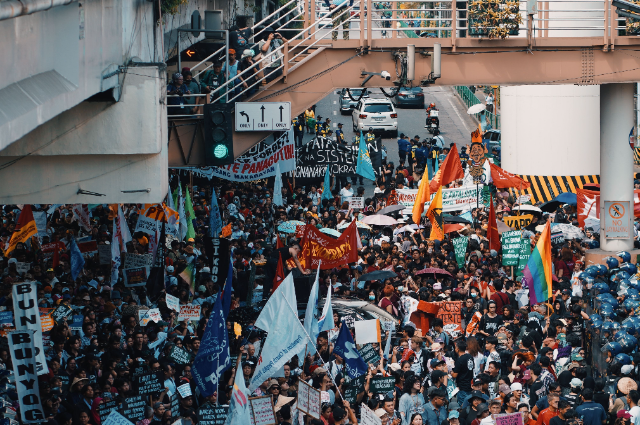
On September 21st, a seventeen-year-old girl was gang-raped at Aastha Kunj Park, South Delhi, while celebrating her birthday. There are three male suspects who have been apprehended as a result of this crime. This incident has brought into question whether or not women are safe in Delhi, specifically in public areas where individuals are supposed to be allowed to travel without fear.
Women are told what not to do. Don’t leave after dark, don’t walk alone, don’t go to such and such places, don’t travel alone. Because of the incident in Aastha Kunj Park, the Delhi Development Authority (DDA) said they would allow only men to go to their parks after the sun sets and that they would be adding more cameras and patrols during the night in the parks. While safety measures are necessary, women being denied access to public spaces sends the wrong message. Instead of asking why a public park was unsafe, it makes women's freedom the one that needs to be controlled.
And exactly this was the argument made by Delhi University students during their protests. Students from Lady Shri Ram College, Gargi College and Kamala Nehru College marched under the slogan “Hum Auratein Azaad Hain” for better lighting, working CCTV cameras, police presence and safer public spaces. They were asking women to give up their freedom simply because the system has failed to protect them.
The protests were also an expression of a much older struggle for women’s freedom in Delhi. In 2015, Pinjra Tod started challenging the discriminatory hostel and curfew rules for women students at Delhi University. It argued that women’s security is not sufficient to protect them, and restrictions placed on women would lead to greater dependence on society. These protests, therefore, represent more than anger over one rape case. They are also part of a much wider fight over who can enter public spaces at what time, and under what conditions.
But the issue is not whether women are allowed to enter a park after sunset, but whether they can enjoy the same freedom of movement as men. The Constitution guarantees the right to life and personal liberty under Article 21 and the right to move freely under Article 19(1)(d). These rights mean little if women constantly have to think about whether a road, park, bus, or college area is safe. As the Supreme Court has pointed out, the right to life includes living with dignity, and women's safety is essential to that dignity.
The Aastha Kunj Park case also demonstrates the failure of public spaces in areas where crime is easy to commit. Women are told to change their behaviors, but what actions are authorities taking so that people can safely use parks, roads, and public transport? There were similar issues with poor lighting and lack of CCTV coverage and police patrolling in recent cases in Delhi-NCR. The Supreme Court also observed the same.
There is a difference between preventing a crime and reacting to it. Yes, there is a need to have criminal laws. However, the injuries caused will be avenged later through the legal process. What we need alongside the criminal justice system is preventative measures, including having functioning infrastructure, an effective police force, and other safety measures. For a crime to be prevented, we need proactive measures to be taken.
Accountability is particularly important because attention then turns to the perpetrator after a rape, but the authorities should have to answer other questions as well. Was the park lit, were cameras on? Was the area patrolled regularly? Did complaints about unsafe places get taken seriously? If safety measures were only on paper, somebody should be held responsible for not doing so. Not only should we know who committed the crime, but also whether institutions did everything they could to prevent it.
Elaborate yet practical, the same idea should be true of public transport too. Women should be able to take a bus or cycle through the city without thinking that every trip has some risk. In recent cases in Delhi and NCR, Supreme Court judges have raised concerns over safety in public transport, such as driver and staff verification, GPS, and panic buttons. These are not frills but means to make public places accessible.
In the end, telling women to stay inside or avoid public spaces does not solve the problem of violence against women. It just shifts the safety burden from institutions to people already at risk. A woman shouldn’t have to miss an early class, a birthday party, a walk home, or a hike through a public park because the authorities did not make the space safe for her.
There are many other reasons why there have been protests in Delhi. Women say, “Why should women’s freedom be curtailed when the system is failing?” A curfew should not replace better lighting, CCTV cameras, visible and responsive police, safer transport, accountable institutions, and a society that no longer views women’s movement as the problem. Women do not need more instructions about where they should not go. They just need safe public places for them to go wherever they want.
References::