
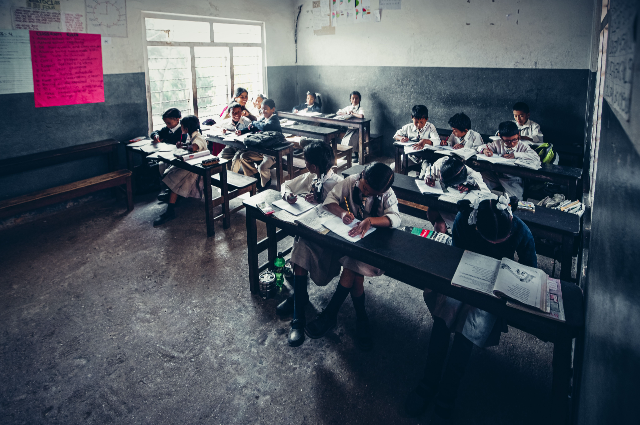
Most people sell oranges at bus stands to make a living. For Harekala Hajabba, it was the beginning of a mission that would change the lives of hundreds of children. This orange vendor from Karnataka, who never got enrolled in school himself, turned what had been just a moment of embarrassment into a lifetime quest to bring education to his village. What began as a school for only 28 students has become a full-fledged government high school for 175 students, earning him the Padma Shri and national recognition for the award.
Hajabba is a poor man from Mangaluru who has sold oranges at the local bus station since the late 1970s and did not have the opportunity to learn how to read or write. Hajabba's life changed in 1978 when a foreign customer bought oranges and asked how much they were in English. Since he did not know English, he missed an opportunity to sell. That moment stayed with Hajabba for many years and made him realise how much education can do for a person.
Instead of feeling sorry for himself, Hajabba made it his mission to ensure that children in his village did not have to suffer the same fate that he did. He dreamed of establishing a school where aids from the poor class could receive an education that he too wished for but never had. Before his dream, children in Newpadpu had to travel a long distance to be able to access education or, worse, drop out.
Hajabba had been selling oranges for over 20 years and saving money from his tiny daily earnings. In 1999 and 2000, Hajabba finally had the means to start executing his dream. With savings and the support of the community, he held the first class in a small room of a madrasa with only 28 of his students. Unlike many other founders of schools, Hajabba had neither great sponsorship nor great wealth to start the school, but he believed small things can indeed bring great changes.
As more children came, the small classroom became insufficient. Hajabba saved to buy land for a permanent school building and contacted donors, charities, officials of government, and local leaders for help. Eventually, contributions from people of different religions and communities began to appear. After several years, the government built a proper school building and expanded it to serve higher classes.
The school grew slowly over the years. Classes spread until Class 10, allowing children from the village to finish their secondary education close to home. Today, about 175 students are attending the school. For some, this school has opened doors that previously seemed impossible. Children who may never have attended school now have the chance to do so thanks to one man’s determination.
Hajabba is well known in India but has kept his humility. Teachers at the school say he sweeps the floors and helps with the chores daily without any expectation of special treatment. He never considered the school his. He said everybody who helped him put the school together was the one who contributed money, land, or time.
His hard work has brought him awards throughout his life. He was awarded the fourth tier of civilian respect in India's system of civilian awards, the Padma Shri, in 2020. The award ceremony was held later due to COVID. When Hajabba walked into Rashtrapati Bhavan to receive the award from President Ram Nath Kovind, he took off his shoes and accepted the award. He explained later that it was neither appropriate nor respectful for him as a poor man to wear shoes while receiving the award.
Although Hajabba received the Padma Shri, he stated it was not meant for him. It belonged to his school and to all those who had supported his dream over the years. His modesty impressed people around the country, and he came to be known as “Akshara Santha,” or “Saint of the Alphabet.”
Hajabba’s work is not yet over. He intends to construct a Pre-University College in his village so the children in his village can learn without having to pay the expensive tuition of the private colleges in the city, as well as without the need for long travel. He intends to use the awards he has received to promote this and sponsor this cause.
Hajabba is a man who never gave up, despite his many obstacles. Journalists and teachers who have followed his journey have heard from him that he sacrificed much of his comfort for a brighter future for village children. Selling oranges is what he is currently occupied with the most, but his biggest achievement lies beyond the oranges that he has sold.
From a poor, uneducated, and illiterate person to a determined individual who inspired and instigated social change, Harekala Hajabba is an example that the perseverance of an individual can change thousands of lives. The value of one determined individual in society can be life's work for 28 children and a legacy of hope for hundreds of thousands.
References: