
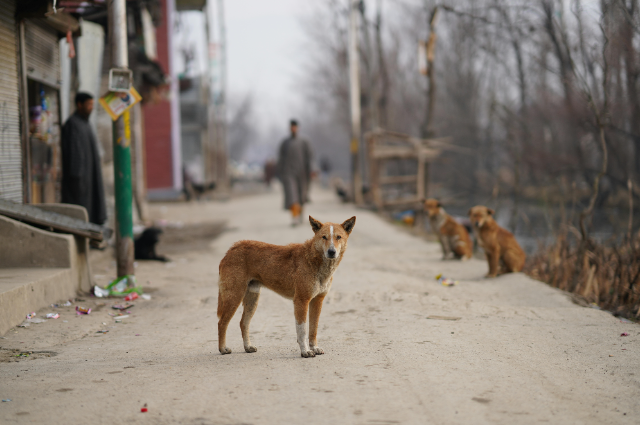
In January 2026, there was a silent yet strongly disturbing kind of violence that was experienced in Telangana. In villages in Hanamkoda, Kamareddy and surrounding districts, more than 500 allegedly stray dogs are reportedly murdered in a few days. What is especially unsettling about this episode is not the extent of cruelty, but the motivation behind it: the murders were supposedly made on the grounds of election promises. A number of the candidates participating in the December 2025 Gram Panchayat elections had promised dog-free villages in response to the fear of attacks by stray animals among the citizens. Some village heads, after being elected, seem to have interpreted this pledge into action, not by lawful means of controlling the animals, but by wholesale slaughter. This was not a failure in policy knowledge. It was a conscious choice.
It is reported that the contractors were recruited across the neighbouring states to execute the killings by lethal injections and by using baits that had been laced with poison. The dumping of carcasses occurred close to temples, in open fields, and along the boundaries of villages, and in many cases, they were in plain view. In other places, the veterinary teams were later called to exhume the bodies after animal welfare activists reported to the authorities. The ensuing scenes were horrible and disturbing, not only in the matter of legality, but also in the mere restraint of a moral kind.
Since then, the Telangana police have filed FIRs against several people, even elected sarpanches, on grounds of the Bharatiya Nyaya Sanhita and the Prevention of Cruelty to Animals Act. Forensic tests are being done to determine the toxins employed. Such legal measures are needed, but it deals with the wrong action only in the short run. They fail to elaborate on how such acts came to be administratively acceptable in the first place.
This episode is based on a deadly misperception of democracy. A victory in the election does not come with uncontrolled power. Campaign promises are not superior to the law. However, here electoral mandate seems to have been interpreted as a license—a license that acted as an excuse to cross the line of law and morality to achieve the fast and noticeable outcomes.
The Stray Animal Control Act is explicit. The Supreme Court has, on severe occasions, decided that mass culling of stray dogs is unlawful and unconstitutional. The rules of Animal Birth Control prescribe sterilisation and vaccination since these are the only methods that are allowed. As real as the issue of public safety may be, these guidelines cannot be disregarded by local bodies. The fact that the killings of the Telangana happened at the time the Supreme Court was already hearing cases on the issue of stray dogs further increases the severity of the violation.
Adherents of such behaviour tend to present them as effective answers. Sterilisation takes time. Infrastructure facilities are inadequate in the field of veterinary. Patients are frightened of assaults. Such arguments can be used to understand the cause of the frustration of the people, but it is not a reason to use illegal violence. Convenience is no excuse for being illegal, and fear is no defence for being cruel. At best, this is a short-term solution to long-term problems, as it kills trust in governance.
Worse is that this violence has become so common in the administration. The murders were supposedly conducted in a bureaucratic normalcy — orders given, contractor contracted, work done. At one moment, it seemed that nothing regarding this was regarded as extraordinary. It is that feeling of normalisation that we should be concerned about much more than the actual. Once the inhumanity is institutionalised, the ethical compass of leadership has been lost.
This event also reveals the dangers of populism on the grassroots level. Local elections are perceived to be the most romantic of elections, the one that is nearest to the people. However, co-location can be harmful to institutions. When leaders offer simple solutions to a complicated social issue, the powerless or voiceless people are usually left to face the results, animals now, marginalised groups in the future.
The problem of stray dogs is evidently a real policy issue. Attacks do occur. There should also be safety in the open areas, particularly for children and the elderly. However, long-term planning will ensure that the issues mentioned above are sustainable: sufficient funding, inter-departmental coordination, trained veterinary personnel, community education, and responsibility. Murder is less expensive, quicker and more visible. And this is the reason why it is illegal.
The silence of the killings is also revealing. It is not probable that such actions would receive serious consequences without the intervention of activists and long-term media attention. This brings in bad questions on institutional control and social collaboration. The number of actions like this that go unnoticed because no one is speaking, or because it is being presented as a necessity, as an administration?
Responsibility should not just be resolved to personal arrests, as crime investigations are ongoing. The issue of political responsibility is important. When elected officials can command unlawful actions and then escape the resulting repercussions, the message that is being passed to society is quite clear: the system finds a way to bend the law when it is required to do so to wield power.
The case of Telangana stray dog murders cannot be dismissed as a local scandal and a singular spurt. They are expressions of a larger corruption of good governance, in which ends, rather than means, are important and promises, rather than values, are significant. As much as the authority to normalise violence is exercised democratically, albeit temporarily, it undermines the principles of the very system. Democracy is not challenged based on the process of the leaders winning elections, but on how they succeed in governing once in power.
In January 2026, such a test had failed not only by those who ordered the violence, but by the system that allowed it to happen.
REFERENCES
Primary News Reports
- The Hindu: 550 stray dogs killed in Telangana in one week to fulfil 'poll promise' (Detailed report on the suspects and the "poisoned stick" method).
- Times of India: Mass culling exposed in Telangana: Lethal injections wipe out 500 stray dogs (Focuses on the FIRs and village sarpanches involved).
- Indian Express: In Telangana, mass killing of stray dogs, police action put entire villages on edge (In-depth look at the community mindset and the "dog-free" election promise).
- Livemint: Why 500 stray dogs were killed in Telangana: Kamareddy and Hanamkonda explained (Detailed breakdown of the locations and dates).
Video & Field Coverage
- NDTV (YouTube): Telangana Panchayat Kills 500 Dogs In A Week To Fulfil 'Election Promise' (Field report from Kamareddy).
- News9 (YouTube): Telangana Outrage: 500 Stray Dogs Allegedly Killed After Elections (Summary of the legal charges and the activist's role).
- WION (YouTube): Telangana Dog Killings: Activists Sue Village Heads Over Mass Culling (International perspective on the story).
Official & Activist Updates
- PTI News: Police register case against nine after 300 stray dogs killed in Hanamkonda (The original agency report on the Hanamkonda district incident).
- Financial Express: 500 dogs were ‘injected with poison’: Key details of the case (Summary of forensic findings).