
The political atmosphere across India has witnessed a significant shift following the announcement of the recent West Bengal assembly election results. In an outcome that surprised many political observers and altered established ground realities, the Bharatiya Janata Party managed to secure a historic victory. This win effectively unseated Mamata Banerjee and brought an end to the decade-long rule of the Trinamool Congress in the state. While the winning camp quickly moved into a mode of celebration with massive street rallies and public declarations, the reaction from the opposition front has been filled with intense anger, deep scepticism, and structural concern about the future of regional political movements.
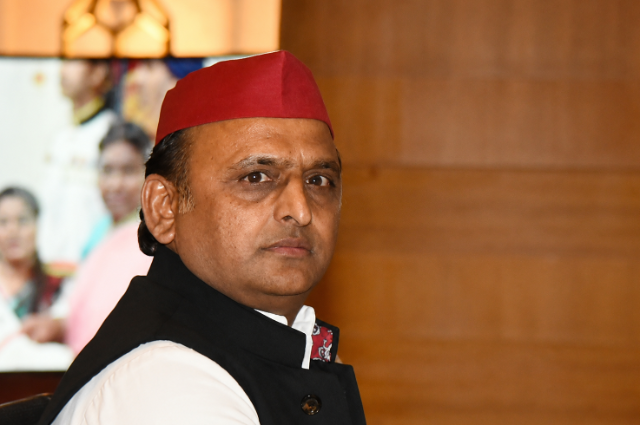
Among the sharpest and most vocal reactions to this major development came from Samajwadi Party national president and former Chief Minister of Uttar Pradesh, Akhilesh Yadav. Known for his close political alignment and personal rapport with Mamata Banerjee, Yadav did not hold back his intense disappointment when speaking to members of the media regarding the Bengal verdict. In a series of direct statements, Yadav explicitly termed the day the results were announced as a dark day in the political history of democratic India. According to his reading of the situation, this outcome does not represent an unforced or genuine democratic choice by the regular population, but instead stands as a calculated and heavy blow to the federal structure and overall democratic health of the nation.
The Structural Arguments Put Forward by the Opposition
Yadav focused his primary criticism on the entire operational framework under which the multiphase elections were organised and conducted in West Bengal. He alleged that the fundamental democratic systems that exist to guarantee free, fair, and unbiased voting were heavily compromised from the very beginning of the polling schedule. In his interaction with reporters, the Samajwadi Party chief claimed that regular everyday citizens, especially those living in rural pockets and areas traditionally known as opposition strongholds, faced systematic pressure, intimidation, and visible discouragement when trying to reach their designated polling stations.
The former Uttar Pradesh Chief Minister pointed his fingers directly toward the central ruling administration as well as the highest levels of the electoral management bodies. He accused them of transforming what should have been a neutral, transparent, and balanced democratic contest into a highly managed and artificial administrative operation. Yadav argued that when the national institutions tasked with safeguarding public trust fail to maintain an independent stance, the entire outcome loses its basic credibility. He emphasised that a political victory built upon the alleged manipulation of state resources and selective enforcement of regulations cannot be recognised as a valid mandate in a functioning parliamentary system.
A Public Display of Resistance in Kolkata
To deliver a clear message of unity and show that the national opposition block does not intend to back down easily despite the heavy loss, Yadav travelled directly to Kolkata within hours of the final seat counts being finalised by the poll officials. This fast-paced visit was intended to reassure regional voter bases that their leaders remain committed to a shared strategy. Yadav visited Mamata Banerjee at her personal residence to offer his direct moral and political support during a highly vulnerable moment for the Trinamool Congress leadership.
While addressing a crowded press conference outside the venue, Yadav expanded on his specific grievances concerning the role of government machinery during the election months. He stated that central paramilitary units and various independent administrative departments, which are legally bound to act without political bias, were actively used to alter ground-level conditions and tilt the final numbers in favour of the challengers. Yadav went on to characterise the situation as a multi-layered misuse of constitutional powers, designed with the sole purpose of systematically breaking down strong state leaders and paving the path for a highly centralised political landscape where regional voices are sidelined.
The Strategy of State Identity and Regional Survival
The growing anxiety shared by Yadav is reflecting heavily across several other regional parties, all of whom interpret the West Bengal verdict as a dangerous precedent for their own survival. The core narrative now being established by these state-level organisations centres around the idea that national entities are deploying unlimited financial resources, media dominance, and investigative organisations to shatter any localised resistance. Yadav argued that the loss in Bengal is not merely an isolated defeat for one individual leader or one local party, but rather a final warning signal for every state-governed administration in the country.
He noted that if the distinct cultural, linguistic, and political identity of a state like West Bengal can be overwhelmed by centralised external pressure, then no regional political setup can consider itself secure in the long run. The immediate approach for the opposition involves highlighting these institutional irregularities to build a strong narrative around federal preservation, aiming to consolidate their respective voter bases before upcoming electoral contests in other parts of the country.
The Counterarguments and Defence from the Winning Front
On the opposite side of the spectrum, leaders and senior strategists from the victorious party have completely dismissed Yadav’s statements, labelling them as a classic example of sour grapes and groundless political rhetoric. Spokespersons for the winning organisation maintain that the West Bengal verdict is an entirely natural, uncoerced mandate delivered by a population that was eager for a complete change in governance. They argue that the ordinary citizens of the state voted for economic progress, better central integration, and freedom from the localised corruption and frequent political violence that had defined the previous regime for a generation.
The ruling party leadership maintains that the use of strong language like a dark day is a deliberate psychological tactic used by opposition figures to cover up their own organisational weaknesses and avoid accountability for their loss. They pointed out that the entire voting process happened under the direct watch of independent observers and judicial guidelines, meaning that casting doubt on the final result is a direct insult to the basic intelligence and independent will of millions of individual voters who spent hours waiting in lines to record their preferences.
Long-Term Impact on National Politics
The intense fallout from the West Bengal election is bound to rewrite the rules of engagement between the central government and individual states for a long time to come. With a new administrative setup taking over the reins in Kolkata, the geopolitical friction regarding financial allocations, state autonomy, and administrative boundaries is expected to scale up significantly.
Observers also note that Yadav’s highly aggressive stance is closely tied to his local priorities in Uttar Pradesh, where he faces a continuous challenge from the same national political force.
By taking a high-profile stand on a national platform and offering unreserved support to Mamata Banerjee, Yadav is working to position himself as a primary anchor of a combined opposition front capable of challenging central dominance. As the formal transition of power occurs in West Bengal, the bitter words exchanged between the camps show that standard post-election courtesies have been fully discarded, replaced by a deep institutional distrust that will shape the next era of Indian democracy.
References
- ABP News Report. West Bengal Election Results: Akhilesh Yadav calls it a dark day in political history. May 2026.
- The Hindu. Akhilesh Yadav targets the ruling party and the Election Commission over the Bengal poll process. May 2026.
- Press Trust of India. Opposition leaders gather in Kolkata to show solidarity with Mamata Banerjee after poll defeat. May 2026.