
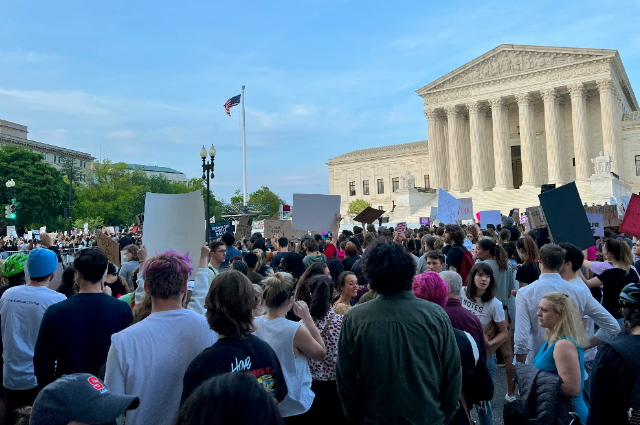
For weeks, the air in major American cities has tasted of more than just spring; it carries the acrid scent of a nation reaching its boiling point. What began on February 28 as a "precision" military strike against Tehran has rapidly devolved into a sprawling, multi-front conflict that many are calling the most significant geopolitical gamble of the 21st century. But while the missiles fly over the Persian Gulf, a different kind of explosion is happening on the streets of New York, London, and even small-town America.
The catalyst? A staggering $44 billion war bill is the initial price tag for a conflict that many Americans feel was forced upon them without a vote or a clear exit strategy. This figure has become the rallying cry for a movement that is no longer just "anti-war," but fundamentally "anti-status quo." It has achieved the unthinkable: bringing pacifists, hard-nosed economists, and suburban mothers into the same protest lines, all united by a singular, burning frustration with the leadership of President Donald Trump.
The Unlikely Coalition: Beyond the Usual Suspects
In the past, anti-war movements were often relegated to the fringes of student activists and veteran peace groups. Today, the "No Kings" movement looks and sounds remarkably different. The sheer scale of the 2026 Iran War, coupled with the domestic economic fallout, has created a "big tent" of dissent.
The Pacifists: The moral core of the movement remains the traditional anti-war groups, but their message is now amplified by the brutal reality of modern warfare. As reports of civilian casualties in Tehran and missile strikes on infrastructure filter through social media, the humanitarian plea for "No More Blood for Oil" has found a global audience.
The Economists: This is perhaps the most surprising addition to the protest lines. When the Pentagon requested an initial $44 billion—a figure that grew to nearly $200 billion by mid-March—fiscal conservatives and economic analysts began sounding the alarm. With the Strait of Hormuz effectively closed, oil prices have spiked to historic levels, triggering a "war tax" on every gallon of gas and every grocery bill in America.
The Mothers: Across the country, "Mothers Against the War" chapters have sprouted like wildfire. Driven by the fear of a potential draft—a rumor that the administration has struggled to suppress—and the immediate reality of budget cuts to domestic programs like healthcare and education to fund the war effort, these women have become the movement's most organized and vocal demographic.
Anti-Trump Everywhere": The Political Subtext
While the war is the spark, the political climate is the fuel. For many, the Iran conflict is seen as the ultimate manifestation of the "Trump Doctrine"—unilateral, aggressive, and unpredictable. The phrase “Anti-Trump Everywhere" has become more than a slogan; it’s a description of the geographic reality of the protests.
From the massive "No Kings" rallies in Washington D.C., which saw an estimated 8 million participants nationwide, to solidarity marches in Paris and Berlin, the sentiment is clear: the world is exhausted by the volatility. Protesters argue that the war was not a necessity of national defense, but a "war of choice" intended to project strength during a period of domestic political vulnerability.
"We aren't just here because we hate war," said Sarah Jenkins, a mother of two protesting in Driggs, Idaho. "We're here because we’re tired of our future being treated like a poker chip in a game we never agreed to play. That $44 billion could have fixed every crumbling bridge in this state. Instead, it's being used to blow up bridges in a country we have no business being in."
The Economic Toll: The $44 Billion Anchor
The financial cost of the conflict has provided a data-driven backbone to the movement. Unlike previous conflicts where the "cost of war" felt abstract, the 2026 Iran War hit the American wallet instantly.
Economic Impact Sector – Consequence of the Conflict
- Energy: Gas prices surged by 40% within the first week of the Hormuz closure.
- Federal Budget: $44 billion initial bill, leading to proposed cuts in social safety nets.
- Supply Chain: Disruption in global shipping, leading to "war-flation" on consumer goods.
- Markets: Unprecedented volatility in tech and manufacturing stocks due to regional instability.
For the average citizen, the math is simple and devastating. The $44 billion represents a choice. It is the cost of 470 ballistic missile launchers destroyed versus the cost of thousands of teachers hired or a "Patients' Bill of Rights" that remains unfunded.
A Global Backfire
The administration’s hope that a quick strike would induce "regime change" in Tehran has, thus far, backfired. Instead, it has sparked a push for regime change at home. The "No Kings" protests are a direct challenge to the authority of the executive branch, demanding a return to congressional oversight and a cessation of "diplomacy by bombardment."
As of April 2026, a tenuous two-week ceasefire brokered by Pakistan offers a glimmer of hope. However, the movement shows no signs of slowing down. The coalition of pacifists, economists, and mothers has discovered its collective power. They have realized that while the war is being fought thousands of miles away, the real battle is for the soul and the treasury of the United States.
The Iran War may have been intended as a show of force, but it has inadvertently become the greatest organizing tool the modern protest movement has ever seen. The $44 billion war bill didn't just buy missiles; it bought a revolution of conscience.
References
- Wikipedia (2026): "Protests against the 2026 Iran war" – Detailed timeline of global demonstrations and the "No Kings" movement.
- House of Commons Library (UK): Research Briefing CBP-10521 (March 2026) – Analysis of the US/Israel-Iran conflict and its economic repercussions on global trade.
- Center for American Progress (April 2026): "Statement on the Human and Financial Toll of the Iran War" – Fact-checking the $44 billion initial expenditure and the "War Tax" on American consumers.
- AJC News (March 2026): "The Iran Strikes, Explained" – Military data regarding the 90% decline in launch rates and the cost to U.S. Central Command.
- Times of India / Global Voices: "Regime Change in U.S.: Iran War Backfires" – Coverage of the 8 million-person "No Kings" rally and the participation of diverse demographics.