
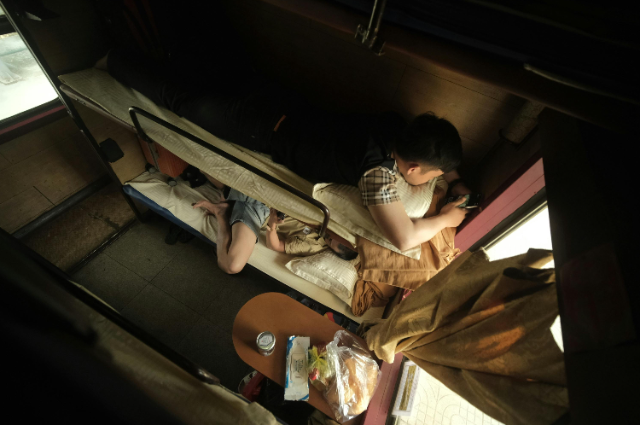
It is a striking paradox of the modern era: we have the most environmentally "aware" generation in history, yet some of the most visible displays of civic apathy. Our social media feeds are saturated with aesthetic infographics about climate change, petitions to save the coral reefs, and hashtags like #SaveEarth or #Sustainability. However, as a recent viral incident involving Class 10 students on a train to Manali demonstrates, there is a cavernous divide between digital activism and physical responsibility.
When Vikrant Krishnarao Thakre shared a video of a train coach buried under biscuit wrappers, plastic bottles, and discarded blankets, it wasn't just a video of a messy room; it was a snapshot of a systemic failure in civic education. The students, aged 16 to 18, didn't just litter; they mocked the passenger who asked them to stop. This incident serves as a grim case study on the "Bystander Effect," the shield of anonymity provided by a group, and the growing culture of entitlement among the youth.
The Performative vs. The Practical
For a Class 10 student today, "environmentalist" is often an identity curated online rather than a practice lived offline. In the classroom, these students likely write stellar essays on the dangers of plastic pollution to secure high marks in their Board exams. On Instagram, they might "repost" a story about a forest fire in the Amazon. But when faced with the tangible, unglamorous task of carrying a chocolate wrapper to a dustbin five meters away, the "Save the Earth" persona evaporates.
This disconnection happens because civic responsibility has been relegated to a "subject" to be studied rather than a "habit" to be formed. When we treat environmentalism as a trend, it becomes performative. The students on the Manali-bound train felt no cognitive dissonance because, in their minds, "the environment" is a grand, abstract concept involving polar bears and melting ice caps—not the floor of a Sleeper coach.
The Psychology of the Pack: Entitlement and the Bystander Effect
Why did no one in a group of dozens speak up? Why did they respond with mockery instead of shame? This behavior is rooted in two psychological phenomena: Diffusion of Responsibility and the Bystander Effect.
In a group setting, the individual's sense of morality often merges into a "collective ego." When one student litters and isn't corrected by their peers, it becomes the group norm. If a passenger intervenes, the group reacts defensively to protect its collective pride. The mockery observed by witnesses is a classic defence mechanism—by laughing, the students devalued the passenger’s authority and validated their own misbehaviour.
Furthermore, there is a growing sense of "service entitlement." As one social media commenter noted, many children are raised believing that cleaning is "someone else’s job." Whether it is a domestic helper at home or the cleaning staff on a train, these students have been conditioned to view public spaces as places to be served, not spaces to be maintained.
When the floor is dirty, they don't see their own handiwork; they see a failure of the "system" to clean up after them.
The Role of Schools and Parents: Beyond the Syllabus
The outrage following the video correctly identified that this wasn't just a "kid being a kid" moment. It was a failure of the ecosystem surrounding them.
- The School Trip Oversight: School trips are often marketed as "educational excursions," but they frequently lack a curriculum for behaviour. If a school cannot instill the discipline to keep a train coach clean, it has failed in its primary mission of creating a functional citizen. Discipline is not just about silence in the library; it is about respect for shared resources.
- The Parental Mirror: Children mirror the micro-habits of the adults they see. If parents throw trash out of car windows or leave tables messy at food courts, no amount of school "Civics" lessons will stick.
- The Absence of Consequences: In many cultures, littering carries a heavy social or legal penalty. In India, despite the "Swachh Bharat" (Clean India) campaign, there is often a lack of immediate, tangible consequences for despoiling public property. The students mocked the passenger because they knew, at that moment, there was no authority figure to hold them accountable.
The Manali Irony: If Not the Train, Then Not the Mountain
There is a deep irony in the fact that these students were heading to Manali—a destination known for its fragile ecosystem and natural beauty. If a student cannot respect the metallic confines of a train coach, it is unrealistic to expect them to respect the trekking trails of the Himalayas.
The litter left on that train is a precursor to the plastic left on mountain slopes. When tourism is divorced from civic sense, it becomes "extractive." We go to these places to "consume" their beauty, leaving behind the husks of our consumption without a second thought for the local ecology or the people who live there.
Rebuilding the Civic Compass
To bridge the gap between trending hashtags and real-world action, we need a shift in how we teach responsibility:
- Practical Civic Credits: Schools should move away from purely theoretical grades. Participation in community cleaning, waste management at school, and maintaining "Zero-Waste" trips should be mandatory criteria for graduation.
- The Power of Peer Correction: We must move away from the "Bystander Effect." The goal should be to create a culture where the coolest person in the group is the one who tells their friend, "Hey, don't throw that there. Pick it up."
- Public Accountability: The digital backlash to the video was a form of "modern shaming," which, while harsh, serves a purpose. It signals to the younger generation that the "private" act of littering has "public" consequences in a connected world.
The Class 10 students on the train to Manali are not villains; they are symptoms of a society that prioritises individual success over collective well-being. They are products of an education system that rewards "knowing" over "doing."
If we want a generation that truly saves the earth, we must teach them that the environment doesn't start at the edge of a forest or the peak of a mountain—it starts at their feet, on the floor of a train, and in the way they treat the people sharing that space with them. A hashtag can raise awareness, but only a bended back can pick up the trash.
References:
- Social Media Source: Viral video posted by Vikrant Krishnarao Thakre (@vikrant.thakre) on Instagram/X regarding the littering incident by students on a Manali-bound train.
- Psychological Concept: The Bystander Effect and Diffusion of Responsibility* (Darley, J. M., & Latané, B., 1968).
- Civic Context: Swachh Bharat Abhiyan guideliṄnes and the Indian Railways' "Clean My Coach" initiatives.
- Public Discourse: Analysis of user commentary on X (formerly Twitter) regarding the "entitlement" of urban youth and the role of school administrations in outdoor behaviour.
- Environmental Context: Reports on the "Overtourism" and waste management crisis in Manali and the Himachal Pradesh region