
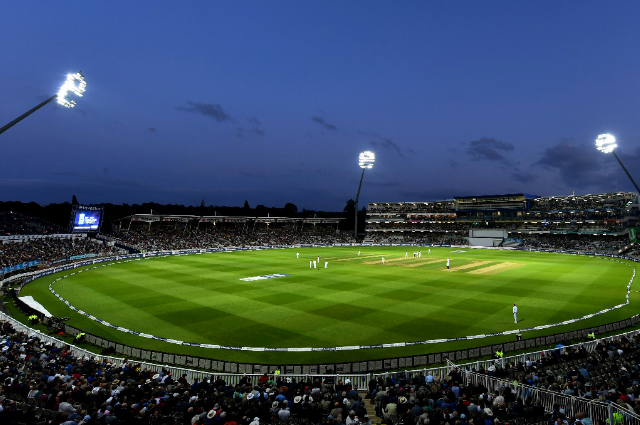
In the spring of 2026, as the floodlights hum at the Wankhede Stadium and the roar of the crowd reaches a fever pitch, there is a second, invisible game being played. It’s a game of bits, bytes, and high-frequency sensors. While the world sees a contest between leather and willow, the Indian Premier League (IPL) 2026 has officially evolved into the most technologically advanced sporting competition on the planet.
For nearly two decades, the IPL was defined by its glamour and its paychecks. Today, it is defined by its intelligence. From AI-driven strategy rooms to biometric player tracking and immersive "metaverse" broadcasting, the 2026 season represents a total fusion of sport and Silicon Valley.
The Rise of the "Smart Replay" and AI-Officiating
The most visible shift in 2026 is the near-total elimination of human error in officiating. The Smart Replay System, which saw its early iterations in 2024, has reached its zenith this season.
Previously, TV umpires relied on broadcast feeds that were sometimes limited by frame rates or angles. In 2026, the IPL utilizes a dedicated array of 8k high-speed cameras synced with the Hawk-Eye SkeleTRACK system. This technology doesn't just track the ball; it tracks every joint on a player's body in real-time.
No-Ball Accuracy: High-frequency sensors in the crease and AI-linked limb tracking mean front-foot no-balls are called within milliseconds of the foot landing.
Stump-to-Screen: The delay in DRS (Decision Review System) has been halved. AI models now pre-render the ball-tracking path the moment the ball impacts the pad, allowing for near-instant decisions that keep the game’s momentum alive.
The Data-Driven Dugout: 200,000 Data Points per Match
Gone are the days when coaches relied on gut feeling or simple "strike rate" statistics. In 2026, an IPL match generated over 200,000 data points. Teams like the Mumbai Indians and Royal Challengers Bengaluru now operate "Data War Rooms" that resemble NASA control centers more than traditional locker rooms.
The "Clutch Factor" and Real-Time Win Probability
During a live broadcast, viewers now see a Dynamic Win Predictor that shifts with every delivery. This isn't just based on historical data; it factors in:
Live Pitch Degradation: Sensors embedded in the 22-yard strip measure moisture and hardness, predicting exactly when a spinner will start getting more turn.
Matchup Profiling: AI algorithms suggest bowling changes based on a batter's historical struggle against specific release angles and speeds in the current humidity levels.
"We are no longer just playing cricket; we are solving a complex physical equation in real-time," noted one franchise analyst during the 2026 auction.
Player Wearables: The "Bio-Digital" Athlete
In 2026, the athletes themselves will become part of the Internet of Things (IoT). Players wear discreet, lightweight smart patches and GPS trackers that monitor everything from heart rate variability to core temperature and sweat composition.
This data serves two purposes:
- Injury Prevention: If a fast bowler’s "bowling load" (the mechanical stress on their back) exceeds a safe threshold calculated by AI, the team’s medical staff receives an alert on their tablet, often leading to tactical rotations to prevent stress fractures.
- Broadcasting Gold: Fans can now see a player’s live heart rate during a "Super Over" or the speed of a fielder’s sprint to the boundary. It adds a layer of human drama seeing a nerveless bowler maintain a steady 75 BPM while defending 10 runs in the final over.
Broadcasting: Beyond the Screen
The IPL 2026 broadcast has moved beyond the 2D television. With the rise of 5G and 6G trials, the league has pioneered Immersive 360-Degree Viewing.
Choose Your Angle: Through official streaming apps, fans can choose to watch the game from the "Umpire’s Eye" (a tiny camera on the umpire's hat) or a "Spider-Cam" perspective.
AI Commentary: For the first time, fans can choose "Hyper-Personalized Commentary." Using voice-cloning technology and real-time data analysis, fans can hear a technical breakdown of a shot or a more casual, fan-centric narration in over 15 regional languages.
Augmented Reality (AR): For viewers with AR glasses or high-end smartphones, the match doesn't stay on the screen. Detailed 3D maps of the field, heat maps of a batter’s shots, and "virtual avatars" of players can be projected onto the viewer’s coffee table.
Fan Engagement: The Tokenized Stadium
Technology hasn't just changed how we watch; it’s changed how we belong. In 2026, every ticket to an IPL match is a Digital Collectible (NFT)**. These aren't just souvenirs; they are keys to a "Phygital" experience.
Scanning a digital ticket at the stadium might unlock an AR scavenger hunt within the stands or grant access to an exclusive "Metaverse" meet-and-greet with players after the game. Furthermore, smart-stadium tech has optimized the fan experience. Apps now predict the shortest lines for food and restrooms, ensuring that the technology serves the person in the seat as much as the player on the field.
The New Frontier
The IPL 2026 has proven that tradition and technology are not enemies. By embracing AI, high-speed biometrics, and immersive broadcasting, the league has managed to make a centuries-old game feel like it was invented for the 21st century.
Cricket is no longer just a sport of "glorious uncertainties." It is a sport of calculated risks, measured excellence, and unparalleled digital immersion. As the IPL continues to lead, the rest of the sporting world is left to watch and learn from the silicon revolution on the cricket pitch.
References:
- Boston Institute of Analytics (2026). "IPL 2026: How AI Is Revolutionising Cricket Broadcasts.
- International Journal for Multidisciplinary Research (IJFMR) (2026). "How Data Analytics Has Transformed Player Selection in Franchise Cricket."
- Hawk-Eye Innovations (2026). "SkeleTRACK and the Future of Officiating in the IPL."
- Google Sports Data (2026). "IPL 2026 Match Schedules and Real-Time Analytics Integration."
- Dailyhunt (2026). "The Tech Behind IPL 2026 Broadcasts: High-Speed Cameras and AR."